
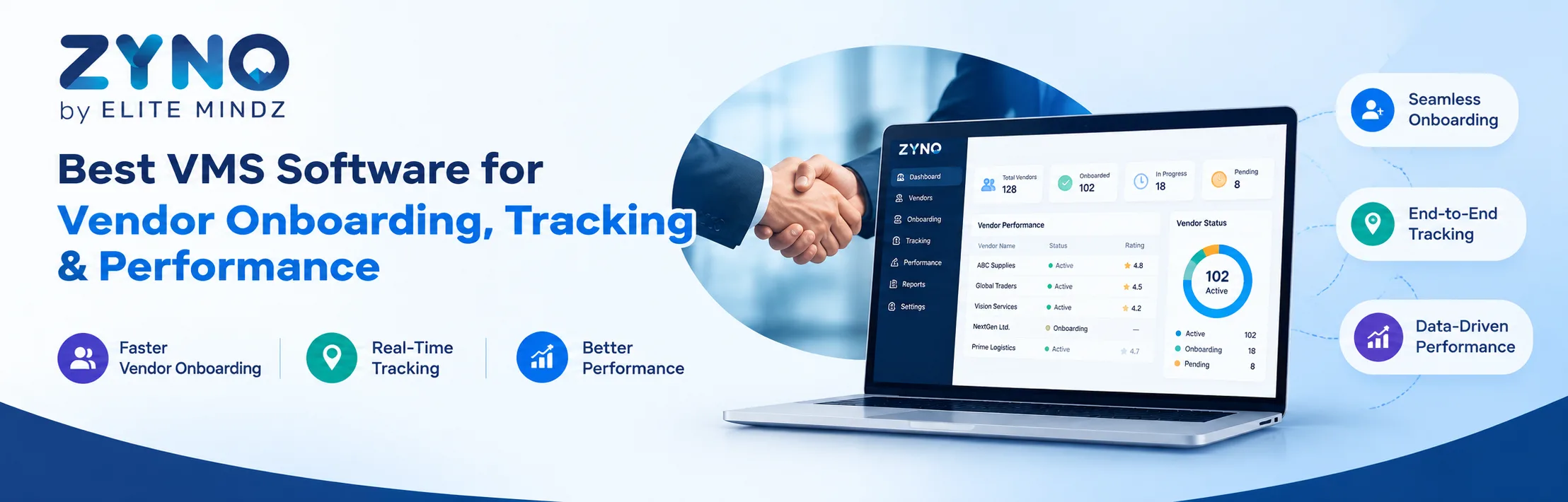
Managing vendors manually through spreadsheets, emails, and separate systems can make it difficult to track supplier information, compliance documents, purchase activities, and performance. VMS software helps businesses centralize vendor data and manage important stages of the supplier lifecycle from onboarding to performance monitoring.
Modern vendor management software can support vendor registration, approvals, document management, compliance tracking, supplier communication, performance evaluation, and reporting. Many platforms also connect vendor activities with procurement and ERP workflows, giving businesses better visibility into supplier operations.
What Is VMS Software?
A Vendor Management System (VMS) is software designed to manage vendor and supplier relationships through a centralized platform. A vendor management system can help businesses organize supplier information, automate onboarding, track compliance, manage contracts, monitor performance, and improve communication.
Instead of maintaining vendor information across spreadsheets and email threads, businesses can use a vendor management platform to create a centralized source of supplier information.
For procurement teams, VMS software can make it easier to track the complete vendor lifecycle, from registration and qualification to performance management and ongoing collaboration.
Why Is Vendor Management Software Important?
As the number of vendors increases, manually managing supplier records becomes more complicated. Teams may have difficulty identifying expired documents, following up on approvals, tracking delivery performance, or maintaining updated supplier information.
Vendor management software can help businesses:
- Centralize vendor and supplier information
- Simplify vendor onboarding
- Track supplier documents and compliance
- Monitor vendor performance
- Automate approval workflows
- Improve supplier communication
- Track procurement activities
- Maintain vendor records
- Identify supplier risks
- Generate vendor performance reports
A centralized system can also help procurement teams connect supplier information with purchasing and operational workflows.
Key Features of the Best VMS Software
When evaluating the best VMS software, businesses should look beyond basic vendor databases and consider the complete supplier lifecycle.
1. Vendor Onboarding Software
Vendor onboarding software helps businesses collect supplier information, documents, certifications, tax details, and other required information through a structured process.
Automated registration and approval workflows can reduce manual follow-ups and help procurement teams onboard suppliers more consistently.
2. Vendor Tracking Software
Vendor tracking software provides visibility into supplier activities and important milestones. Teams can monitor onboarding status, documentation, purchase orders, delivery information, compliance requirements, and performance data.
This makes it easier to identify pending actions and follow up with vendors.
3. Vendor Performance Management
Vendor performance management software helps procurement teams evaluate suppliers using defined KPIs. Common metrics include delivery performance, product quality, responsiveness, cost, compliance, and service levels.
Performance dashboards and scorecards can make supplier reviews more data-driven.
4. Vendor Compliance Software
Vendor compliance software helps organizations monitor certifications, licenses, contracts, tax documents, insurance, and other supplier requirements.
Automated alerts can notify teams when important documents are missing or approaching expiration.
5. Supplier Performance Management
Supplier performance management software provides tools for monitoring supplier KPIs and identifying performance trends.
For example, procurement teams can compare supplier delivery timelines, quality issues, response times, and compliance records to identify areas requiring attention.
6. Vendor Collaboration
A modern vendor management platform should make communication and information sharing easier. Supplier portals can allow vendors to submit information, upload documents, respond to requests, and receive updates.
Centralized collaboration can reduce dependence on scattered email conversations.
7. Vendor Risk Management
Vendor risk management helps organizations identify and monitor potential supplier risks. These can include compliance problems, poor performance, supply disruptions, or missing documentation.
Risk information can be combined with supplier performance data to provide better visibility into vendor relationships.
Best VMS Software for Vendor Onboarding, Tracking & Performance
Different businesses have different requirements, so there is no single best vendor management software for every organization. Businesses should compare platforms according to their supplier network, industry, procurement processes, integrations, scalability, and budget.
ZYNO Manufacturing ERP
ZYNO Manufacturing ERP combines vendor management with manufacturing, procurement, inventory, and production workflows. Its vendor management capabilities include centralized vendor data, supplier evaluation, communication, onboarding, performance tracking, and procurement-related workflows.
For manufacturing businesses, this can be useful when vendor management needs to connect directly with production and procurement activities. ZYNO also provides procurement and supplier management capabilities covering supplier onboarding, sourcing, purchase approvals, purchase orders, and supplier performance tracking.
The platform can therefore be considered by manufacturers looking for VMS software for supplier management alongside broader ERP functionality.
SAP Ariba
SAP Ariba provides supplier management capabilities covering areas such as supplier onboarding, qualification, segmentation, performance, risk, and supplier information. It is designed for organizations that need supplier management integrated with broader procurement operations.
Oracle Supplier Management
Oracle offers supplier management capabilities within its procurement ecosystem. Organizations can evaluate it for supplier information management, qualification, performance, and procurement-related workflows.
Coupa
Coupa provides business spend management capabilities that can connect procurement, supplier information, purchasing, and other spend-related processes.
Ivalua
Ivalua provides supplier management capabilities covering supplier relationships, performance, risk, contracts, compliance, and other procurement processes.
JAGGAER
JAGGAER provides procurement and supplier management functionality for organizations that need tools for sourcing, supplier relationships, purchasing, and performance management.
GEP SMART
GEP SMART combines procurement and supply chain capabilities with supplier-related processes, helping organizations manage sourcing, spending, supplier relationships, and procurement activities.
Procurify
Procurify focuses on procurement and spend management, including purchasing workflows, approvals, spending visibility, and supplier-related processes.
Precoro
Precoro provides procurement workflow capabilities for purchase requests, purchase orders, approvals, budgets, and supplier management.
How to Choose the Best Vendor Management System
Before selecting a vendor management system, compare the following areas:
Vendor Onboarding
Check whether suppliers can register themselves, submit documents, and complete required approval steps digitally.
Vendor Tracking
Look for dashboards that provide visibility into onboarding status, documents, contracts, purchasing activities, and supplier performance.
Performance Management
Make sure the system supports configurable KPIs, supplier scorecards, performance reports, and historical tracking.
Compliance
Evaluate whether the platform can monitor certifications, licenses, contracts, and document expiration dates.
Integration
Check whether the VMS can connect with your ERP, procurement, accounting, inventory, and other business applications.
Automation
Look for automated notifications, approval workflows, document collection, reminders, and other features that reduce repetitive administrative work.
Scalability
The platform should support additional vendors, users, locations, workflows, and business requirements as the organization grows.
Reporting
Real-time dashboards and analytics can help procurement teams understand supplier performance, compliance status, and vendor-related activities.
Benefits of Using VMS Solutions
Implementing VMS solutions for businesses can improve visibility and consistency across vendor management processes.
A centralized vendor database reduces the need to search through multiple spreadsheets and emails. Automated vendor onboarding and management software can simplify supplier registration and approvals. Performance tracking can help procurement teams identify supplier issues earlier, while compliance monitoring can reduce the possibility of missing important documentation.
When VMS software is connected with procurement or ERP systems, businesses can also create stronger links between supplier data, purchasing, inventory, and operational activities.
For manufacturers, integrating vendor management with manufacturing ERP can provide additional visibility because supplier performance and material availability directly affect production operations.
Final Thoughts
The best VMS software for vendor onboarding, tracking, and performance should provide more than a basic supplier database. Businesses should look for a platform that supports vendor onboarding, supplier tracking, compliance, performance management, collaboration, risk monitoring, reporting, and integration.
Before selecting a vendor management platform, compare its features, workflow flexibility, integrations, scalability, implementation requirements, support, and pricing.
For manufacturing organizations, ZYNO Manufacturing ERP can be considered when vendor management needs to work alongside procurement, inventory, production, and other manufacturing processes.
FAQs
1. What is VMS software?
VMS software, or Vendor Management System software, helps businesses manage supplier information, onboarding, compliance, performance, communication, and other vendor lifecycle activities from a centralized platform.
2. What is the purpose of vendor onboarding software?
Vendor onboarding software helps businesses collect supplier information, documents, approvals, and compliance details required to register and activate new vendors.
3. How does vendor tracking software work?
Vendor tracking software centralizes supplier activities and helps teams monitor onboarding progress, documentation, purchasing activities, compliance requirements, and vendor performance.
4. What is vendor performance management software?
Vendor performance management software helps businesses measure suppliers against KPIs such as delivery, quality, responsiveness, cost, and compliance.
5. What features should the best VMS software include?
Important features include vendor onboarding, supplier tracking, compliance management, performance scorecards, vendor collaboration, risk monitoring, reporting, workflow automation, and ERP or procurement integration.
6. Can VMS software integrate with ERP systems?
Yes. Many vendor management platforms can integrate with ERP and procurement systems to connect supplier information with purchasing, inventory, finance, and operational data.
7. Is VMS software useful for manufacturing companies?
Yes. Manufacturing businesses can use VMS software to manage suppliers, procurement activities, compliance, and supplier performance. When integrated with manufacturing ERP, vendor information can also be connected with production and inventory workflows.
8. How does VMS improve vendor performance tracking?
A VMS can centralize supplier KPIs, scorecards, delivery information, quality data, compliance records, and performance reports, helping procurement teams monitor supplier performance more consistently.
9. What is the difference between VMS and supplier management software?
The terms are often used interchangeably. Both can cover supplier onboarding, information management, compliance, performance, risk, and collaboration. The exact functionality depends on the software provider.
10. How should businesses select vendor management software?
Businesses should compare onboarding, vendor tracking, performance management, compliance, automation, integrations, reporting, scalability, security, implementation, pricing, and customer support before selecting a platform.
Read Also:
BOM Management Software: A Complete Guide
Top 15 Small Business ERP Systems for 2026
How Manufacturing ERP Helps Ethiopian Factories
10 Best ERP Software for Metal Manufacturing Companies