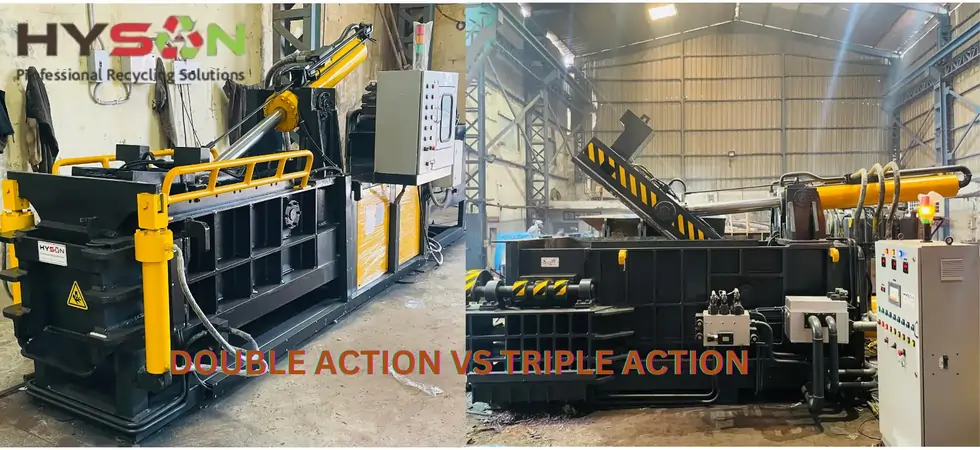
In the world of industrial processing, recycling, and waste management, the baling press machine stands as a cornerstone of efficiency and sustainability. This powerful equipment is designed to compress, compact, and bind materials into dense, manageable bales, transforming bulky waste into valuable, streamlined commodities. From scrap metal to cardboard, plastics to textiles, the baling press is an essential tool for businesses aiming to optimize space, reduce costs, and contribute to a circular economy.
How Does a Baling Press Work?
At its core, a baling press operates on straightforward mechanical or hydraulic principles. Material is fed into a large chamber, where a powerful ram—driven by a hydraulic system—compresses it with immense force against a fixed wall. Once the material reaches a predetermined density, the machine uses wires, straps, or ties to secure the compacted block into a tight, uniform bale. These bales are then ejected for storage, transport, or sale. Modern machines often feature automated controls, safety mechanisms, and customizable settings for bale size and density.
Types of Baling Press Machines
The market offers various types tailored to specific materials and operational scales:
- Vertical Balers: Space-efficient and ideal for lower-volume operations (e.g., retail stores, small warehouses). Material is loaded from the top and compressed vertically.
- Horizontal Balers: Suited for high-volume, continuous processing (e.g., recycling plants, large factories). Material is fed horizontally, allowing for automation and conveyor integration.
Key Advantages and Applications
The benefits of using a baling press are multifaceted:
- Space Optimization: By compressing voluminous materials into dense bales, businesses can drastically reduce storage footprint, freeing up valuable floor space.
- Cost Reduction: Efficient handling, storage, and transportation of baled materials lower logistical costs. Baled materials are also easier and safer to handle, reducing labor requirements.
- Revenue Generation: Baled recyclables like cardboard (OCC), PET plastic, and aluminum are clean, standardized commodities that fetch better prices in the recycling market.
- Environmental Impact: Baling is a fundamental step in the recycling chain. It promotes responsible waste management, reduces landfill dependency, and conserves natural resources by feeding materials back into production cycles.
- Safety and Cleanliness: Containing loose, often hazardous materials (like sharp metals or dusty paper) into solid blocks creates a safer, tidier workplace.
Industries that rely heavily on baling presses include:
- Recycling Facilities: For processing paper, plastic, and metal.
- Manufacturing: To manage packaging waste and production scraps.
- Distribution Centers & Retail: For corrugated cardboard from shipping.
- Agriculture: For producing hay and straw bales.
- Textile Mills: For handling fabric scraps and fiber waste.
Choosing the Right Machine
Selecting an appropriate baling press depends on several factors: the type and volume of material, available floor space, desired bale size and weight, budget, and level of automation required. Investing in a machine with robust construction, reliable hydraulics, and energy-efficient operation ensures long-term productivity and a strong return on investment.
The Future of Baling
Technological integration is shaping the future of baling. Innovations include IoT-enabled machines for predictive maintenance, advanced automation with sensor-based feeding, and data analytics to optimize baling cycles and track material throughput. The drive towards sustainability globally ensures that the baling press will remain a critical asset, evolving to meet higher efficiency and environmental standards.
In conclusion, the baling press machine is far more than just a compactor; it is a strategic investment that drives operational efficiency, economic benefit, and environmental stewardship. By turning waste into wealth and chaos into order, it proves indispensable for any forward-thinking business committed to streamlined operations and sustainable practice.
Source: https://www.hysanbalers.com/triple-compression-baler.html