
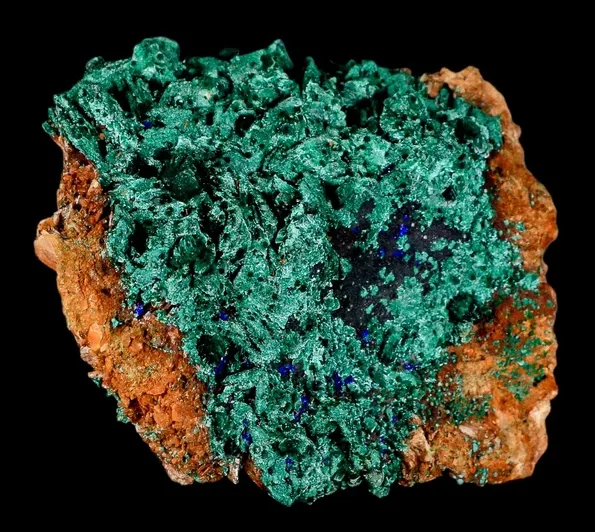
Azurite is a deep blue mineral that draws attention for its rich color and natural crystal formations. Many people collect azurite crystals for their appearance, while others enjoy learning about how they form and their place in mineral history. This copper-bearing mineral is commonly found in areas with copper deposits. Its striking blue shades make it a popular choice for mineral collections, educational displays, and decorative pieces.
What Does Azurite Mean?
Azurite is a copper carbonate hydroxide mineral with the chemical formula Cu₃(CO₃)₂(OH)₂. Its name comes from a word associated with the color blue, which describes its most recognizable feature.
The mineral can appear in several forms, including individual crystals, rounded masses, and crust-like coatings on rocks. Its color ranges from bright azure blue to deep, almost navy blue. Some specimens also contain green malachite, another copper-bearing mineral that often forms in the same environment.
Azurite usually develops in the oxidized zones of copper deposits, where copper minerals react with water, carbon dioxide, and other substances near Earth's surface. It can occur alongside minerals such as malachite, cuprite, and limonite.
Although azurite is known for its rich color, it is relatively soft, with a hardness of about 3.5 to 4 on the Mohs scale. This means it scratches more easily than many common minerals, so handle it with care.
In mineral collecting, azurite is valued for its color, crystal shapes, and geological significance. Each specimen can look different depending on the conditions under which it formed.
Common Uses of Azurite
Azurite has been used for different purposes throughout history. Its bright blue color made it a useful pigment, and its natural beauty continues to attract mineral collectors today.
Some common uses include:
- Mineral collections: Collectors appreciate azurite for its deep blue color, crystal formations, and natural patterns.
- Decorative displays: Attractive specimens can be displayed on shelves, desks, or inside glass cabinets.
- Historical pigments: Ground azurite produced blue pigment for paintings and artwork. Its use appears in historical art from different parts of the world.
- Geological education: The mineral helps students learn about copper deposits, mineral formation, and chemical reactions in rocks.
- Jewelry and ornaments: Some specimens are used in decorative items, although their softness makes them less suitable for everyday jewelry that experiences frequent wear.
The value of an azurite mineral specimen depends on factors such as its color, crystal quality, size, condition, and overall appearance. Well-formed crystals can be especially attractive to collectors.
Azurite is also associated with various spiritual meanings in modern crystal traditions. Some people connect its blue color with wisdom, communication, and self-reflection.
These associations are personal or cultural beliefs, not scientifically established effects.
How Should Azurite Be Stored?
Azurite needs gentle care because it is relatively soft and can be affected by unsuitable storage conditions. A few simple precautions can help preserve its natural appearance.
Consider these basic care tips:
- Handle gently: Avoid dropping the specimen or rubbing its crystal surfaces.
- Keep it dry: Excessive moisture and unsuitable environmental conditions may affect its condition over time.
- Avoid harsh cleaners: Do not use strong chemicals or abrasive materials to clean the surface.
- Limit direct sunlight: Store the specimen away from prolonged exposure to strong sunlight.
- Use a stable display: A secure stand or display case can help prevent accidental falls.
Keep azurite separate from harder minerals that might scratch its surface. If dust collects on the specimen, use a soft brush carefully rather than washing it without understanding its condition.
Azurite minerals can vary considerably in shape, size, and stability. Some specimens have delicate crystal points, while others occur as solid masses or mixed formations with malachite. Their care requirements may therefore differ.
Do not use azurite to prepare drinking water or crystal-infused water. It contains copper, and copper-bearing minerals may pose a health risk if their material enters water that is swallowed. Keep mineral specimens away from children and pets who might put them in their mouths.
Conclusion
Azurite is a distinctive mineral known for its beautiful blue color, interesting crystal formations, and historical uses. From mineral collections to traditional pigments, it has attracted attention for centuries. Understanding its properties and caring for it properly can help collectors appreciate its natural beauty for years to come.
For those interested in exploring minerals and other natural specimens, Fossil Age Minerals offers a chance to discover items connected to Earth's geological history. Learning about each specimen's composition, formation, and care makes collecting more enjoyable and informative.