If you’re considering switching to artificial grass, one of the first things you’ll want to understand is pricing. At a glance, it might seem like a straightforward cost per square foot—but artificial lawn grass prices are shaped by several factors that go beyond just the turf itself.
Getting clear on those details helps you avoid overspending or choosing something that won’t last.
Breaking Down the Cost of Artificial Grass
The price of artificial grass usually starts with the material itself. Basic options are more affordable but may lack durability and realism. On the other hand, premium turf tends to cost more because it offers better fibre quality, stronger backing, and a more natural look.
But turf is only one part of the equation. Installation, preparation, and finishing all add to the total cost.

What Do Artificial Lawn Grass Prices Include?
When looking at quotes, it’s important to understand what’s actually included. Pricing often covers more than just the turf itself.
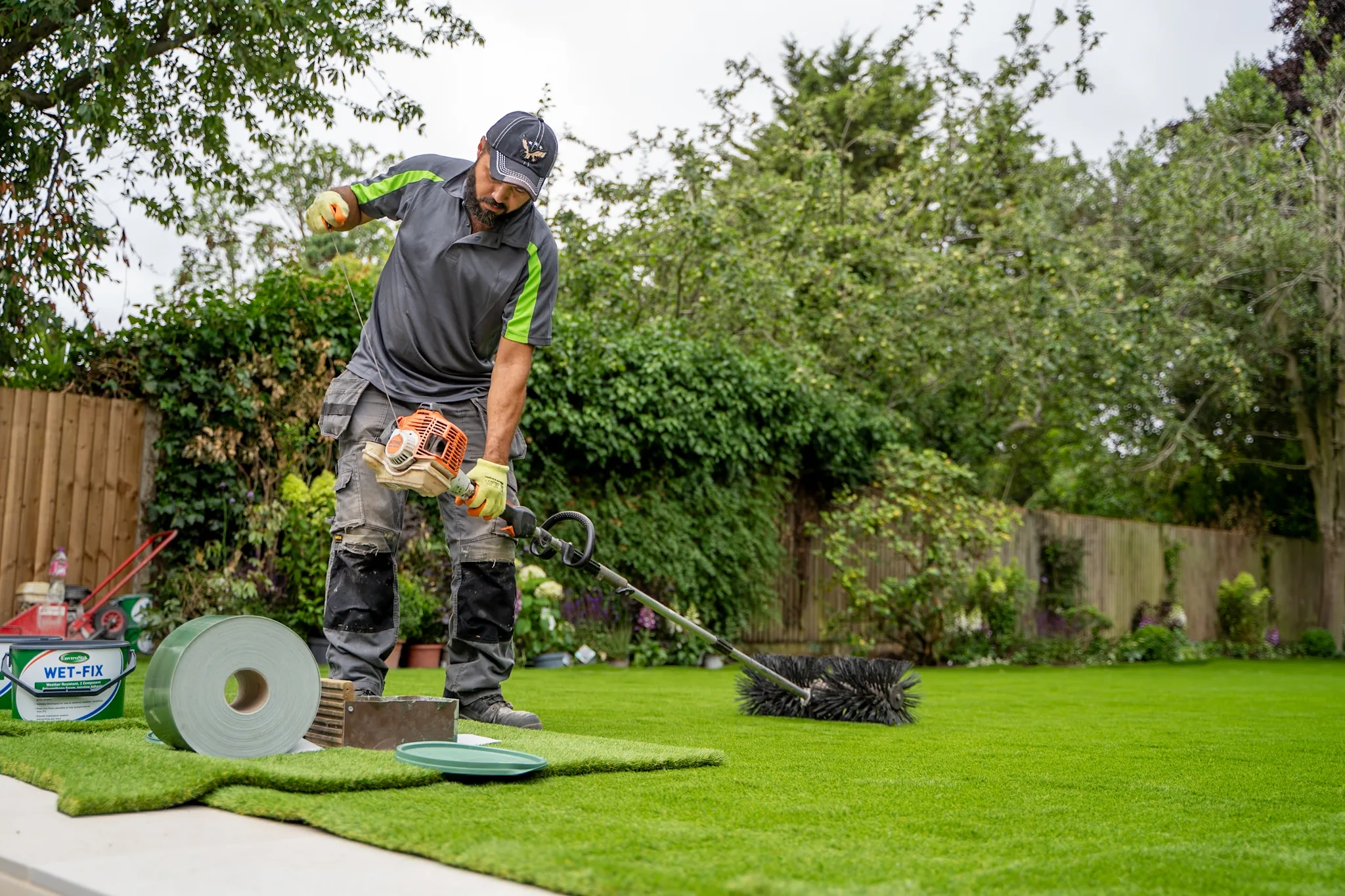
Most projects include ground preparation, base materials, labour, and finishing work such as securing edges and brushing the fibres. Some quotes may also include waste removal and infill materials.
Knowing exactly what’s included helps you compare options more accurately and avoid unexpected costs later.
Why Prices Vary So Much
Two lawns can look similar but have completely different price tags. That difference often comes down to what’s underneath the surface.
If your garden needs excavation, leveling, or drainage improvements, the cost will increase. A well-prepared base is essential for long-term performance, and skipping it usually leads to problems later.
The size and layout of your space also matter. Larger, open areas are generally more cost-efficient, while smaller or complex gardens require more detailed work.

How Much Does Artificial Lawn Grass Cost Per Square Foot?
While prices vary, most homeowners fall within a general range.
Basic turf materials can start from a few dollars per square foot, while higher-end options can cost significantly more depending on quality and features. When installation is included, the total price typically increases due to labour and groundwork.
These ranges are useful as a guide, but the final cost always depends on your specific project.
Choosing Between Budget and Premium Turf
It’s tempting to go for the cheapest option, especially for larger areas. But lower-cost turf can flatten, fade, or wear out faster.
Higher-quality options tend to hold their shape better and maintain a consistent appearance over time. In many cases, spending a bit more upfront reduces the chances of needing repairs or replacement.

Long-Term Value vs Upfront Cost
Here’s where artificial grass starts to make sense financially. Once installed, there’s no need for watering, mowing, or lawn treatments.
Over time, these savings add up. What initially feels like a higher investment often balances out when you consider how little maintenance is required.
Getting the Best Value for Your Budget
The goal isn’t to find the cheapest artificial lawn grass prices—it’s to find the best value. That usually means choosing a product that fits your needs while ensuring the installation is done properly.
A well-installed lawn with good-quality turf will always outperform a cheaper setup that cuts corners