Norwood covers a stretch of south London that straddles the Croydon and Lambeth borough boundaries — Upper Norwood, West Norwood, and South Norwood each have their own character, but they share the same underlying ground conditions and broadly similar Victorian and Edwardian housing stock that defines much of south London. Artificial grass is a well-established choice across the Norwood area, and for good practical reasons. This guide explains what Norwood homeowners should understand before requesting installation quotes.
Ground Conditions Across the Norwood Area
Norwood sits at the south London ridge — Upper Norwood in particular is elevated, sharing the Crystal Palace ridge with SE19. The ridge position gives some Norwood gardens a natural gradient that aids surface drainage, but the underlying geology is London Clay throughout the area, from the elevated streets of Upper Norwood down to the flatter terrain of West Norwood and South Norwood.
London Clay retains moisture, drains slowly, and produces the same surface waterlogging in natural lawns that makes artificial grass such a compelling alternative. A compacted MOT Type 1 aggregate sub-base of at least 75mm is the correct specification for any Norwood artificial grass installation — on the ridge or in the valley. The elevated gardens of Upper Norwood benefit from their natural gradient for drainage run-off, but the clay still requires the sub-base to prevent surface movement and waterlogging at the turf level.
Norwood Garden Types
Upper Norwood and Crystal Palace border (SE19): The elevated streets of Upper Norwood — around Westow Hill, Auckland Road, and the streets running towards the Crystal Palace park — are predominantly Victorian and Edwardian terraces and semis with rear gardens that often benefit from natural slope. Side access is variable but more common than in flat inner-south London terrace streets. These gardens suit artificial grass well: the slope aids drainage, the proportions are manageable, and the mix of terrace and semi housing covers a range of access situations.
West Norwood (SE27): West Norwood's residential streets — Knights Hill, Norwood Road, and the surrounding Victorian terrace grid — are predominantly flat, with narrower rear gardens and
through-house access as the norm. The flat terrain makes sub-base drainage management more important, and the confirmed outlet arrangement for the sub-base should be discussed at the survey stage for any West Norwood garden that currently experiences waterlogging.
South Norwood (SE25): South Norwood blends into Croydon and Selhurst, with a mix of late-Victorian terrace housing and inter-war semis. Gardens are generally more generous than in West Norwood, and some properties in the inter-war stock have side access. The flatter terrain of South Norwood shares the drainage considerations of West Norwood — sub-base outlet confirmation is worthwhile for lower-lying gardens.
What a Complete Norwood Installation Includes
● On-site survey — including slope and drainage assessment
● Removal of existing lawn and topsoil to 80–100mm depth
● 75mm+ compacted MOT Type 1 aggregate sub-base
● Geotextile weed membrane
● Artificial turf — product named and specified
● Laying, joining where required, perimeter edging
● Through-house access management where no side access exists
● All waste removal on completion
Realistic Costs for Norwood Gardens
Norwood falls within south London's mid-range pricing band, with some variation across the three sub-areas:
● Small garden (15–25m²), through-house access: £750–£1,550 total
● Medium garden (25–40m²), through-house access: £1,250–£2,700 total
● Medium-larger garden (35–55m²), side access: £1,700–£3,800 total
Per-m² fully inclusive rates across Norwood range from approximately £44–£56 (budget, complete sub-base) to £72–£105 (mid-range to premium product). Through-house surcharges of £100–£280 apply where no side access is available.
Product Recommendations
Active family gardens: Mid-range artificial grass — pile height 30–37mm, dtex 11,000–14,000 — is the recommended choice for Norwood family gardens. Intensive daily use by children and dogs is managed well by this product tier, with twelve to fifteen years of consistent performance under south London conditions.
Sloping Upper Norwood gardens: For gardens with a pronounced slope in the SE19 area, confirm that the installer specifies a cross-fall in the sub-base that directs water to the correct outlet rather than pooling at the low end. A higher-pile product (35–40mm) also sits better on a sloping surface, where lower-pile turf can look matted more quickly under foot traffic moving predominantly in one direction.
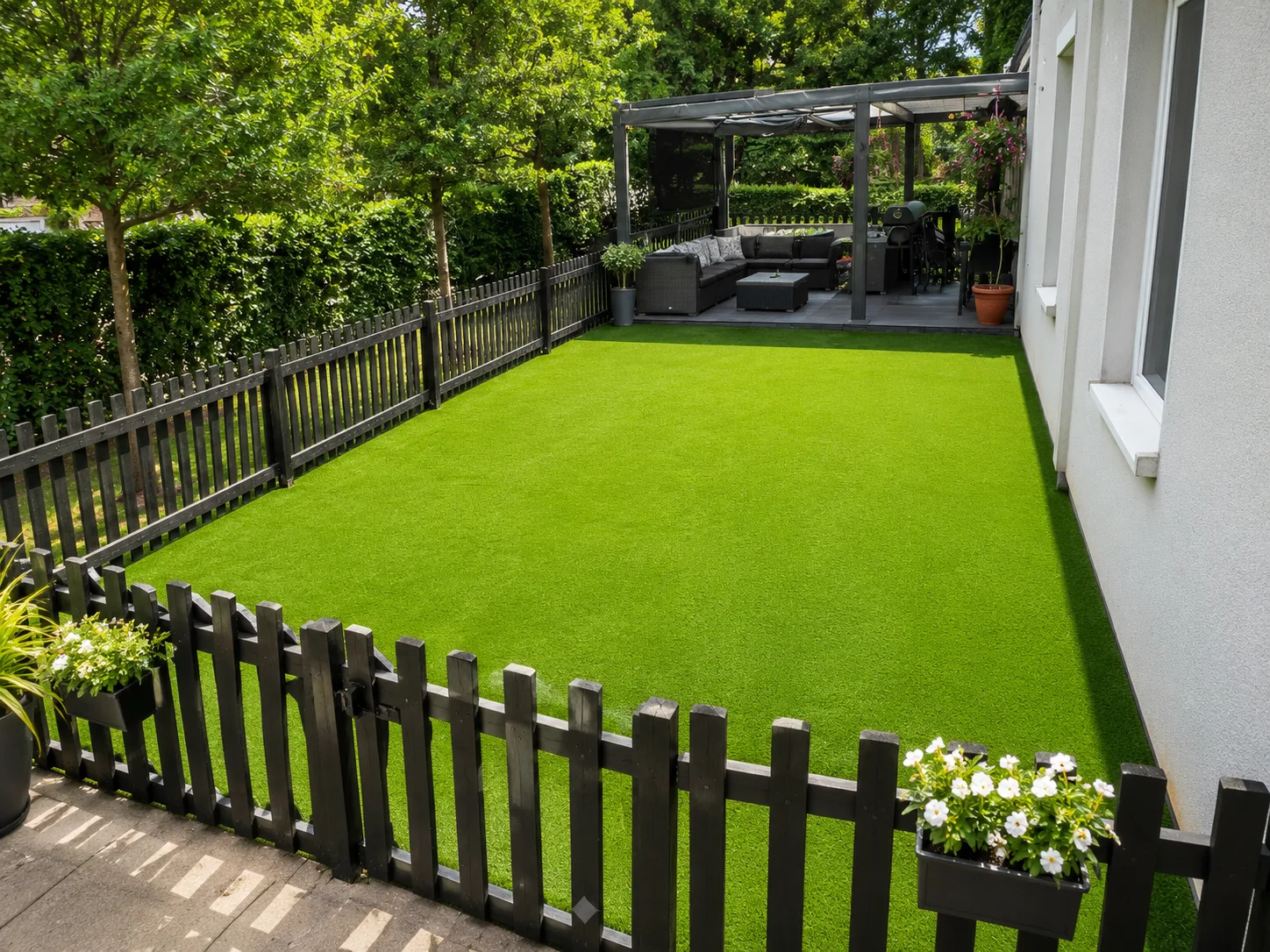
Front gardens: Norwood's Victorian street frontages are well-maintained across most of the area. Premium artificial grass for a Norwood front garden delivers lasting kerb appeal that requires no ongoing maintenance beyond an occasional brush.
Finding a Reliable Norwood Installer
The Norwood area is covered by south London installers working across Lambeth, Croydon, and Bromley. Standard criteria apply: survey before quoting, sub-base specified in writing, product named, through-house access included, drainage outlet confirmed for flat gardens. A reliable artificial grass company serving Norwood will survey your specific garden — whether it is on the SE19 ridge or in the SE27 valley — and produce a written specification that addresses the drainage characteristics of your particular plot.
Final Thoughts
Norwood's mix of elevated ridge and flat valley positions creates slightly different drainage considerations within a relatively small geographic area, but the fundamentals of a good artificial grass installation are consistent throughout: the right sub-base, a quality product, professional installation, and clear drainage provision. Get those right, and an artificial lawn in any part of Norwood will deliver reliable, low-maintenance performance for well over a decade.