
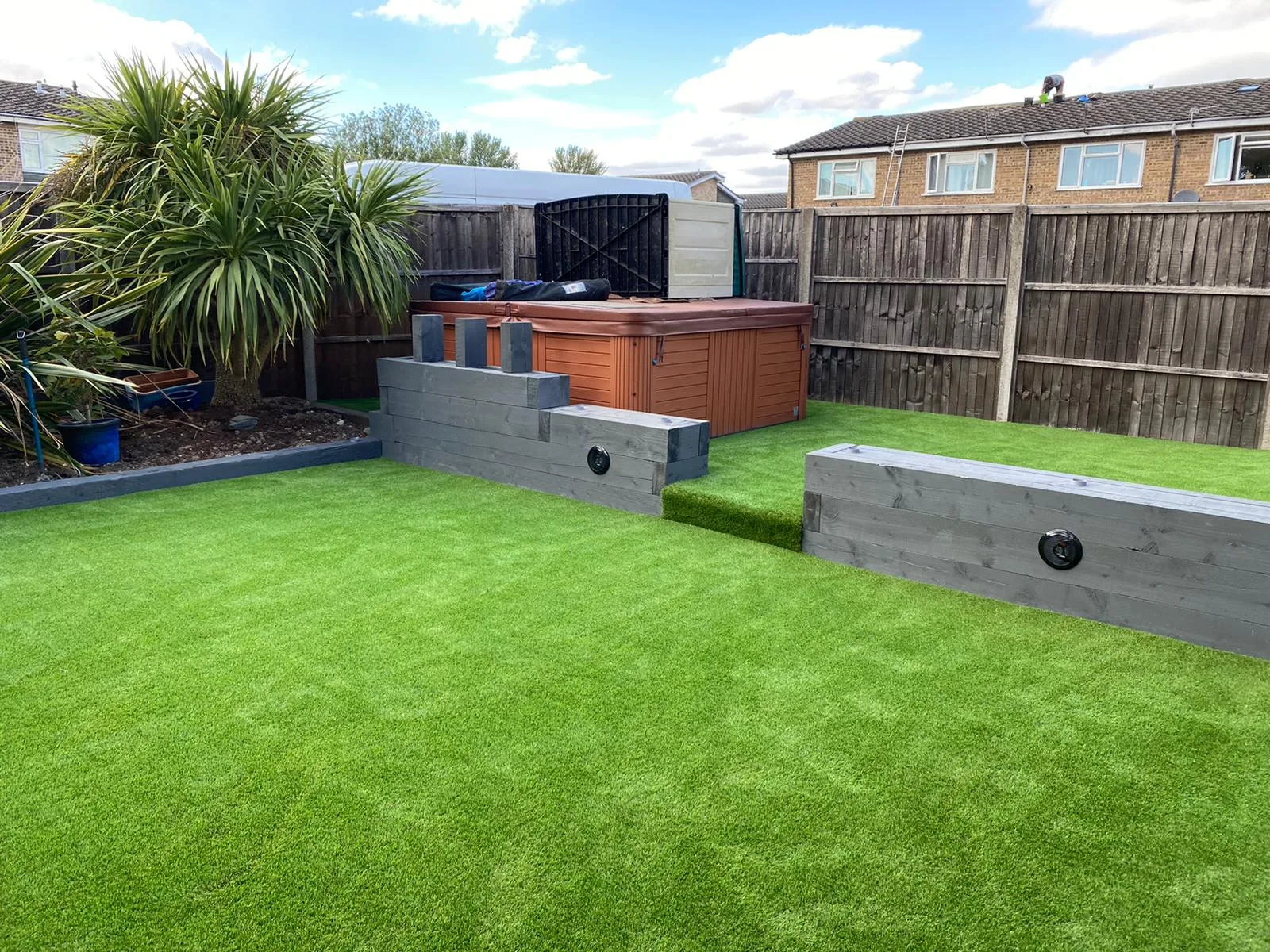
Crystal Palace sits on one of the highest ridges in south London, with a mix of Victorian terraces, Edwardian semis, and inter-war housing that gives the area a distinctive character — and a distinctive set of garden conditions. If you are a Crystal Palace homeowner considering artificial grass, there are a few local factors worth understanding before you get quotes.
This guide covers what makes Crystal Palace gardens slightly different from the London average, what a proper artificial grass installation here should include, and what to expect from the process.
Crystal Palace Gardens: What to Expect Underground
Like most of south London, Crystal Palace sits on London Clay. The ridge position means drainage is generally somewhat better than in lower-lying areas — there is more natural gradient for surface water to run off — but the underlying clay still demands the same sub-base specification as anywhere else in Greater London. Do not let any installer convince you that Crystal Palace's elevated position means a reduced sub-base is acceptable. The clay is still there, it still drains slowly, and a 75mm compacted MOT Type 1 aggregate sub-base remains the correct specification for a lasting installation.
What the ridge position does affect is the likelihood of heavy surface waterlogging in flat gardens. Gardens with good natural slope to the rear or sides benefit from that gradient, but level or bowl-shaped gardens on the ridge still accumulate standing water after rain on unimproved ground. A proper sub-base with a cross-fall graded into the existing drainage arrangement resolves this reliably.

Garden Types in Crystal Palace
Crystal Palace housing stock covers a few distinct garden types, each with their own installation characteristics:
Victorian terrace rear gardens: Long, narrow strips — common on streets off Church Road and Anerley Road — that are typically 4–6 metres wide and 10–18 metres long. These gardens almost always have no side access, meaning all materials come through the house. Through-house access surcharges of £100–£300 are standard for these properties. On the positive side, the long rectangular shape is one of the most straightforward to install and produces very little turf waste.
Edwardian and inter-war semis: Wider plots, often with side access — particularly common towards Gipsy Hill, Westow Hill, and the upper streets of Norwood Junction. Side access makes logistics considerably simpler and can reduce the overall installation cost compared to a same-size terrace garden. These gardens often have more complex shapes, with curved borders, existing patios, and mature planting that requires careful edging work around the artificial grass perimeter.
Modern flats and conversions: Ground-floor flat gardens in Crystal Palace are often compact — 15–25m² — and frequently shared-access situations where the garden is accessed via a communal area or through another flat. Any shared access arrangement should be discussed with your installer at the survey stage to confirm what is and is not accessible.
What a Crystal Palace Artificial Grass Installation Should Include
Regardless of garden type, a complete artificial grass installation in Crystal Palace covers:
● Survey visit to confirm dimensions, ground conditions, and access route
● Removal of existing lawn and topsoil to 80–100mm depth
● 75mm+ compacted MOT Type 1 aggregate sub-base
● Geotextile weed membrane
● Artificial grass supply — product named and specified
● Laying, joining where required, perimeter edging
● All waste removal on completion
Crystal Palace-specific through-house access charges apply to most Victorian terrace properties on the ridge. This should be confirmed and included in the quote before you agree to proceed — not added on the day.
Realistic Costs for Crystal Palace Gardens
Fully inclusive artificial grass installation in Crystal Palace follows the south London pricing structure. For a standard terrace garden of 20–35m² with through-house access, expect:
● Budget product (20–28mm pile): £900–£1,700 total
● Mid-range product (30–37mm pile): £1,200–£2,600 total
● Premium product (38mm+ pile): £1,800–£4,000+ total
The through-house access charge accounts for £100–£300 of the total in most Crystal Palace terrace installations. Properties with side access to the rear garden typically see total costs 8–12% lower for the same specification.
Choosing a Product for Crystal Palace Gardens
Crystal Palace gardens see a full range of south London weather — the ridge position means occasional stronger winds and slightly cooler temperatures than lower-lying areas like Peckham or Brixton, but the turf specification is otherwise standard for London.
For family gardens with children and pets: A mid-range product with 30–37mm pile height, lead-free infill, and good drainage rate (at least 60 litres per m² per hour). This combination handles intensive daily use and maintains its appearance reliably for twelve to fifteen years.
For low-use or decorative gardens: An entry-level product (20–28mm, dtex 8,000–10,000) is cost-effective for gardens used primarily for appearance rather than active play. The appearance is acceptable for five to eight years before the pile shows noticeable compression under London conditions.
For front gardens visible from the street: Premium products with naturalistic multi-tone colouring and high dtex ratings (14,000+) are worth the additional investment for front gardens where kerb appeal matters. The higher density holds its natural appearance under UV exposure and light foot traffic for fifteen to twenty years.
Finding the Right Installer for Crystal Palace
The Crystal Palace area is well served by south London artificial grass installers, and the majority of reputable companies working across Croydon, Bromley, and Lambeth cover Crystal Palace routinely. The key criteria are consistent regardless of which company you choose: confirm the sub-base specification in writing, verify that through-house access is included in your quote if required, and check that the product specification is named — not just "quality artificial grass" — before committing. A reliable artificial grass company serving Crystal Palace will survey your garden, specify the sub-base correctly for London Clay, and provide a fully itemised quote that leaves nothing ambiguous.

Final Thoughts
Crystal Palace is a well-established south London neighbourhood with garden conditions that are typical for the ridge — London Clay underneath, a mix of Victorian and inter-war housing stock, and mostly terrace gardens that require through-house access management. A correctly specified artificial grass installation here, with the right sub-base and a quality product, will transform one of those gardens into a low-maintenance, year-round outdoor space that serves the household well for well over a decade.