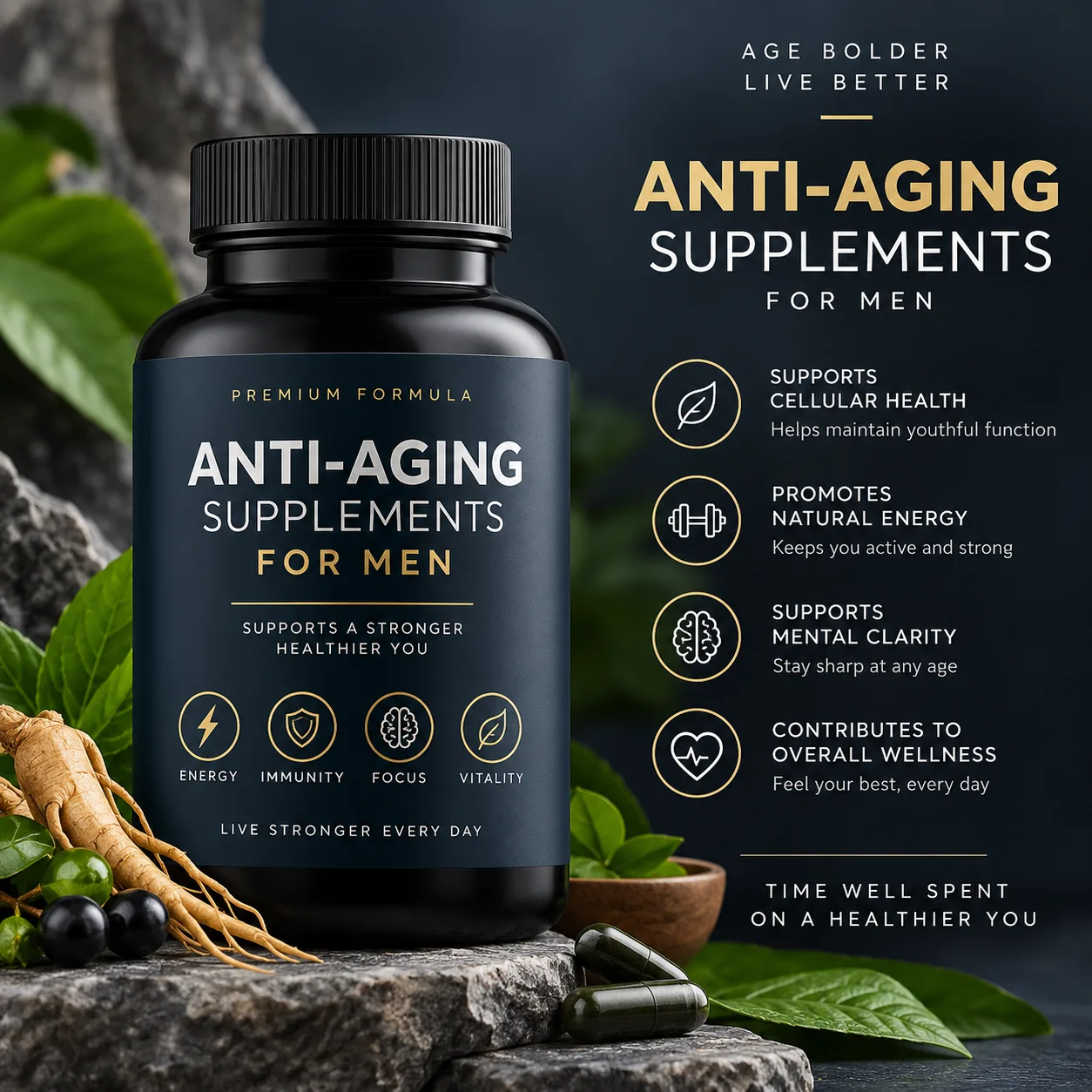
Getting older is normal, but most men want to stay strong, active, and healthy for as long as possible. That is why many are now exploring Anti aging supplements for men that are designed to support areas such as energy, skin, muscles, and overall wellness.
But here is the important part: not every product lives up to its marketing. A smart buyer should look beyond the bold words on a bottle and learn what the product actually contains, what it is designed to support, and whether it fits their personal needs.
Supplements can be useful when they help fill a real nutrition gap. They should not be treated as a magic way to turn back the clock. Healthy aging still depends heavily on food, movement, sleep, stress control, and regular health care. The National Institute on Aging also highlights healthy eating and physical activity as important parts of healthy aging.
Start With Your Real Health Goals
Before buying a supplement, think about what you are trying to improve. A man looking for support with normal energy needs may have very different needs from someone focused on maintaining bone health or getting enough nutrients from a limited diet.
This simple step can help you avoid buying several products that offer similar ingredients. It can also make your supplement routine easier to follow.
Ask yourself:
- What is my main health goal?
- Am I trying to fill a known nutrition gap?
- Do I get most of my nutrients from food?
- Am I taking prescription or over-the-counter medicines?
- Have I talked with a doctor or pharmacist about my plan?
- Do I really need several products, or would one product be enough?
- Have I checked the ingredients instead of just reading the front label?
A targeted approach is usually easier to understand than taking a long list of pills every morning.
Look at the Ingredients, Not Just the Claims
Many supplement bottles use words such as “youth,” “renew,” “boost,” or “advanced.” These words can sound impressive, but they do not tell you whether a product is right for you.
When comparing products, turn the bottle around and read the full label. Look for the active ingredients, serving size, directions, warnings, and other information.
A useful label checklist includes:
- Full list of active ingredients
- Amount provided per serving
- Recommended serving size
- Suggested daily use
- Warning and safety information
- Possible allergen information
- Manufacturer details
- Product licence information when buying in Canada
- Expiry or best-before information
- Storage instructions
In Canada, natural health products that are licensed for sale carry an eight-digit Natural Product Number, known as an NPN, or a DIN-HM for homeopathic medicines. Health Canada recommends using licensed products and checking the product details before use.
Know What Supplements Can and Cannot Do
The biggest mistake is expecting a supplement to solve every part of aging. A supplement may help provide nutrients that your body needs. For example, certain people may have a higher chance of not getting enough vitamin B12 because of age, diet, or absorption problems. Vitamin B12 status can be checked by a health professional when there is a concern.
That does not mean every man needs a B12 supplement. The right choice depends on diet, health status, age, medications, and sometimes blood test results.
Keep these points in mind:
- Supplements can help provide nutrients your diet may lack.
- They do not replace a balanced diet.
- They do not replace regular exercise.
- They do not replace quality sleep.
- They do not guarantee younger-looking skin.
- They cannot stop normal aging.
- Higher amounts are not always better.
- Taking many products together can increase unnecessary exposure to ingredients.
- Results may vary from person to person.
- A product that works for one person may not be needed by another.
A good supplement plan should support healthy habits rather than compete with them.
Think About Ingredients That Support Basic Nutrition
When men compare products, it is helpful to focus on basic nutritional needs instead of chasing every new trend. For example, vitamins and minerals are essential nutrients that help the body perform normal functions. The National Institute on Aging notes that supplements may be useful for people who do not get enough vitamins or minerals through their daily diet.
Omega-3 fatty acids are another example that often appear in wellness products. Research shows that omega-3 supplements can have specific effects, such as lowering triglyceride levels, but their benefits are not the same for everyone and they can interact with some medicines.
When comparing a formula, check:
- Whether the ingredients match your actual needs
- Whether the product has clear directions
- Whether the amounts are easy to understand
- Whether multiple products contain the same ingredient
- Whether you have a known deficiency
- Whether you have a health condition that may affect your choice
- Whether the product has warnings for medication use
The goal is not to build the biggest supplement collection. The goal is to make informed choices.
Be Careful With “More Is Better” Thinking
It is easy to assume that a higher dose will create better results. That is not always true. Some nutrients are needed only in certain amounts. Taking large amounts without a reason can create unwanted side effects or increase the risk of interactions.
This is especially important for men who already take several medicines or supplements. The U.S. Food and Drug Administration advises consumers to speak with a doctor, pharmacist, or other health professional before using dietary supplements because some products can interact with medicines or other supplements.
Before adding another product:
- Check whether it contains ingredients you already take.
- Read the warning section carefully.
- Follow the suggested serving.
- Do not assume a natural product is automatically risk-free.
- Ask a professional about possible drug interactions.
- Stop and seek advice if you notice an unwanted reaction.
This simple habit can prevent a lot of unnecessary problems.
Buying Supplements in Canada: What to Check
For shoppers looking at Canada nutritional supplements, product quality and licensing should be part of the buying decision.
Health Canada explains that licensed natural health products must meet requirements related to safety, effectiveness, and quality before they can be marketed in Canada. The NPN on the label can then be checked in Health Canada's Licensed Natural Health Products Database.
Smart buying habits include:
- Look for an NPN or DIN-HM when applicable.
- Check the number in Health Canada's database.
- Read the complete product label.
- Buy from a reliable seller.
- Be cautious with products making dramatic promises.
- Avoid products with unclear ingredient lists.
- Check expiry dates before buying.
- Keep the receipt and product information.
- Be extra careful when ordering health products from unfamiliar websites.
Health Canada also warns that some products sold online may be unauthorized, contaminated, counterfeit, or inaccurately labeled.
Lifestyle Still Matters Most
Supplements can be one small part of a healthy aging plan. They should never become the main plan. Regular physical activity can help support strength, balance, sleep, and overall health. Healthy eating also plays an important role by providing protein, fruits, vegetables, whole grains, healthy fats, vitamins, and minerals.
Build your daily foundation around:
- Regular movement and exercise
- Strength training suited to your ability
- A balanced diet with plenty of whole foods
- Enough protein
- Consistent sleep
- Healthy stress management
- Regular medical checkups
- Good hydration
- Avoiding smoking
- Keeping alcohol intake within healthy limits
These habits may not look as exciting as a new supplement bottle, but they form the foundation of healthy aging.
Make Your Next Purchase a Smarter One
Buying a supplement should feel less like chasing a trend and more like making a practical health decision. Read the label. Check the ingredients. Look for trustworthy product information. Think about your own needs. Most importantly, do not let a dramatic promise replace good judgment.
The right supplement may be useful when it fills a real nutritional need or supports a specific health goal. But no single capsule can replace the daily habits that help the body age well.
A smart approach is simple: understand what you are buying, use it as directed, and speak with a qualified health professional when you are unsure. That way, your supplement routine becomes part of a bigger plan for staying active, healthy, and independent as you get older.