
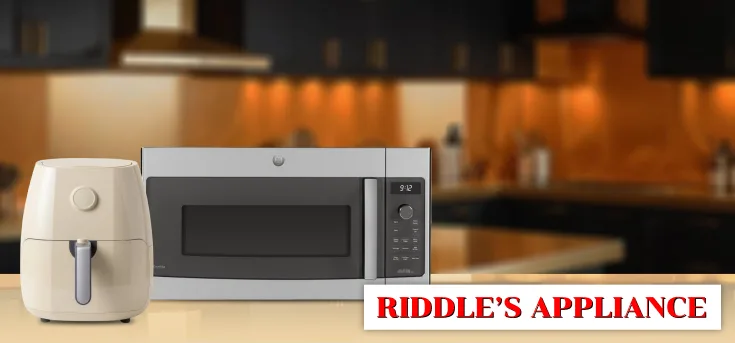
If you are thinking about buying an air fryer, you may wonder whether you still need a microwave. Both appliances make everyday cooking more convenient, but they work differently and are suited to different tasks. An air fryer is excellent for crisping foods, while a microwave is often the better choice for quickly heating leftovers, beverages, and frozen meals.
For some households, an air fryer can handle many cooking tasks. However, replacing a microwave entirely may mean giving up conveniences you use every day. Before deciding, consider your cooking habits, available kitchen space, and the types of meals you prepare most often.
How an Air Fryer and a Microwave Differ
An air fryer circulates hot air around food to cook and brown its surface. It works well for French fries, chicken wings, roasted vegetables, and other foods that benefit from a crisp exterior. Depending on the food and portion size, it may need several minutes to preheat and cook.
A microwave uses electromagnetic energy to heat food, making it especially useful for reheating meals, warming drinks, softening ingredients, and defrosting food. It usually handles these everyday tasks quickly without requiring preheating.
The main difference comes down to the results you want. An air fryer is useful when texture matters, while a microwave is convenient when speed and moisture retention are priorities.
What Can an Air Fryer Do Better Than a Microwave?
An air fryer is a practical choice for households that regularly prepare crispy foods. It can help restore texture to leftover pizza, heat breaded chicken, and cook frozen snacks without the soggy results that sometimes occur with microwave reheating.
It can also roast vegetables and prepare smaller portions of certain foods without heating a full-size oven. For people who cook quick lunches, snacks, or small dinners, this versatility can be valuable.
However, air fryers are not ideal for every dish. Soups, sauces, beverages, and foods that need even heating throughout are generally easier to handle in a microwave. Basket capacity can also limit how much food you prepare in one batch.
What Can a Microwave Do That an Air Fryer Cannot?
A microwave remains useful for tasks that require fast, convenient heating. You can warm a cup of coffee, heat a bowl of soup, soften butter, or reheat rice without waiting for an air fryer to heat up.
Microwaves are also convenient for defrosting frozen ingredients. Many models include weight-based or timed defrost settings that simplify the process. Sensor cooking features on selected models can adjust cooking time and power based on the food being heated.
An air fryer may warm some of these foods, but it generally requires more attention and may produce uneven or undesirable textures. Liquids are especially inconvenient to heat in a typical air fryer.
For busy households, keeping a microwave can save time during breakfast, lunch, and dinner preparation.
Can an Air Fryer Replace a Microwave for Everyday Cooking?
The answer depends on what you cook.
If your meals mostly consist of crispy snacks, roasted vegetables, and small portions of meat, an air fryer may cover many of your needs. If you frequently reheat leftovers, prepare frozen dinners, warm drinks, or defrost ingredients, a microwave will probably remain more useful.
Families may find that both appliances serve different purposes. One person can reheat a meal in the microwave while another prepares a crispy side dish in the air fryer.
For a smaller household, the decision may come down to available counter space. Before removing a microwave, think about how often you use its quick-heating and defrosting functions. If those tasks are part of your daily routine, keeping both appliances may be the more practical choice.
Pros and Cons of Replacing a Microwave With an Air Fryer
Advantages of using an air fryer
- Produces crispier results for suitable foods.
- Handles snacks, vegetables, and smaller portions conveniently.
- Can replace some oven cooking tasks.
- Offers versatility for roasting and browning.
Limitations to consider
- Takes longer for many reheating tasks.
- Is less convenient for beverages, soups, and other liquids.
- May require multiple batches for larger meals.
- Does not offer the same convenient defrosting functions as many microwaves.
An air fryer can be a valuable addition to your kitchen, but it is not automatically a complete replacement for a microwave. Consider the cooking functions you would miss before making the switch.
Choosing the Right Microwave for Your Kitchen
If you decide to keep a microwave, you do not have to settle for a basic model. Today's options include compact countertop units, larger-capacity microwaves, and models that combine microwave and convection cooking.
Countertop Microwave Ovens: Flexible and Convenient Options
Countertop Microwave Ovens are suitable for kitchens where installation flexibility matters. They can sit on a suitable countertop, and some models offer optional kits for alternative installation arrangements.
The GE Profile Countertop Microwave Oven, model PCHK11S1WSS, offers 1.1 cubic feet of capacity, 800 watts of microwave power, sensor cooking controls, and built-in Wi-Fi connectivity. It is worth considering for households that want a compact microwave with modern convenience features.
For families who regularly heat larger dishes, the GE Profile Countertop Microwave Oven, model PCST22U1WSS, provides 2.2 cubic feet of capacity, 1,100 watts of microwave power, a large 16.5-inch turntable, and sensor cooking controls. Its larger interior can be helpful when cookware size is a concern.
Over the Range Microwave Ovens: A Space-Saving Alternative
Over the Range Microwave Ovens install above the cooking range, helping free up countertop space. Many also include a ventilation system and a cooktop light, combining two useful kitchen functions.
The GE Spacemaker Over the Range Microwave Oven, model JVM3160DFBB, offers 1.6 cubic feet of capacity, 1,000 watts of microwave power, convenience cooking controls, and a two-speed, 300-CFM venting system. It is a practical option for households looking for everyday microwave functions in an over-the-range design.
Another option is the GE Spacemaker Over the Range Microwave Oven, model JVM6175SKSS. This 1.7-cubic-foot model includes sensor cooking controls, weight and time defrost, a 1,000-watt microwave, and two-speed, 300-CFM ventilation.
When comparing either model, check cabinet dimensions, electrical requirements, and venting arrangements before purchasing.
GE Spacemaker Microwaves: Are They a Practical Alternative to an Air Fryer?
For households that rely on quick reheating, GE Spacemaker microwaves offer a useful way to retain microwave convenience without using additional countertop space. A GE Spacemaker microwave oven may be especially appealing when the kitchen layout already includes a suitable space above the range.
If you are searching for a General Electric Spacemaker microwave oven, consider the features that match your routine, including capacity, defrost settings, cooking controls, and ventilation.
A GE Spacemaker over-the-range microwave is not a direct replacement for an air fryer when crisping food is the priority. However, it can complement an air fryer by handling liquids, leftovers, and quick heating while the air fryer takes care of foods that benefit from browning.
For another perspective on which appliance works best for different cooking tasks, read our Microwave vs. Air Fryer: Best Use-Case Comparison.
Should You Keep Both an Air Fryer and a Microwave?
For many homes, the most practical solution is to keep both appliances. They serve different purposes, and using each for the tasks it handles best can make meal preparation easier.
The GE Profile Countertop Convection Microwave Oven, model PCWK15C1WSS, is another option for shoppers who want more than conventional microwave heating. It offers 1.5 cubic feet of capacity, 1,000 watts of microwave power, convection cooking, combination cooking, and removable oven racks. These features provide additional flexibility for baking and browning while retaining microwave functionality.
If you prefer one appliance for multiple cooking methods, the GE Countertop Microwave with Air Fry and Convection, model GCST10A1WSS, combines microwave cooking with air frying, convection, and broiling. Its 1.0-cubic-foot capacity and 1,050-watt microwave power make it worth considering when counter space is limited and versatility is a priority.
Remember that combination appliances have their own capacity and cooking limitations. Compare the available functions with the foods you prepare most often before choosing one.
How to Choose the Right Appliance for Your Cooking Habits
Start by listing your most frequent kitchen tasks. If you mainly reheat meals and defrost ingredients, a microwave should remain high on your list. If you frequently prepare crispy snacks and roasted foods, an air fryer may be a worthwhile addition.
Next, measure your available space and compare appliance capacity. Consider whether an over-the-range installation would free up useful counter space or whether a countertop model would provide more flexibility.
At Riddle Appliance, we recommend comparing the functions you will use regularly rather than choosing an appliance based on one feature alone. Think about convenience, installation, capacity, and the meals your household prepares throughout the week.
Final Thoughts: Can an Air Fryer Replace a Microwave?
An air fryer can replace some microwave tasks, but it cannot match every part of a microwave's everyday convenience. It excels at crisping and browning, while a microwave remains better suited to quickly heating liquids, reheating many leftovers, and defrosting ingredients.
If your kitchen has room, keeping both appliances is often the most versatile choice. If you want to save space, a countertop convection microwave or a microwave with air-fry functionality may offer a useful middle ground.
Explore the available microwave options at Riddle Appliance and compare models to find the right fit for your kitchen, cooking habits, and space. Visit our website or get in touch with our team today to find the right microwave for your home!
Originally Posted At : Can an Air Fryer Replace a Microwave? Pros and Cons