Reimagining Education: A Glimpse Into April 2026’s EdTech Revolution
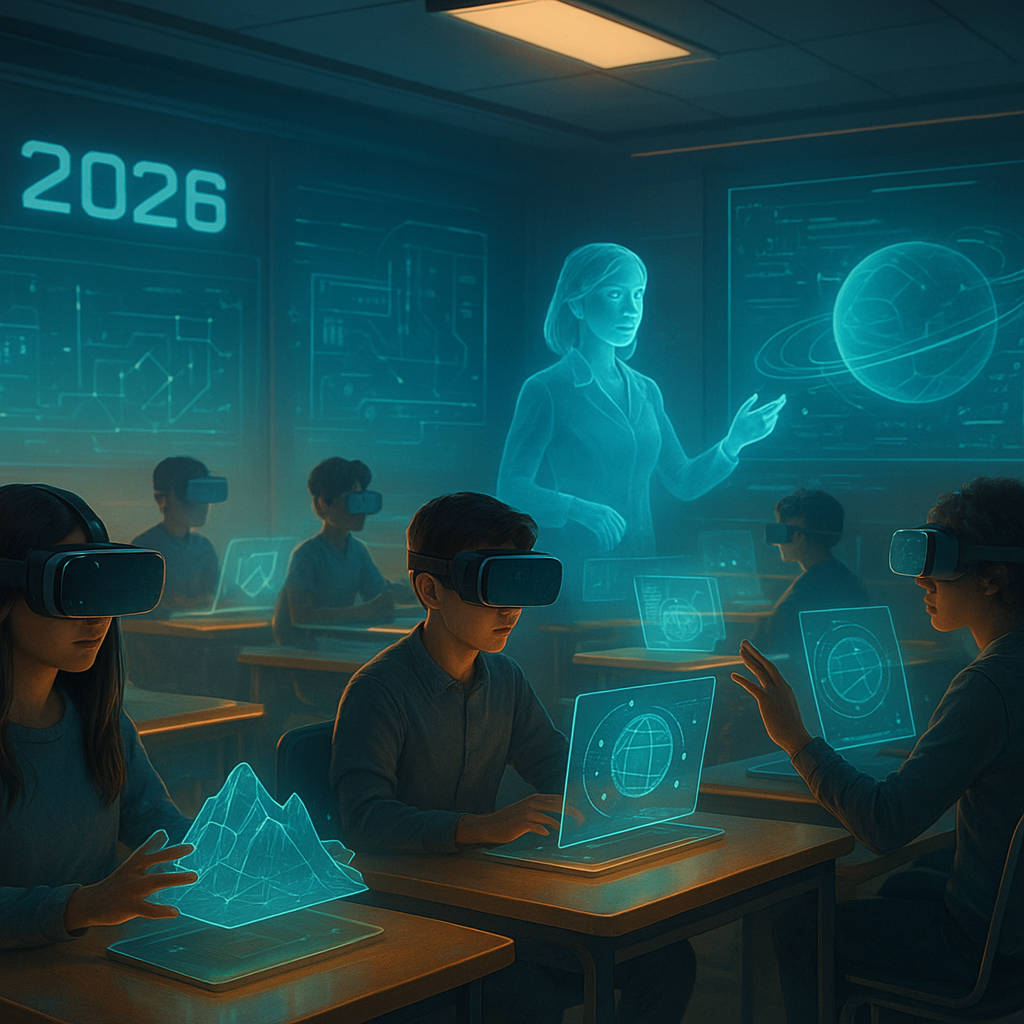
In a sunlit classroom of a public school in Seoul, a group of students don augmented reality (AR) glasses as their teacher initiates a virtual field trip to the Great Barrier Reef. Instead of textbook pages, vibrant coral reefs and marine creatures swirl around the room, engaging students in a multisensory experience. This scene, once a distant futuristic concept, is now a quotidian reality across many schools worldwide. The educational technology (edtech) landscape in April 2026 is marked by sweeping integration of artificial intelligence (AI) and immersive technologies, reshaping how knowledge is delivered, absorbed, and personalized.
According to a recent report by the International EdTech Association, global investments in AI-driven learning platforms have surpassed $35 billion in the first quarter of 2026 alone, underscoring the sector’s rapid growth and adoption. The pandemic years catalyzed a digital shift, but the momentum has only accelerated, with stakeholders—from governments to private enterprises—embracing the potential of technology to bridge educational gaps and enhance learning outcomes.
“The convergence of AI and immersive tech is not just augmenting education; it’s democratizing it,” states Dr. Lina Mendez, a leading education futurist. “We’re witnessing a fundamental shift from one-size-fits-all teaching to highly adaptive, learner-centric experiences.”
The following analysis unpacks the trajectory of edtech leading up to 2026, the current innovations defining the field, and the implications for educators, students, and policymakers alike.
From Chalkboards to Chatbots: Tracing EdTech’s Evolution
Understanding the current edtech landscape requires revisiting its origins and key milestones. The early 2000s introduced digital whiteboards and rudimentary online learning modules, but adoption was uneven and limited by infrastructure. The 2010s saw a surge in Massive Open Online Courses (MOOCs) and mobile learning apps, expanding access but still grappling with engagement and completion rates.
The COVID-19 pandemic of the early 2020s was a watershed moment. Forced remote learning accelerated digital adoption, exposing disparities in access but also spurring innovation. AI-powered tutoring systems emerged, enabling personalized feedback at scale. The mid-2020s then witnessed breakthroughs in AR and virtual reality (VR), offering experiential learning beyond traditional classrooms.
Key developments shaping the journey include:
- Adaptive Learning Algorithms: Early AI tools used data to customize practice exercises, but by 2024, platforms like LearnSphere and IntuitEdu integrated deep learning models to tailor content dynamically based on student performance and preferences.
- Immersive Simulations: VR labs and AR field trips became increasingly sophisticated, allowing learners to conduct virtual chemistry experiments or explore historical sites interactively.
- Hybrid Learning Ecosystems: The blending of in-person and digital instruction evolved into seamless models supported by cloud-based collaboration tools and real-time analytics.
“Edtech’s trajectory reflects a gradual but decisive departure from static resources towards interactive, data-driven environments,” notes Professor Rajesh Kumar, an education technology historian at the University of Cambridge.
Data-Driven Insights: The State of EdTech Adoption in 2026
Recent data paints a compelling picture of edtech’s penetration and efficacy. A 2026 UNESCO survey across 75 countries reports that 82% of secondary schools now integrate AI tools within their curricula, a near doubling from 43% in 2022. Furthermore, immersive technology usage has tripled in the last three years, with 58% of higher education institutions offering VR-supported courses.
Analyzing the impact reveals notable trends:
- Improved Learning Outcomes: Schools utilizing AI-driven platforms report average test score increases of 15% in STEM subjects, attributed to personalized pacing and targeted interventions.
- Engagement Boost: Immersive content has been linked to a 30% rise in student participation rates, particularly among neurodiverse learners and students with attention challenges.
- Teacher Empowerment: Educators are leveraging AI analytics for formative assessments and curriculum adjustment, reducing administrative burdens and enhancing instructional quality.
However, challenges remain. Equity in access to cutting-edge tools is uneven, with rural and economically disadvantaged regions lagging despite global initiatives. Privacy concerns around student data have intensified, prompting calls for robust regulatory frameworks.
Comparatively, countries like Singapore and Finland lead in edtech integration, supported by cohesive national strategies and public-private partnerships. In contrast, some developing nations struggle with infrastructure deficits and digital literacy gaps.
These dynamics underscore the importance of strategic policymaking to ensure that edtech’s benefits are inclusive and sustainable.
April 2026’s Innovations: AI, Immersion, and Beyond
The current quarter showcases remarkable technological advances shaping education:
- Generative AI Tutors: Platforms like TutorGPT 5.0 now provide nuanced, context-aware tutoring across multiple languages and disciplines. These AI tutors can simulate human-like dialogue, adapting explanations to a student’s cultural context and learning style.
- Metaverse Classrooms: The rise of educational metaverses allows students globally to collaborate in shared virtual spaces. Institutions such as GlobalEd University have launched degree programs entirely within these environments, blending social interaction with immersive learning.
- Neuroadaptive Interfaces: Experimental interfaces that monitor brain activity to adjust content difficulty in real-time are transitioning from labs to pilot classrooms, promising unprecedented personalization.
Additionally, open-source edtech initiatives have gained traction, promoting transparency and community-driven enhancements. Industry collaborations are also accelerating, exemplified by the recent partnership between EduVate and Holosim Technologies to develop scalable AR kits for underserved schools.
“The fusion of AI with immersive tech is enabling a multisensory, emotionally intelligent learning experience,” explains Maya Chen, Chief Innovation Officer at EduVate.
These innovations reflect a paradigm where technology is not a mere supplement but a foundational pillar of pedagogy.
Voices from the Field: Educator and Industry Perspectives
Educators and industry leaders share varied insights on this transformative phase:
- Teacher Adaptation: While many embrace AI tools for their ability to identify learning gaps, some express concerns about overreliance potentially diluting human judgment and creativity.
- Student Empowerment: Students report increased motivation and autonomy, though digital fatigue and screen time management remain areas of focus.
- Industry Expectations: Edtech companies emphasize scalability and interoperability, seeking to integrate AI and immersive solutions across diverse educational systems.
Dr. Helena Ortiz, principal of a bilingual school in Mexico City, highlights the human-technology balance:
“Technology should amplify human connection, not replace it. Our goal is to nurture critical thinking and empathy alongside digital skills.”
Meanwhile, investors eye edtech as a resilient sector with growth potential, driven by expanding markets in Asia and Africa. Regulatory experts advocate for frameworks that safeguard privacy without stifling innovation, echoing themes discussed in related analyses on privacy in hyperconnected environments at TheOmniBuzz.
Looking Ahead: What April 2026 Signals for Education’s Future
As April 2026 closes, the edtech ecosystem stands at an inflection point. The integration of AI and immersive technologies promises to redefine educational norms, but success hinges on addressing persistent inequities and ethical concerns.
Key areas to watch include:
- Policy Evolution: Governments will need to craft balanced regulations that protect learners while fostering innovation.
- Infrastructure Expansion: Closing the digital divide remains critical, with investment in broadband and device access continuing globally.
- Pedagogical Innovation: Educator training must evolve to harness tech tools effectively and maintain human-centered teaching.
- Data Ethics: Transparent data practices and consent frameworks will gain prominence as AI systems become more embedded in education.
“The future of learning depends on our collective ability to integrate technology ethically and equitably,” asserts Dr. Mendez.
In parallel, students are poised to benefit from increasingly personalized, engaging, and accessible educational experiences, potentially transforming outcomes across socioeconomic boundaries.
For those interested in study optimization strategies leveraging technology, TheOmniBuzz’s recent feature Unlocking Peak Performance: Proven Study Techniques Transforming April 2026 offers valuable insights into contemporary learner habits.
As educational institutions, technology providers, and policymakers continue to collaborate, April 2026 marks not just a moment of transformation but the foundation of a resilient, inclusive, and innovative educational future.