A new patient finds your practice online, likes what they see, and calls to book. It's 12:40 PM, your one front desk person is at lunch, and the phone rings out to voicemail. Most callers won't leave a message, and many won't call back. They simply dial the next practice on the list. That single missed call can be a lost patient worth thousands over their lifetime, and it happens at predictable moments all day long: the morning rush, the lunch gap, a same day emergency that pulls reception into the operatory, and every evening after you close.
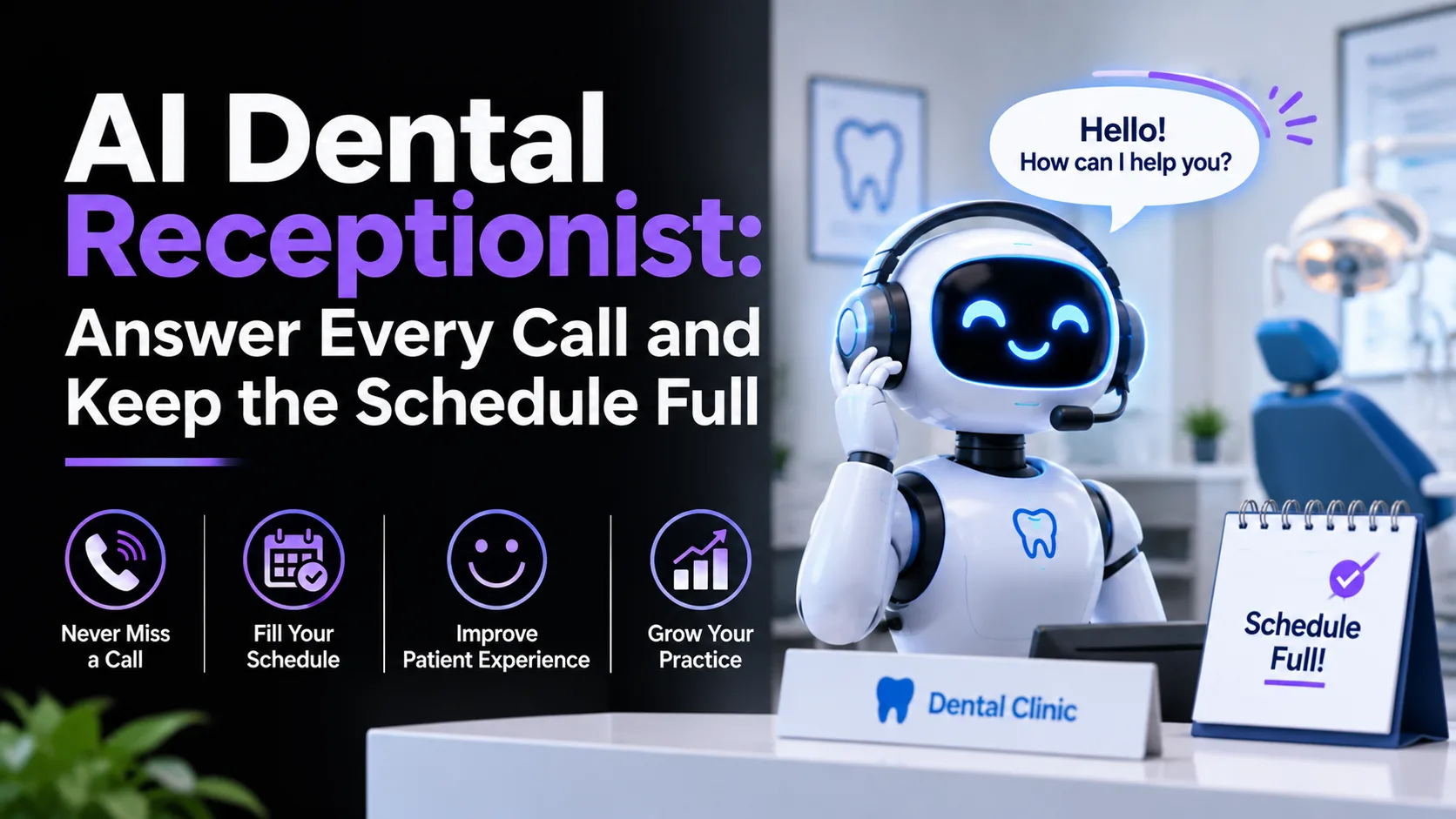
This is where an AI dental receptionist has become a practical solution. Instead of relying entirely on one or two front desk staff to catch every call while also checking patients in, verifying insurance, and managing the schedule, practices can automate the routine conversations while keeping each interaction natural and friendly. The right system doesn't just answer the phone. It helps a dental practice respond instantly, book more appointments, and keep the chair full without piling more pressure on the team.
Understanding What an AI Dental Receptionist Does
A modern AI dental receptionist uses conversational artificial intelligence to hold phone conversations that sound natural rather than scripted. For a dental practice, that means answering inbound calls around the clock, booking and rescheduling appointments, sending reminders, answering common questions about hours and services, filling cancellations from a waitlist, and transferring the call to a team member when a situation genuinely needs a human.
Unlike a traditional phone menu or a basic chatbot, an AI receptionist for dental offices understands what a caller actually means, adapts to how different people speak, and responds in real time. A patient can say "I need to book a cleaning and I have a tooth that's been bothering me" and get an immediate, helpful response instead of a voicemail box.
That responsiveness matters because dental front desks miss calls at specific, predictable times. A large share of call volume arrives after hours, and new patient calls in particular tend to cluster around midday and the evening, exactly when staff are stretched thinnest. A practice that answers consistently captures the patients a busy front desk would otherwise lose.
Did You Know? Most callers who reach a voicemail box never leave a message, and callers on hold tend to hang up within a minute and a half. For a dental practice, that means an unanswered phone usually isn't a message waiting for you in the morning. It's a patient who already booked somewhere else.
Start With Your Practice's Needs Before Comparing Features
Choosing the right virtual dental receptionist begins with understanding your own goals. A single location general practice focused on new patient growth has different priorities than a multi location group that needs overflow handling, after hours coverage, and consistent scheduling across offices.
Mapping your real requirements first prevents you from paying for features you'll never use, and makes sure the system fits how your practice already runs instead of forcing a rebuild of your workflow. A few questions worth answering before you evaluate any platform:
- When do you miss the most calls the morning rush, lunch, after hours, or during emergencies?
- Do you need full 24/7 coverage, or mainly overflow and after hours support?
- Should the system book directly into your practice management software and work a cancellation waitlist?
- How should new patient calls, emergencies, and routine questions be handled or routed?
A solution that solves today's problems while leaving room to grow usually delivers the best long term value.
Look Beyond Automation Alone
Automation on its own should never be the deciding factor. The quality of each conversation matters just as much as the number of calls handled. A patient calling about tooth pain, or a nervous first timer choosing a dentist, needs a warm, clear interaction that reflects well on your practice.
A reliable AI dental receptionist should understand natural language, recognize different accents and speaking styles, and respond intelligently as the conversation unfolds. It's equally important to check how the system handles the messy parts of real calls: interruptions, unexpected questions, spelling out names, a same day emergency that needs triage, and a clean transfer to a live team member when the situation calls for one.
Expert Insight The practices that get the most from voice AI aim it at their two biggest leaks: new patient calls that ring out, and cancellations that leave a gap in the schedule. Let the AI answer instantly and work the waitlist, so your front desk can focus on the patients standing right in front of them.
Integration and Data Security Matter
Very few practices run on a single piece of software. Patient information usually lives in a practice management or scheduling system, and sometimes a separate CRM for new patient follow up. An AI dental receptionist that connects to these existing systems reduces double data entry, keeps records accurate, and creates a smooth workflow instead of another disconnected silo. Platforms like Brilo AI, for example, integrate with tools such as Salesforce, HubSpot, Cal.com, and common EMRs so bookings and call outcomes sync automatically.
Security deserves extra weight in healthcare. Dental calls routinely involve protected health information, which makes secure data handling and privacy compliance essential rather than optional. Any platform you consider should follow recognized healthcare privacy standards, use encrypted channels, and be transparent about how data is stored. A HIPAA compliant AI receptionist with a signed BAA should be the baseline, not a premium extra.
Common Mistake Choosing a general purpose voice bot that wasn't built for healthcare. Many handle a restaurant booking fine but fall short on medical grade privacy, dental terminology, and safe handling of an emergency call. That's exactly where a dental practice can least afford a gap.
Evaluate Reporting, Reliability, and Scalability
One of the quieter advantages of an AI dental receptionist is visibility. Strong reporting shows how many calls came in, what patients asked about, how many booked, and where callers dropped off. Weekly totals often hide the real problem, so call data broken out by hour and day helps you see exactly when your front desk is being overwhelmed.
Scalability matters too. Call volume spikes on Monday mornings, after a marketing push, or during a busy season. A system that handles a quiet afternoon should also hold up during a rush without dropping calls or slowing down. Choosing a platform that scales cleanly saves an expensive migration later, when you're busier and have less time to switch.
Reliability sits underneath all of it. Because a virtual receptionist often covers nights, weekends, and lunch breaks, it needs to answer consistently every time. A patient with a dental emergency at 9 PM shouldn't reach a dead line.
Pro Tip Before going live, test the system on your hardest calls: a new patient booking, an after hours emergency, a reschedule request, and a transfer to a human. How it handles the emergency and how smoothly it books a new patient tells you far more than any feature list.
Why the Right Choice Delivers Long Term Results
Bringing in an AI dental receptionist isn't only about reducing manual work. It's about capturing every new patient call, giving patients a consistent experience, and keeping the schedule full without burning out your front desk.
Practices that weigh conversation quality, integrations, security, reporting, and scalability tend to see the clearest improvements fewer missed calls, fewer empty slots, and more new patients booked. The most successful practices don't treat AI as a replacement for their team. They use it to extend what their team can do, cover the hours and gaps humans can't, and strengthen the patient relationships that keep a practice growing.
Conclusion
Choosing the right front desk automation comes down to balancing technology with the real needs of your practice and your patients. The best AI dental receptionist should hold natural conversations, connect with your existing scheduling and records, protect patient data to healthcare standards, and scale as your practice grows. By focusing on long term value rather than a flashy feature checklist, practices can answer every call, book more new patients, and keep the chair full from the first ring onward.
If you're looking for an intelligent platform built for exactly this, Brilo AI offers HIPAA conscious AI voice agents designed for healthcare answering 100% of patient calls 24/7, booking appointments, handling routine queries, and escalating to staff only when needed. You can see how it fits your practice by booking a quick 15 minute call.
Frequently Asked Questions
What is an AI dental receptionist? It's a voice based assistant that uses conversational AI to answer patient calls, book and reschedule appointments, send reminders, fill cancellations from a waitlist, answer common questions, and transfer callers to staff when needed working 24/7 without breaks or voicemail.
Can an AI dental receptionist book appointments into our practice management software? Yes. Most modern platforms integrate with scheduling tools, calendars, and practice management or EMR systems so the AI can check real availability, confirm a booking, and log it automatically without staff re entering anything. Confirm that a given platform supports your specific software.
Is an AI dental receptionist HIPAA compliant? Reputable healthcare focused providers use encryption, secure workflows, and privacy controls, and will sign a Business Associate Agreement (BAA). Always confirm compliance and data handling practices before choosing a platform, since not every general voice bot meets medical standards.
How does an AI dental receptionist help reduce no shows and fill cancellations? By confirming appointments, sending reminders, and making rescheduling easy at any hour, it helps keep the schedule on track. Many systems can also work a waitlist, reaching out to fill a cancelled slot quickly rather than leaving the chair empty.
Can it handle dental emergencies? A well built AI dental receptionist can answer emergency calls around the clock, gather the caller's details, and route or escalate urgent situations to staff or an on call protocol according to the rules you set, so patients aren't left with voicemail after hours.
Will patients be able to tell they're talking to AI? A well built AI voice agent sounds natural, pauses, and responds conversationally rather than robotically. Many patients complete routine calls smoothly, and the system transfers to a human whenever the situation calls for one.
Does an AI dental receptionist replace front desk staff? No it handles repetitive, predictable calls so staff can focus on in office patients and complex situations. It extends your team's capacity and covers the hours and gaps humans can't, rather than replacing them.