The growing demand for intelligent automation is encouraging enterprises to explore AI systems that can handle multiple responsibilities simultaneously. Instead of depending on a single AI model for every task, businesses are increasingly exploring collaborative systems where specialized agents work together toward shared objectives. This growing interest is bringing Multi-Agent AI Development into enterprise technology strategies. Through advanced AI Agent Development, organizations can build intelligent agents that communicate, exchange information, divide responsibilities, and coordinate complex workflows. This approach creates new opportunities for businesses to automate interconnected processes and manage demanding operations more effectively.
What Is Multi-Agent AI and How Does It Work?
Multi-Agent AI is an approach where multiple autonomous AI agents collaborate to complete tasks or achieve a common goal. Each agent can have a specific role, knowledge base, and set of responsibilities. For example, in an enterprise workflow, one agent can collect information, another can analyze the data, and a third can generate reports based on the findings. These agents communicate through defined protocols and share relevant information to coordinate their activities. An orchestration system manages task distribution, monitors progress, and ensures that individual agents contribute toward the overall objective.
Why Are Enterprises Moving Toward Multi-Agent AI Systems?
Enterprises handle interconnected activities that often require different types of knowledge and decision-making. A single AI agent may struggle with workflows involving multiple stages, specialized tasks, and different information sources. Multi-agent systems address these requirements by distributing responsibilities among specialized agents. They also support parallel task execution, allowing different operations to progress simultaneously. Businesses are exploring this architecture to reduce manual coordination, improve workflow management, and build AI systems that can adapt to changing operational requirements.
Key Business Applications of Multi-Agent AI Development
Customer Service and Support Automation
Multiple AI agents can collaborate to manage customer interactions, understand requests, retrieve relevant information, and resolve common support queries. One agent can identify customer intent, another can access account information, and a specialized agent can recommend suitable solutions. This coordinated approach supports more organized customer service operations.
Financial Analysis and Risk Management
Financial institutions can use multi-agent systems to collect financial information, analyze market trends, identify unusual transactions, and assess potential risks. Specialized agents can handle different analytical responsibilities and combine their findings to support financial research and risk assessment.
Supply Chain and Inventory Management
Multi-agent AI can coordinate inventory monitoring, demand forecasting, supplier communication, and logistics planning. Different agents can analyze stock levels, track delivery information, and identify potential supply disruptions, helping organizations manage interconnected supply chain activities.
Software Development and IT Operations
In software development, specialized agents can assist with code generation, debugging, testing, documentation, and deployment support. IT-focused agents can also monitor system activities, identify technical issues, and assist with troubleshooting tasks.
Technologies Behind Multi-Agent AI Systems
Large Language Models (LLMs)
LLMs provide reasoning, language understanding, and content generation capabilities that help AI agents interpret instructions, communicate, and perform assigned tasks.
Agent Communication Protocols
Communication protocols allow agents to exchange messages, share information, and coordinate activities. Standards such as Agent2Agent (A2A) support communication and collaboration between different agents.
AI Agent Orchestration Frameworks
Orchestration frameworks manage agent workflows, task distribution, execution sequences, and interactions between specialized agents. They help coordinate complex multi-agent operations.
Retrieval-Augmented Generation (RAG)
RAG connects AI agents with external knowledge sources and enterprise databases. It allows agents to retrieve relevant information before generating responses or performing knowledge-based tasks.
Memory and Context Management
Memory systems help agents retain relevant information from previous interactions and maintain context throughout multi-step workflows. This supports continuity and more consistent task execution.
Benefits of Adopting Multi-Agent AI Development
Improved Task Coordination and Collaboration
Specialized agents can work together by sharing information and coordinating responsibilities. This reduces the need for manual coordination across interconnected tasks.
Faster Execution of Complex Workflows
Multiple agents can handle different stages of a workflow simultaneously. Parallel execution can reduce processing delays and help enterprises complete complex tasks more efficiently.
Increased Operational Efficiency and Productivity
Automating repetitive responsibilities and distributing tasks among specialized agents helps employees focus on strategic activities while reducing manual workloads.
Scalable and Flexible AI Operations
Businesses can introduce additional agents, assign new responsibilities, and modify workflows as operational requirements change. This flexibility supports expanding enterprise AI applications.
What Should Enterprises Consider Before Implementing Multi-Agent AI?
Defining Agent Roles and Responsibilities
Enterprises should clearly establish each agent's purpose, assigned tasks, permissions, and expected outputs to avoid overlapping responsibilities and unnecessary coordination.
Data Security and Access Management
Organizations must implement appropriate authentication, access controls, data protection measures, and monitoring to secure information exchanged between agents.
System Integration and Compatibility
Multi-agent solutions should connect effectively with existing enterprise applications, databases, APIs, and infrastructure to support seamless information exchange.
Monitoring and Performance Evaluation
Businesses should evaluate agent accuracy, execution time, communication efficiency, and workflow outcomes. Continuous monitoring helps identify issues and improve system performance.
Why Choose Osiz Technologies for Multi-Agent AI Development?
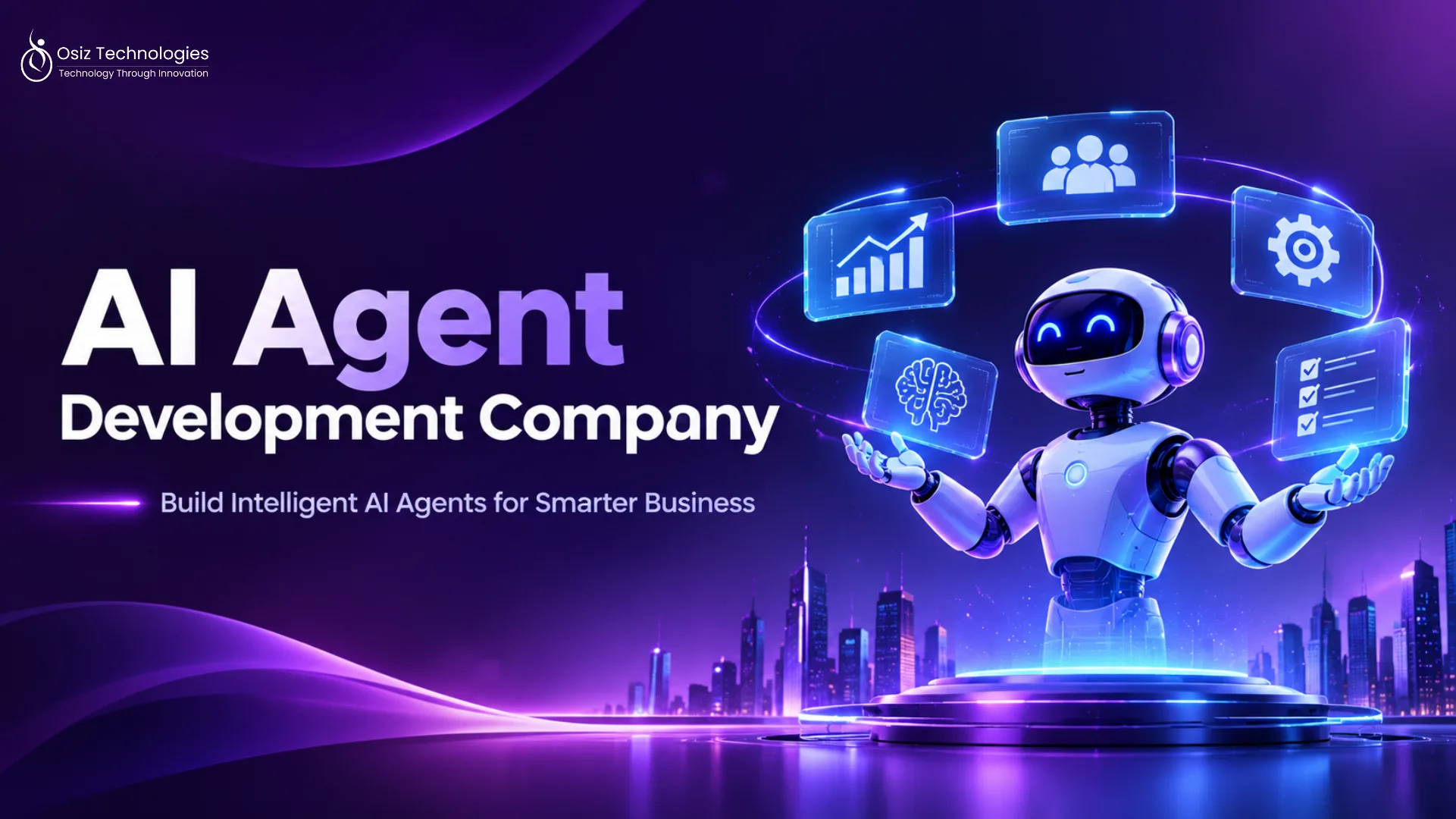
Osiz Technologies is a leading AI Agent Development Company delivering intelligent AI solutions tailored to enterprise requirements. Our AI Agent Development services focus on building collaborative multi-agent systems that support workflow automation, intelligent task execution, and coordinated operations. We work with advanced AI technologies, LLMs, agent orchestration frameworks, and RAG to develop solutions suited to different business applications. By understanding organizational requirements and aligning AI capabilities with operational objectives, Osiz Technologies helps enterprises explore the potential of multi-agent systems and build intelligent solutions for evolving business needs.