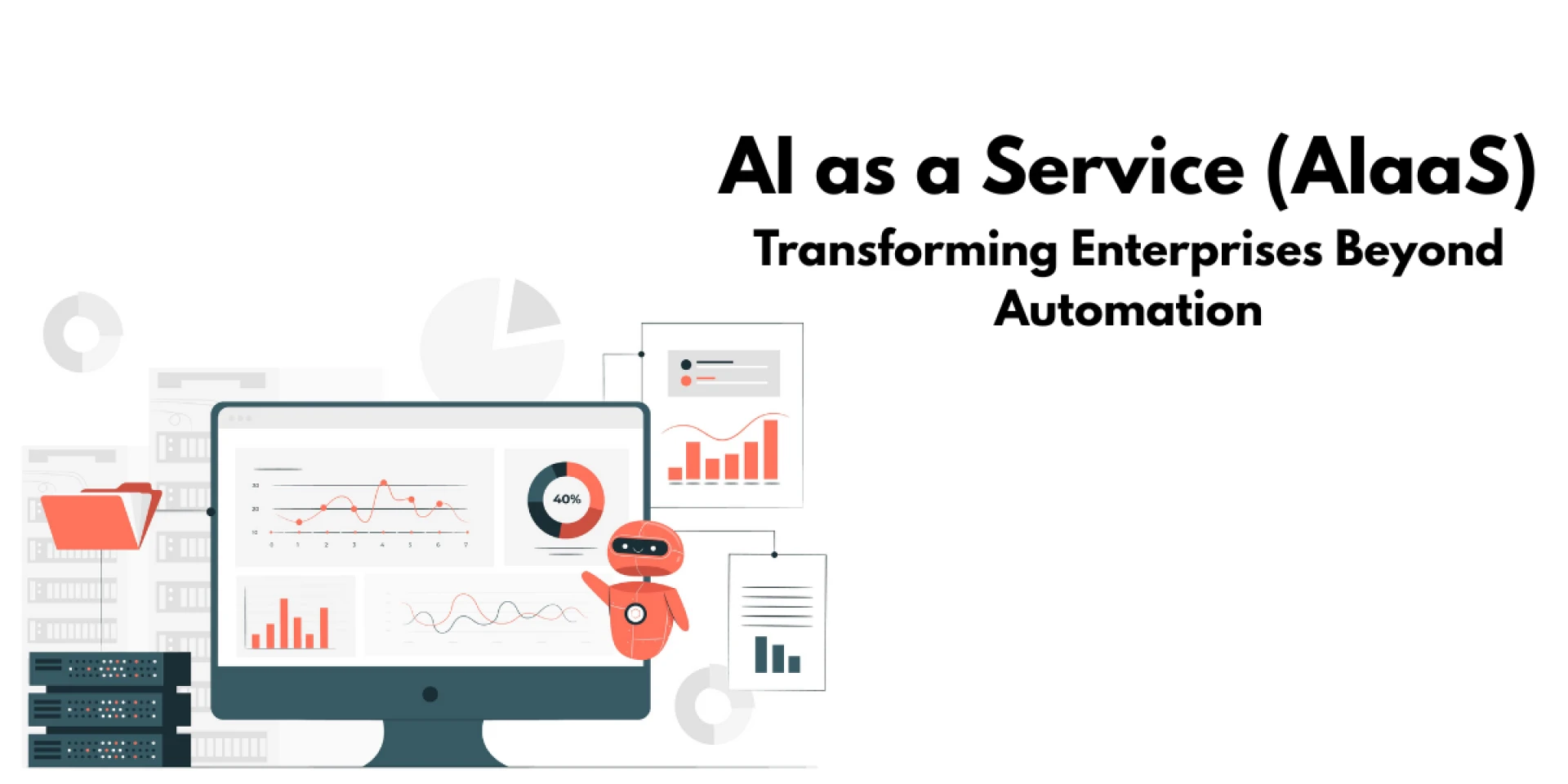
Beyond Buzzwords — What AIaaS Means in 2025
Artificial Intelligence is no longer a futuristic concept—it’s a current-day enterprise necessity. But in 2025, the narrative has shifted. AI is no longer just a tool for automating simple tasks; it’s a critical lever for transformation. This is where AI as a Service (AIaaS) steps in, redefining how businesses adopt, scale, and evolve their technology infrastructure.
AIaaS allows enterprises to access sophisticated AI capabilities without building expensive in-house systems. By moving beyond traditional automation, AI Service offers intelligent, adaptive solutions that can learn, improve, and contribute to strategic decision-making. It's not just about doing things faster—it's about doing things smarter.
The Evolution from Automation to Intelligent Systems
For years, enterprises relied on traditional automation to streamline repetitive tasks—things like invoice processing, email sorting, or scheduling. These systems worked on predefined rules and couldn’t adapt to changes or learn from data. While effective in improving efficiency, they offered no intelligence.
Modern businesses, however, demand more than static rule engines. They need systems that can interpret data, make recommendations, and evolve over time. This is where AI automation solutions step in. These tools are built to analyze context, handle unstructured data, and provide real-time insights.
Enter Intelligent Process Automation (IPA)—a combination of AI and automation technologies. With IPA, businesses are not only automating workflows but also adding cognitive capabilities like natural language processing and predictive analytics. The result is a smarter, more responsive system that supports strategic growth.
AIaaS becomes the critical enabler here, making these advanced technologies accessible via cloud platforms. Instead of building complex models from scratch, enterprises can now integrate AI through flexible, pay-as-you-go models—closing the gap between outdated tools and true intelligence.
What is AIaaS and Why It Matters Now
AI as a Service is a cloud-based delivery model that allows organizations to access AI-powered tools and infrastructure on-demand. This could be anything from chatbots and facial recognition APIs to advanced predictive analytics or natural language understanding.
AIaaS eliminates the need for enterprises to develop AI models from the ground up. Companies like Google Cloud, Microsoft Azure, and AWS offer pre-built models and custom training environments that can be integrated into existing workflows.
There are three common delivery formats:
API-based services: Plug-and-play tools like vision recognition or language translation.
Platform-as-a-Service (PaaS): Cloud platforms that let you train and deploy your own models.
Hybrid AIaaS solutions: Combines off-the-shelf tools with customizable AI modules.
This cloud-based approach reduces costs, accelerates deployment, and democratizes AI—enabling even non-tech companies to innovate using intelligent systems.
Key Benefits of AIaaS for Enterprises
Scalability and Cost-Effectiveness
Building an AI system from scratch requires significant investment in infrastructure, talent, and training data. AIaaS removes that barrier by offering subscription-based or consumption-based pricing models. Businesses can scale their AI usage based on demand, ensuring high efficiency with lower overhead.
Speed of Deployment
AIaaS solutions are often ready out of the box. Enterprises can go from concept to deployment within weeks, not months. Whether you're implementing a customer service chatbot or predictive maintenance system, the cloud infrastructure and pre-trained models accelerate time-to-value.
Democratizing Access to AI
Not every company can hire data scientists or build machine learning pipelines. AIaaS opens the door for smaller businesses or departments to access world-class AI capabilities, fostering innovation across all levels of an organization.
Enhanced Customer and Operational Experiences
By integrating enterprise automation with AIaaS tools, businesses can deliver personalized experiences, automate customer interactions, and gain deep operational insights. This translates into better engagement, higher efficiency, and stronger decision-making across the board.
AI Strategy Consulting: Making AIaaS Work for You
While AIaaS offers powerful tools, its effectiveness depends heavily on strategic implementation. Many companies dive into AI without a clear roadmap and end up with disjointed solutions that don’t align with their business goals. That’s where AI strategy consulting becomes critical.
Consultants help enterprises identify the right use cases, define measurable goals, and align AI initiatives with broader digital transformation plans. Whether it's customer retention, supply chain optimization, or fraud detection, an AI strategy ensures technology is being applied with purpose.
Consulting also aids in choosing between in-house integration or leveraging third-party services. Some enterprises may benefit from full control and customization, while others are better off adopting pre-built AIaaS modules. Either way, a strategic approach minimizes risk and maximizes ROI.
The Future of AIaaS: What’s Next?
The AIaaS landscape is evolving fast. Emerging technologies are pushing boundaries and reshaping how businesses approach AI:
AutoML: Automated machine learning enables non-technical users to build and train custom models. This means marketing teams, HR professionals, or operations managers can deploy AI solutions without writing code—revolutionizing accessibility.
Edge AI: Processing data closer to the source—on devices or local servers—reduces latency and improves real-time responsiveness. Edge AIaaS will become vital in industries like healthcare, logistics, and manufacturing where speed is critical.
No-Code AI Platforms: These platforms allow users to build AI workflows with visual tools rather than programming. Expect widespread adoption of no-code platforms, especially in sectors like retail, education, and finance.
The Role of Generative AI: Generative AI is expanding AIaaS into new areas, such as content creation, design, and knowledge management. These tools can produce human-like text, images, and even code—enabling next-level automation and personalization in enterprise environments.
Over the next 3–5 years, AIaaS will likely become a default part of every enterprise’s tech stack. Companies that invest early will enjoy compounding benefits in innovation, agility, and competitive positioning.
Conclusion: AIaaS as a Strategic Enabler
In a world that values intelligence over efficiency, AI as a Service stands out as a critical component of enterprise success. It empowers businesses to leap beyond static automation and embrace dynamic, data-driven operations. With benefits like cost savings, rapid deployment, and democratized access, AIaaS is not just a tool—it’s a transformation engine.
To fully realize the potential of AIaaS, organizations must move with purpose. With the right strategy, partners, and mindset, enterprises of all sizes can use AIaaS to drive meaningful innovation and sustainable growth.