
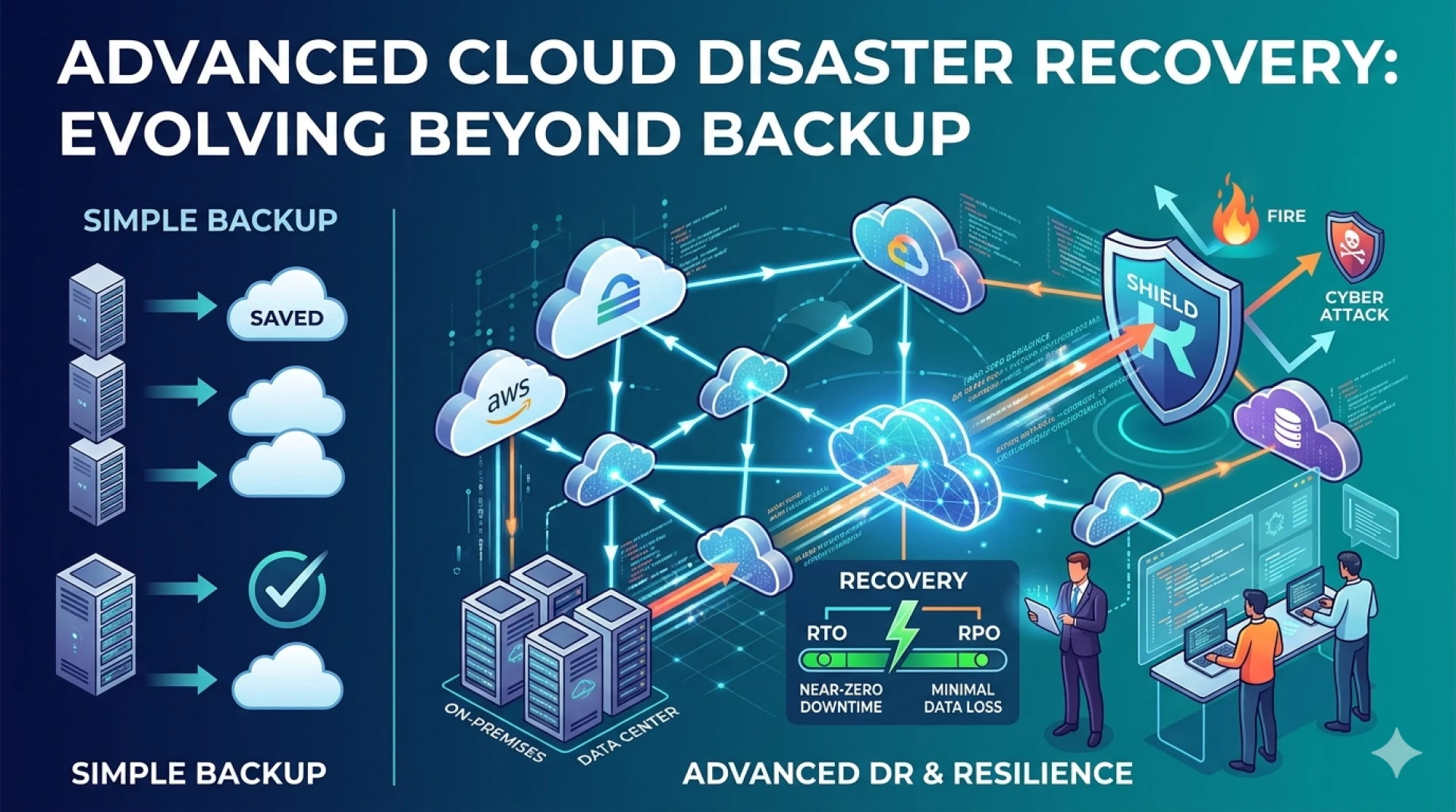
Organizations can no longer rely on simple data backups. The modern threat landscape demands a highly sophisticated approach to business continuity. Advanced cloud-based disaster recovery (DR) transcends legacy methods by offering dynamic, scalable, and automated resilience. Traditional disaster recovery often fails due to high latency, manual failover bottlenecks, and rigid infrastructure. Disaster Recovery as a Service (DRaaS) resolves these inadequacies, ensuring enterprise workloads remain operational even during catastrophic system failures.
Key Components of a Sophisticated Cloud DR Strategy
Granular Recovery Point and Recovery Time Objectives
Achieving near-zero Recovery Time Objectives (RTO) and Recovery Point Objectives (RPO) requires advanced synchronous and asynchronous replication. IT teams must calculate the impact of data churn and network latency on replication queues. High data change rates can overwhelm available bandwidth, necessitating WAN optimization and deduplication protocols to maintain strict RPO service level agreements.
Orchestrated Failover and Failback Processes
Manual interventions during an outage invite human error. Modern cloud disaster recovery relies on automated runbooks and workflow automation to orchestrate the exact startup sequence of applications, databases, and network appliances. Testing these methodologies is equally critical. IT departments must move beyond simple tabletop exercises and execute full simulated failovers in isolated cloud networking bubbles to validate their automated workflows without disrupting production.
Hybrid Cloud DR Architectures
Enterprise infrastructure rarely exists in a single ecosystem. Robust disaster recovery strategies utilize hybrid architectures, spanning on-premise to cloud, cloud to cloud, and multi-cloud setups. Maintaining data synchronization and consistency across these diverse environments requires continuous replication technologies that can automatically translate hypervisor formats on the fly.
Advanced DR Capabilities and Considerations
Protecting data integrity requires proactive defense mechanisms. Immutable backups act as a mandatory shield against ransomware, ensuring that once data is written to the cloud storage target, it cannot be altered, deleted, or encrypted by malicious actors.
Artificial intelligence and machine learning are also revolutionizing proactive disaster recovery. AI-driven anomaly detection continuously monitors backup data streams for unusual encryption patterns or massive deletion events. This halts compromised backup appliances before they can overwrite clean data at the DR site.
Cost optimization requires equal attention. IT leaders optimize cloud DR expenses by implementing tiered storage strategies, moving aging snapshots to cold storage. Utilizing reserved instances and on-demand scaling for DR workloads ensures that compute costs remain minimal during normal operations, scaling rapidly only when an actual failover event occurs.
Finally, organizations must navigate complex regulatory compliance and data sovereignty requirements. Encrypting data in transit and at rest, while ensuring that cloud failover regions comply with local data localization laws, is non-negotiable for global enterprise operations.
Implementing a Robust Cloud DR Solution
Building a resilient architecture requires strict vendor selection criteria. Enterprise-grade DRaaS providers must offer transparent SLA guarantees, native hypervisor integration, and comprehensive API access for custom automation.
Integration challenges frequently arise around legacy applications and complex IP networking topologies. Best practices dictate mapping application dependencies thoroughly before initiating replication. Furthermore, a successful deployment requires continuous improvement. Rigorous infrastructure monitoring, automated compliance testing, and ongoing architectural adaptation ensure the DR strategy evolves alongside your primary production environment.
The Intelligent Future of Disaster Recovery
The trajectory of disaster recovery points toward fully autonomous, self-healing infrastructure. As cloud environments become more complex, relying on intelligent, automated resilience strategies is the most reliable way to guarantee continuous uptime. Organizations must critically evaluate their current recovery protocols. Elevate your organization's disaster recovery posture today by auditing your existing RTOs, testing your failover automation, and adopting advanced cloud-native replication technologies.