
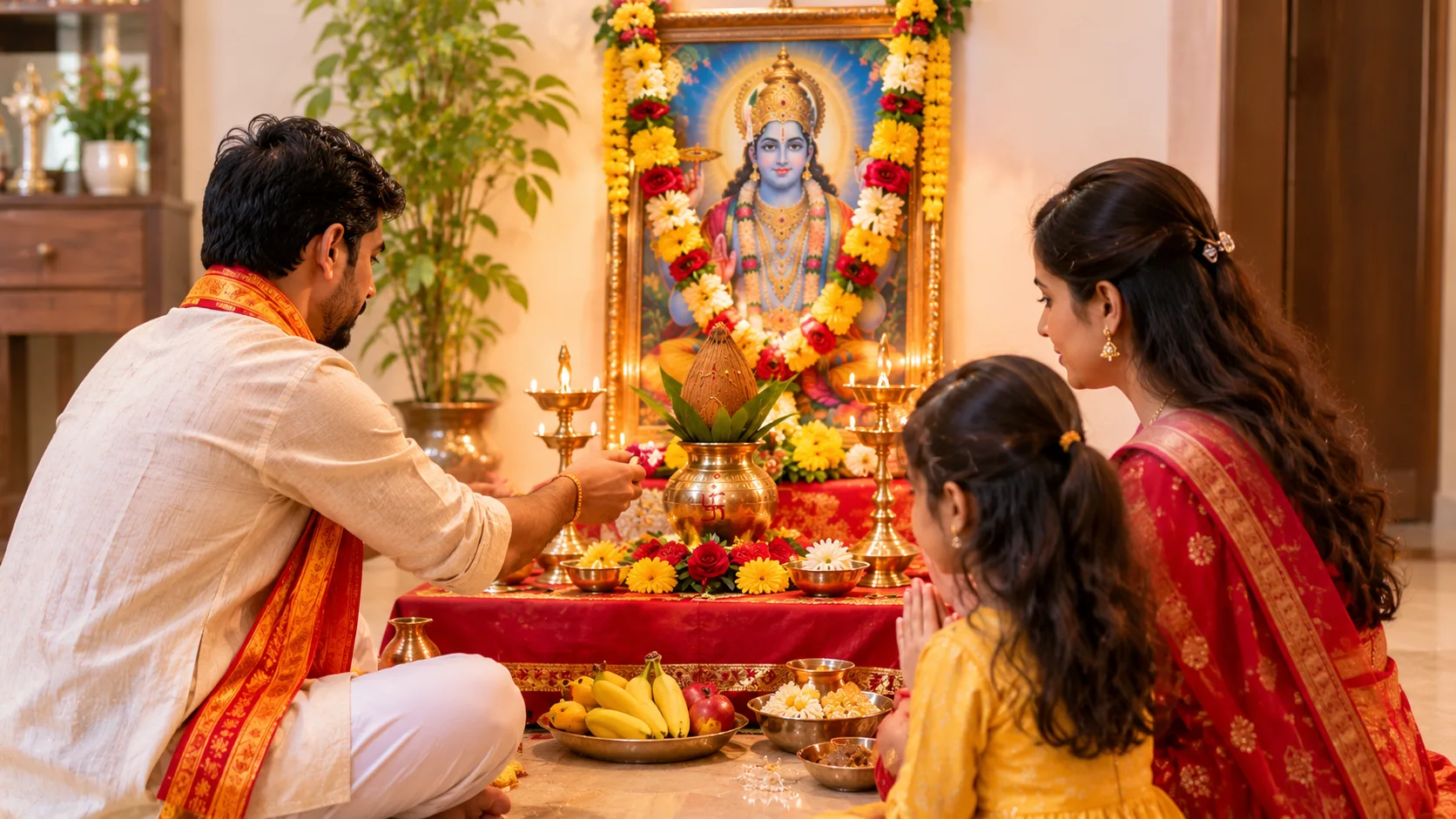
A Complete Guide to Performing Satyanarayan Pooja at Home
Satyanarayan Pooja is one of the most cherished Hindu religious ceremonies dedicated to Lord Vishnu. It is traditionally performed to seek divine blessings, express gratitude and promote peace, happiness and prosperity within the family. The ceremony holds special significance during Purnima, housewarming celebrations, weddings and other important family occasions.
Performing Satyanarayan Puja at home allows family members to come together and participate in a meaningful spiritual experience. The traditional rituals include preparing a sacred altar, offering flowers and fruits, reciting Satyanarayan Katha and distributing Prasad. Each stage carries spiritual significance and encourages values such as honesty, devotion, humility and gratitude.
Choosing an Auspicious Day for the Ceremony
Purnima, or the full moon day, is commonly considered an auspicious occasion for performing Satyanarayan Pooja. However, families may also organise the ceremony during birthdays, anniversaries, Griha Pravesh and other significant occasions. Consulting an experienced pandit can help determine a suitable date and Muhurat according to traditional Panchang calculations and family customs.
Essential Samagri Required for Satyanarayan Pooja
Preparing the required Samagri beforehand helps ensure that the ceremony proceeds smoothly. Common items include a Kalash, coconut, mango leaves, flowers, garlands, Haldi, Kumkum, Akshat, incense sticks, camphor, a Diya, fruits, Panchamrit and traditional Prasad ingredients. A clean wooden Chowki covered with a red or yellow cloth is generally used to arrange the deity's image and offerings.
Understanding the Traditional Puja Vidhi
The ceremony generally begins with Ganesh Puja, followed by Sankalp and prayers to Lord Vishnu. Devotees offer flowers, fruits, Tulsi leaves and traditional Bhog while the pandit guides the prescribed rituals. One of the most important stages is the recitation of Satyanarayan Katha, which consists of five chapters explaining the importance of faith, truthfulness, gratitude and keeping promises.
After the Katha, devotees perform Aarti and distribute Prasad among family members and guests. This concluding practice represents shared devotion and respect for divine blessings.
The Importance of Devotion and Proper Guidance
Every ritual should be performed with sincerity and respect for established traditions. Families unfamiliar with the procedure may seek assistance from an experienced pandit to understand the mantras, offerings and sequence of worship. Those living abroad or facing scheduling difficulties can also consider Satyanarayan Puja Online arrangements.
Namanpuja offers authentic Hindu pujas and Vedic rituals at home or online, performed by experienced pandits. Book traditional pujas conveniently across India and abroad.
Ultimately, Satyanarayan Pooja is more than a religious ceremony. Its teachings encourage individuals to practise honesty, humility and gratitude in everyday life. Understanding these values makes the observance a meaningful tradition that families can preserve and pass on to future generations.