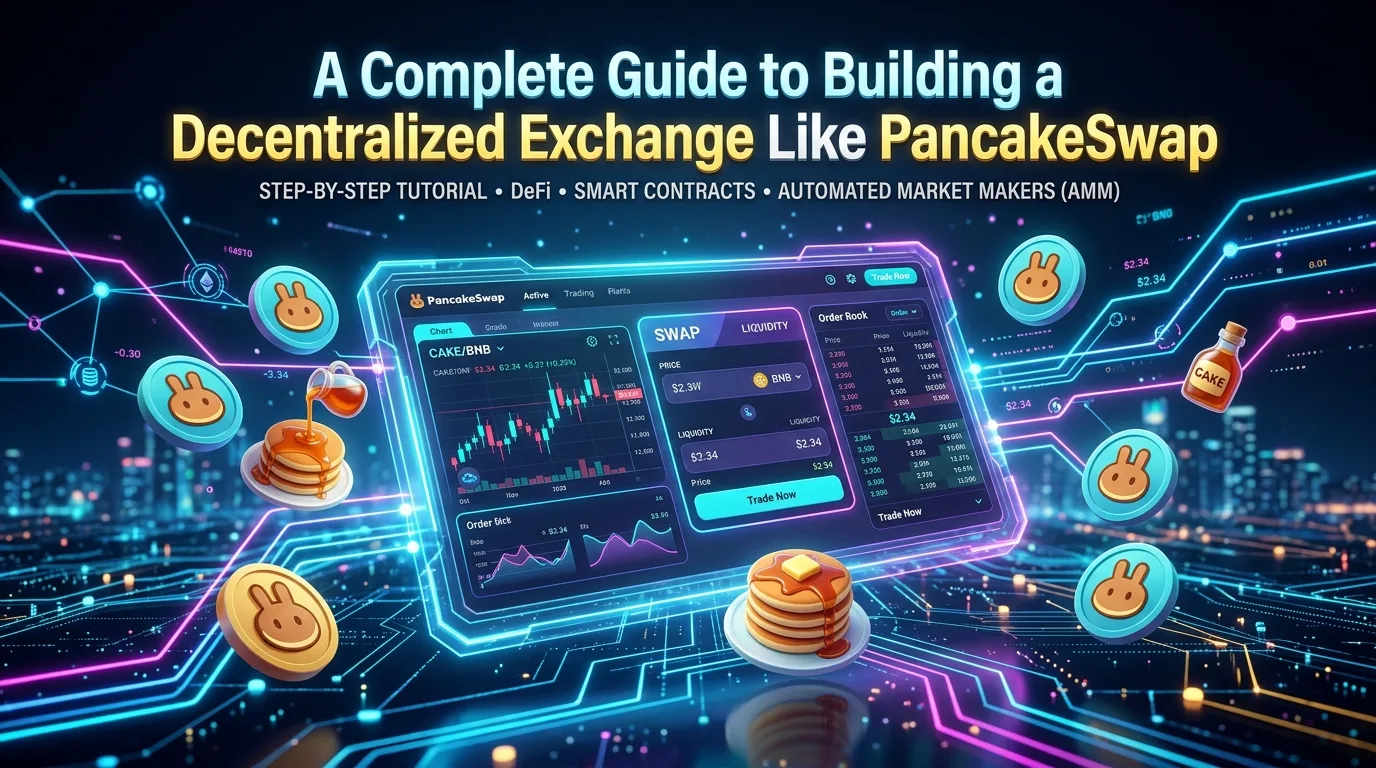
The rapid growth of decentralized finance (DeFi) has fundamentally transformed the way people trade digital assets. Among the most influential innovations in this space are decentralized exchanges (DEXs), which allow users to swap cryptocurrencies directly from their wallets without relying on centralized intermediaries. One of the most successful examples is PancakeSwap, a decentralized exchange built on the Binance Smart Chain (now BNB Chain), which has attracted millions of users through its low transaction costs, fast settlement times, and extensive DeFi ecosystem.
For entrepreneurs, startups, and blockchain innovators, building a decentralized exchange like PancakeSwap presents a significant opportunity. As users increasingly prioritize self-custody, transparency, and decentralized governance, the demand for efficient and secure DEX platforms continues to rise. However, creating a successful decentralized exchange requires much more than deploying smart contracts. It involves careful planning, robust architecture, regulatory awareness, liquidity management, and user-centric design.
This guide explores the essential components, technologies, development stages, and strategic considerations involved in building a decentralized exchange similar to PancakeSwap.
Understanding the PancakeSwap Model
Before developing a DEX, it is important to understand what makes PancakeSwap successful. Unlike traditional exchanges that rely on order books to match buyers and sellers, PancakeSwap uses an Automated Market Maker (AMM) model. AMMs eliminate the need for centralized order matching by allowing users to trade against liquidity pools.
Liquidity providers deposit pairs of tokens into pools and receive rewards in return. Traders interact with these pools, while pricing is determined algorithmically through mathematical formulas. The most common formula is:
where x and y represent the quantities of two tokens in a pool and k remains constant.
This model offers several advantages:
- Continuous liquidity availability
- Reduced dependence on market makers
- Permissionless participation
- Lower operational complexity
- Enhanced decentralization
PancakeSwap expanded beyond token swaps by integrating staking, yield farming, lottery systems, NFT marketplaces, prediction markets, and governance mechanisms. These additional features significantly contributed to user engagement and ecosystem growth.
Market Research and Business Planning
A successful DEX begins with comprehensive market research. While the DeFi market has matured significantly, competition remains intense. Platforms such as Uniswap, SushiSwap, Curve, and PancakeSwap dominate substantial portions of trading volume.
Developers must identify unique value propositions before initiating development. Some opportunities include:
- Specialized liquidity pools
- Cross-chain trading functionality
- Institutional-grade security
- Enhanced user experience
- AI-powered trading insights
- Regional DeFi solutions
- Lower transaction fees
Understanding target audiences is equally important. Retail traders, liquidity providers, institutional investors, and DeFi enthusiasts all have different expectations regarding platform functionality and performance.
A professional Decentralized Exchange Development Company typically begins projects with a feasibility assessment to evaluate market demand, revenue models, technical requirements, and competitive positioning.
Choosing the Right Blockchain Network
Blockchain selection directly impacts performance, transaction costs, scalability, and adoption potential.
BNB Chain
Since PancakeSwap itself operates on BNB Chain, many businesses choose this ecosystem due to:
- Low transaction fees
- High throughput
- Large user base
- Strong DeFi infrastructure
Ethereum
Ethereum remains the largest DeFi ecosystem by total value locked (TVL). Benefits include:
- Extensive developer community
- High liquidity
- Strong security standards
- Mature smart contract ecosystem
However, gas fees can be significantly higher than alternative networks.
Polygon
Polygon offers:
- Lower transaction costs
- Faster confirmation times
- Ethereum compatibility
- Growing DeFi ecosystem
Solana
Solana attracts projects seeking:
- Extremely high transaction speeds
- Minimal fees
- Scalability for large user bases
Each blockchain presents trade-offs between decentralization, security, scalability, and ecosystem maturity. The optimal choice depends on business objectives and user requirements.
Core Components of a Decentralized Exchange
Building a DEX involves integrating multiple technical components into a seamless ecosystem.
Smart Contracts
Smart contracts form the foundation of any decentralized exchange. These contracts manage:
- Token swaps
- Liquidity pools
- Staking mechanisms
- Reward distribution
- Governance voting
Because smart contracts directly control user funds, they must undergo extensive testing and security auditing.
Automated Market Maker Engine
The AMM engine governs trade execution and pricing. Developers can implement various AMM models, including:
- Constant Product Market Makers
- Constant Sum Market Makers
- Hybrid Liquidity Models
- Concentrated Liquidity Models
The choice affects liquidity efficiency, slippage, and capital utilization.
Liquidity Pools
Liquidity pools are essential for maintaining seamless trading activity. Projects often incentivize liquidity providers through:
- Trading fee rewards
- Governance tokens
- Yield farming incentives
- Bonus staking rewards
Without sufficient liquidity, user experience deteriorates due to excessive slippage and poor trade execution.
Wallet Integration
Modern DEX platforms support popular crypto wallets such as MetaMask, Trust Wallet, WalletConnect, and Coinbase Wallet.
Key considerations include:
- Secure authentication
- Seamless connectivity
- Multi-wallet support
- Mobile compatibility
Governance Framework
Decentralization extends beyond trading infrastructure. Governance mechanisms empower token holders to vote on:
- Protocol upgrades
- Fee structures
- Treasury allocation
- Community initiatives
Governance systems help align stakeholder interests and encourage long-term ecosystem participation.
Security: The Most Critical Development Priority
Security remains the single most important factor in decentralized exchange development. According to multiple blockchain security reports, billions of dollars have been lost across DeFi protocols due to smart contract vulnerabilities, flash loan attacks, oracle manipulation, and private key compromises.
Several high-profile incidents have demonstrated how even minor coding errors can result in catastrophic losses.
To mitigate risks, developers should implement:
Smart Contract Audits
Independent security audits identify vulnerabilities before deployment. Multiple audit rounds are recommended for mission-critical contracts.
Bug Bounty Programs
Bug bounty initiatives encourage ethical hackers to discover vulnerabilities before malicious actors exploit them.
Multi-Signature Controls
Administrative functions should require approval from multiple authorized parties, reducing single-point-of-failure risks.
Real-Time Monitoring
Continuous monitoring systems can detect suspicious transactions and unusual activity patterns.
An experienced Decentralized Exchange Development Company generally allocates significant resources to security engineering, as user trust is directly linked to platform safety.
Designing an Intuitive User Experience
One of the major challenges in DeFi adoption is usability. Many blockchain applications remain too complex for mainstream users.
PancakeSwap gained popularity partly because it simplified complex DeFi processes into an accessible interface.
Important UX considerations include:
Simple Onboarding
Users should be able to:
- Connect wallets quickly
- Understand transaction processes
- Access educational resources
- Navigate platform features effortlessly
Clear Trading Interfaces
Trading dashboards should display:
- Price impact
- Slippage tolerance
- Transaction fees
- Liquidity availability
Mobile Optimization
With increasing mobile crypto adoption, responsive interfaces are no longer optional.
Performance Optimization
Fast page loading, efficient API architecture, and responsive transaction updates significantly improve user satisfaction.
A superior user experience often becomes a stronger competitive advantage than technical innovation alone.
Advanced Features That Drive Growth
A basic token-swapping platform may struggle to differentiate itself in today's crowded DeFi market. Successful exchanges increasingly incorporate advanced features.
Yield Farming
Yield farming allows users to earn rewards by providing liquidity. This mechanism helps attract capital and increase trading activity.
Staking
Staking encourages long-term token holding while generating passive income opportunities for users.
Cross-Chain Swaps
Cross-chain interoperability represents one of the fastest-growing areas in DeFi. Users increasingly expect seamless asset transfers across multiple blockchain networks.
NFT Marketplace Integration
Combining NFTs with decentralized finance creates additional revenue streams and expands user engagement.
Launchpad Services
Token launchpads allow new blockchain projects to raise capital while creating value for exchange communities.
Many businesses partner with a specialized Decentralized Exchange Development Company to implement these advanced modules efficiently while maintaining security and scalability.
Liquidity Acquisition Strategies
Liquidity is often the greatest challenge for newly launched exchanges. Even the most technically advanced DEX cannot succeed without active trading volume.
Common liquidity acquisition strategies include:
Liquidity Mining Programs
Users receive platform tokens for contributing liquidity.
Strategic Partnerships
Collaborating with established projects can accelerate liquidity growth.
Market Maker Collaboration
Professional liquidity providers help ensure healthy trading environments.
Community Incentives
Referral programs, governance participation rewards, and ecosystem grants encourage long-term engagement.
PancakeSwap's explosive growth was driven in large part by aggressive liquidity incentives during its early stages.
Regulatory and Compliance Considerations
While decentralized exchanges operate differently from centralized platforms, regulatory scrutiny continues to increase worldwide.
Developers must monitor evolving regulations related to:
- Anti-money laundering (AML)
- Know Your Customer (KYC)
- Securities laws
- Consumer protection
- Tax reporting obligations
Jurisdiction-specific compliance requirements vary significantly. Some projects implement optional identity verification systems, while others maintain fully decentralized models.
Legal consultation should occur early in the planning process to minimize future regulatory challenges.
Revenue Models for a DEX
A sustainable business model is essential for long-term growth.
Popular revenue sources include:
Trading Fees
Most decentralized exchanges charge a percentage of each trade.
Listing Fees
Projects may pay fees to access premium visibility or launchpad services.
Staking and Farming Fees
A portion of generated rewards can support protocol development.
Treasury Appreciation
Governance tokens held by protocol treasuries may increase in value as ecosystem adoption grows.
Premium Services
Advanced analytics, institutional features, and API access can create additional revenue streams.
The most successful platforms balance profitability with user incentives, ensuring ecosystem participants remain motivated to contribute liquidity and activity.
Development Timeline and Cost Considerations
The complexity of the platform significantly affects development costs and timelines.
A basic DEX with swap functionality may require several months of development. However, a comprehensive PancakeSwap-like ecosystem featuring staking, governance, yield farming, launchpads, NFT integration, and cross-chain functionality can take substantially longer.
Major cost factors include:
- Smart contract development
- Frontend and backend engineering
- Security audits
- UI/UX design
- Infrastructure deployment
- Legal consultation
- Ongoing maintenance
Partnering with an established Decentralized Exchange Development Company can reduce development risks, accelerate deployment, and provide access to specialized blockchain expertise.
Conclusion
Building a decentralized exchange like PancakeSwap is a complex but highly rewarding endeavor. The rise of DeFi has created unprecedented opportunities for entrepreneurs to develop transparent, permissionless, and community-driven financial ecosystems. Success, however, requires far more than deploying liquidity pools and token swap functionality.
Developers must carefully address blockchain selection, smart contract architecture, security auditing, liquidity acquisition, governance mechanisms, regulatory compliance, and user experience design. Furthermore, advanced features such as staking, yield farming, cross-chain interoperability, and NFT integration have become increasingly important for competitive differentiation.
As decentralized finance continues evolving, exchanges that prioritize security, scalability, and user-centric innovation will be best positioned to capture market share. By combining robust technology with strategic planning and strong community engagement, businesses can create the next generation of decentralized trading platforms capable of rivaling established leaders like PancakeSwap.