Unpacking a Revolutionary Vision: Luis von Ahn’s Quest to Delete Blockchain
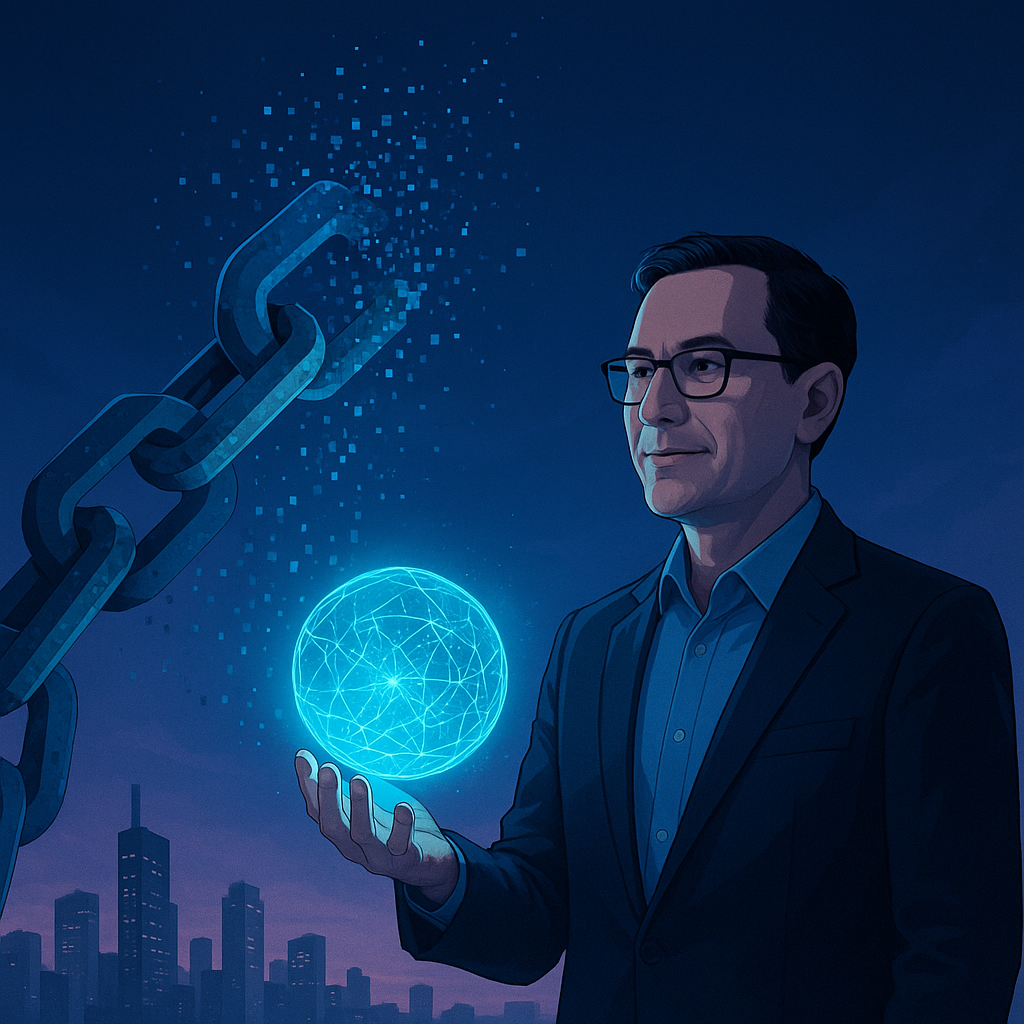
On a brisk spring afternoon in early 2026, Luis von Ahn, the Guatemalan-American entrepreneur famed for creating CAPTCHA and Duolingo, shook the tech world with a radical declaration: he wants to delete the blockchain. This bold statement emerged during a keynote at a leading AI conference in San Francisco, where von Ahn laid out his vision for a future digital infrastructure that discards blockchain technology in favor of a more efficient, scalable, and trust-oriented system. For someone who once harnessed human computation to power some of the internet’s most ingenious applications, von Ahn’s pivot away from blockchain is both unexpected and deeply thought-provoking.
Blockchain, once hailed as the backbone of decentralized finance, digital identity, and secure transactions, now finds itself at a crossroads. Despite its early promise, the technology has struggled under the weight of scalability issues, environmental concerns, and increasingly complex governance debates. Von Ahn’s critique dives into these very challenges, proposing that the blockchain’s limitations are fundamental rather than fixable by incremental improvements.
“Blockchain is a beautiful experiment, but it’s ultimately a dead end for digital trust. We need systems that scale with human society, not ones that choke on their own complexity,” von Ahn stated during his keynote session.
This article explores the roots of von Ahn’s critique, the current state of blockchain technology as of 2026, and the implications of his alternative vision for digital trust and identity. It also contextualizes how this stance resonates within the broader AI and tech communities, examining what the future might hold for decentralized systems beyond blockchain.
From CAPTCHA to Duolingo: A Background on Luis von Ahn’s Innovations
Luis von Ahn first rose to prominence by pioneering human computation through CAPTCHA and reCAPTCHA in the early 2000s, technologies that asked users to solve challenges to prove their humanity while simultaneously digitizing text for Google Books. His work laid the foundation for crowdsourcing knowledge and leveraging collective human effort to solve computational problems.
In 2011, von Ahn co-founded Duolingo, which revolutionized language learning by blending gamification with adaptive learning algorithms. Duolingo’s success lies in its ability to scale education globally while maintaining engagement and quality, underpinned by von Ahn’s core belief in harnessing human intelligence and machine learning in tandem.
Yet, when blockchain technology rose to prominence starting in the 2010s, von Ahn remained cautious. Early enthusiasm for blockchain’s potential to decentralize trust and create transparent ledgers was tempered by his understanding of fundamental computational trade-offs. By 2026, his skepticism crystallized into a call to delete blockchain entirely, advocating for alternative consensus and trust mechanisms.
This trajectory—from leveraging human intelligence in digital verification to critiquing blockchain’s computational heft—reflects von Ahn’s evolving philosophy about scalability and trust in technology.
Core Criticisms: Why von Ahn Believes Blockchain Fails
At the heart of von Ahn’s argument is the notion that blockchain technology, while innovative, is inherently inefficient and environmentally unsustainable. The proof-of-work (PoW) consensus mechanism, popularized by Bitcoin, consumes staggering amounts of energy, a problem partially alleviated by newer consensus protocols but not eradicated.
More critically, von Ahn highlights blockchain’s slow transaction speeds and limited throughput. Despite years of development, the technology struggles to process more than a few dozen transactions per second on major public chains, compared to centralized systems like Visa, which can handle tens of thousands. This bottleneck restricts blockchain’s ability to function as a global digital infrastructure supporting billions of users.
Von Ahn also points to the complexity of blockchain governance, which often leads to forks, disputes, and fragmented ecosystems. This undermines the very notion of a single source of truth that blockchain promises. Moreover, he argues that the immutability of blockchain records can be a double-edged sword, making correction of errors or adaptation to new regulations cumbersome.
“Decentralization does not guarantee democracy or efficiency. In fact, it often leads to gridlock and vulnerability to manipulation,” von Ahn remarked in a recent interview.
These critiques are supported by empirical data. According to industry estimates, Bitcoin’s network consumes about 50 terawatt-hours of electricity annually as of 2025, comparable to the energy consumption of some small countries. Ethereum’s switch to proof-of-stake reduced energy use significantly, but challenges remain in maintaining security and decentralization.
Furthermore, blockchain’s scalability ceiling means that mass adoption in areas such as digital identity, supply chain management, and decentralized finance remains constrained. For example, despite billions invested in blockchain startups and initiatives, global adoption remains limited to niche applications.
New Developments in 2026: Alternatives to Blockchain Gain Traction
As blockchain’s limitations became clearer, 2026 has seen a surge in alternative technologies aiming to solve the problem of digital trust without the downsides of blockchain. Among these, Luis von Ahn’s own projects and collaborations have focused on decentralized trust protocols that leverage AI and human verification in novel ways.
One notable development is the rise of Directed Acyclic Graphs (DAGs) and other non-chain-based distributed ledgers that promise higher throughput and lower energy consumption. These architectures allow for parallel transaction validation and more scalable consensus mechanisms, addressing some of the bottlenecks that plague traditional blockchains.
Simultaneously, AI-driven consensus models are emerging. These systems use machine learning algorithms to dynamically assess trustworthiness and validate transactions or identities without the need for energy-intensive mining or staking. Von Ahn’s research group has been actively developing such protocols, integrating them into applications ranging from identity verification to micro-transactions in educational platforms.
These alternatives are gaining support from major tech companies and governments, as they offer a path toward more sustainable and user-friendly digital infrastructures. For example, several pilot projects in Europe and Asia have shown promising results in deploying DAG-based systems for supply chain transparency and cross-border identity verification.
“What we’re witnessing is a paradigm shift—trust is no longer rooted solely in immutable ledgers but in adaptive, intelligent systems that can evolve with societal needs,” explained Dr. Helena Park, a blockchain researcher at MIT, echoing von Ahn’s vision.
Industry Perspectives: How the Tech World Reacts to Deleting Blockchain
Von Ahn’s proposal to delete blockchain has sparked vigorous debate across the tech ecosystem. Proponents of blockchain argue that its decentralization and security features remain unmatched, and that scalability solutions like sharding and Layer 2 protocols will eventually overcome current hurdles.
However, many recognize the merit in von Ahn’s challenge to rethink digital trust from first principles. Industry leaders in Web3 and decentralized identity acknowledge that hybrid models combining AI, cryptography, and human verification could offer more practical paths forward.
The financial sector, which has invested heavily in blockchain-based infrastructure, is cautiously optimistic. Some banks and fintech startups are exploring AI-powered trust layers that could complement or replace blockchain components in their systems. Regulatory bodies have also taken note, with some advocating for frameworks that support these emerging technologies alongside or instead of blockchain.
Academic circles have embraced von Ahn’s critique as a catalyst for reexamining assumptions about decentralization and trust. Conferences and journals now frequently feature debates on the limits of blockchain and the promise of alternative architectures.
- Major blockchain projects like Cardano and Polkadot continue to innovate but face pressure to integrate AI-based trust enhancements.
- Duolingo’s parent company, now extending its mission to digital trust, has launched pilot programs using von Ahn’s AI-driven consensus in educational credentialing.
- Startups focusing on zero-knowledge proofs and privacy-preserving AI protocols are attracting record venture capital funding, signaling investor confidence in these new paradigms.
Looking Ahead: The Future of Digital Trust Beyond Blockchain
As we move deeper into 2026, the question of how digital trust will evolve remains central to technology discourse. Luis von Ahn’s call to delete blockchain invites us to envision systems that are not just decentralized but intelligent, adaptable, and aligned with real-world scalability needs.
The future will likely be shaped by hybrid architectures that blend AI, cryptographic methods, and human verification to create layered trust frameworks. These systems could enable seamless identity management, secure transactions, and transparent governance without the inefficiencies that currently constrain blockchain.
Emerging trends to watch include:
- AI-augmented consensus models: Leveraging machine learning to dynamically evaluate trustworthiness and transaction validity.
- Energy-efficient distributed ledgers: Moving away from proof-of-work to alternative consensus mechanisms that prioritize sustainability.
- Human-in-the-loop verification: Integrating human judgment where algorithmic certainty is insufficient or context-dependent.
- Regulatory frameworks: Governments adapting policies to foster innovation while ensuring security and compliance.
- Cross-industry collaboration: Tech companies, academia, and public institutions partnering to build interoperable trust infrastructures.
Von Ahn’s vision challenges the tech community to move beyond hype and confront the pragmatic realities of building scalable, trustworthy digital systems. As he himself has demonstrated through his career, innovation thrives when it reexamines foundational assumptions and embraces new paradigms.
“If we want digital trust to serve billions, it must be as human and as intelligent as the society it supports,” von Ahn concluded in a recent panel discussion.
For readers interested in exploring this transformative dialogue, TheOmniBuzz offers comprehensive coverage, including in-depth analyses in Duolingo’s Luis von Ahn Wants to Delete the Blockchain: A Radical Vision for the Future of Digital Trust and Why Luis von Ahn Wants to Delete Blockchain and Reimagine Digital Trust. These resources provide detailed perspectives on the evolving intersection of AI, blockchain, and digital identity.