
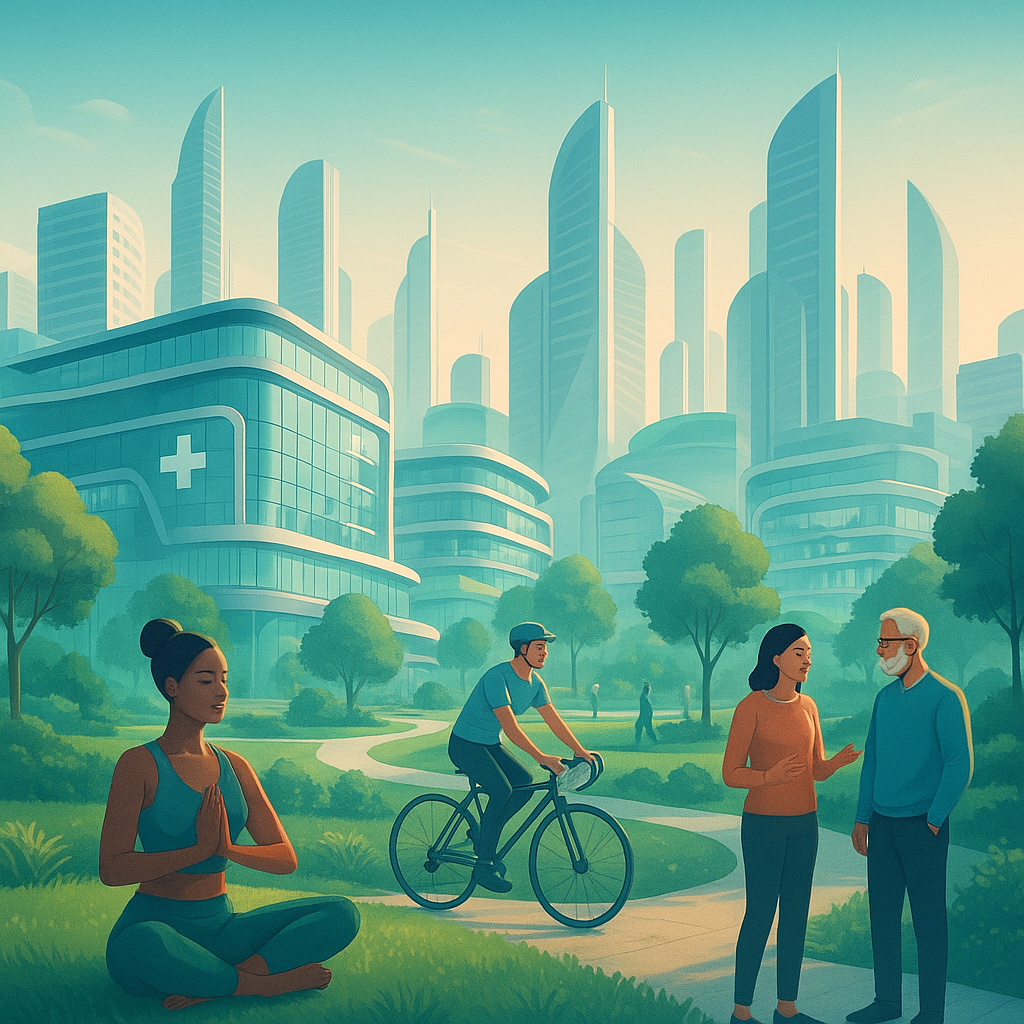
Introduction: The Complexity Behind Health’s Top Priorities
Imagine waking up each day in 2026 with the ability to pinpoint the nine most critical factors influencing your health and wellbeing. This is not a futuristic fantasy but the current reality, shaped by groundbreaking research, evolving societal trends, and technological breakthroughs. Health today is no longer just about avoiding illness; it encompasses a multifaceted approach integrating physical vitality, mental resilience, and social connections.
Recent studies show that chronic diseases now account for over 70% of global mortality, yet prevention and holistic wellbeing approaches are gaining unprecedented traction. According to the World Health Organization’s 2025 Global Health Report, the top health determinants have shifted substantially from traditional metrics to more nuanced, interconnected factors. As we explore these nine vital components, we uncover how they interlock to form the foundation for a healthier population worldwide.
"Health is not a static state but a dynamic interplay of biology, behavior, environment, and society." — Dr. Helena Rosetti, Epidemiologist
The question arises: What are these nine factors, and why do they dominate health conversations in 2026? This article investigates each one, providing a data-driven, expert-level analysis to empower readers with actionable insights.
1. Nutrition Quality: Beyond Calories to Nutrient Density
Nutrition remains the cornerstone of health, but the understanding of what constitutes "good nutrition" has evolved remarkably. The focus in 2026 is on nutrient density rather than sheer caloric intake. Research from the Global Nutrition Alliance indicates that diets emphasizing whole foods, antioxidants, and microbiome-supporting elements reduce chronic disease risk by up to 40%.
Interestingly, the rise of personalized nutrition—driven by genetic testing and AI algorithms—has transformed dietary recommendations. For example, nutrigenomics allows health providers to tailor diets that optimize individual metabolic responses, moving away from one-size-fits-all models.
- Key nutritional trends in 2026:
- Plant-forward diets with enhanced protein diversity
- Reduction of ultra-processed foods with artificial additives
- Focus on prebiotics and probiotics to support gut health
- Increased emphasis on omega-3 fatty acids and micronutrients
This shift aligns with findings reported in the article "Unlocking Wellbeing: The Top 6 Pillars Shaping Health Today," emphasizing the critical role of nutrition among holistic health pillars.
2. Physical Activity: The Science of Movement and Longevity
Physical activity’s benefits extend far beyond weight management. New longitudinal studies published in 2025 reveal that regular moderate exercise can increase lifespan by up to 5 years by reducing cardiovascular risks and improving cognitive function. The World Health Organization now recommends at least 150 minutes of moderate-intensity aerobic activity weekly, reinforced by strength training twice a week.
Technological advancements, including wearable sensors and AI-driven fitness coaching, have revolutionized how people engage with exercise. These tools enable real-time biofeedback and personalized regimen adjustments, boosting adherence and outcomes.
- 2026 trends in physical activity:
- Integration of virtual reality workouts for immersive experiences
- Community-driven fitness challenges leveraging social motivation
- Corporate wellness programs emphasizing movement breaks
- Increased attention to mobility and flexibility for aging populations
The importance of these strategies is echoed in the comprehensive analysis "6 Fitness Strategies Transforming Health and Vitality Today," which highlights movement as a pillar of sustainable wellbeing.
3. Mental Health: From Awareness to Systemic Integration
The mental health landscape has dramatically shifted in recent years, with 2026 marking a watershed moment of systemic integration. Mental health is now recognized as inseparable from physical health, influencing everything from immune function to chronic disease outcomes. According to the Global Mental Health Survey 2025, nearly 30% of adults worldwide experience some form of mental health challenge annually, underscoring the urgency of comprehensive strategies.
Innovations in digital therapy platforms, AI-based mood tracking, and community support networks have expanded access and personalized care. Moreover, workplace mental health initiatives have become mainstream, improving productivity and reducing stigma.
"Mental health is the foundation upon which all other health outcomes are built. Ignoring it jeopardizes overall wellbeing." — Prof. Mark Jensen, Psychiatrist
The report "How Mental Health Awareness Is Transforming Societies and Systems" further explores how awareness is translating into policy and practice, shaping a more resilient global community.
4. Sleep Optimization: The Silent Health Revolution
Sleep science has unveiled its critical role in health maintenance, with recent data linking poor sleep to increased risks of obesity, diabetes, and neurodegenerative diseases. In 2026, sleep optimization is a top priority, with personalized sleep tracking devices and environmental modifications enhancing sleep quality.
- Core elements of sleep health in 2026 include:
- Consistent sleep schedules aligned with circadian rhythms
- Reduction of blue light exposure before bedtime
- Use of smart mattresses and temperature regulation
- Mindfulness and relaxation techniques embedded in daily routines
These strategies contribute to improved hormonal balance, cognitive performance, and emotional regulation, as outlined in the latest findings from sleep research institutions.
5. Environmental Health: The Impact of Our Surroundings
Health is inherently linked to the quality of our environment. Air pollution, water quality, and exposure to toxins contribute significantly to the global disease burden. Recent epidemiological studies estimate that 25% of all deaths are attributable to environmental factors, emphasizing urgent action.
In 2026, urban planning increasingly incorporates green spaces and pollution control, while individuals adopt practices to reduce chemical exposures in homes and workplaces. Innovations in air purification and sustainable building materials contribute to healthier living environments.
- Environmental health priorities now include:
- Mitigating urban air pollution hotspots
- Enhancing access to clean water sources
- Reducing household exposure to endocrine disruptors
- Promoting climate resilience to protect vulnerable populations
TheOmniBuzz’s feature "Health in 2026: Innovations, Challenges, and the Road Ahead" discusses how environmental determinants integrate with broader health strategies.
6. Social Connections: The Underrated Health Booster
Human beings are inherently social, and robust social networks have been linked to lower mortality rates and improved mental health. The Harvard Study of Adult Development, after tracking participants for over 80 years, confirms that quality relationships are key predictors of longevity and happiness.
In 2026, digital platforms have evolved to facilitate meaningful social interactions rather than superficial connections. Community engagement and social prescribing—where healthcare providers connect patients with social resources—have gained momentum.
"Strong social bonds are as important as a balanced diet or exercise in maintaining health." — Dr. Lina Patel, Social Epidemiologist
Strategies to enhance social wellbeing include fostering inclusivity, combating loneliness, and integrating social health metrics in clinical assessments.
7. Preventive Healthcare and Regular Screening
The paradigm shift from reactive to preventive healthcare is more pronounced than ever. Advances in genomics, biomarkers, and AI predictive models allow early detection of diseases, significantly improving treatment outcomes. According to the International Preventive Medicine Association, routine screenings have reduced mortality rates for cancers and cardiovascular diseases by 20% in the past five years.
Personalized screening schedules based on risk profiles are becoming standard practice, supported by telemedicine platforms facilitating accessibility.
- Preventive healthcare highlights:
- Genetic testing for inherited disease risks
- Wearable biosensors monitoring vital signs continuously
- Vaccination programs adapted for emerging pathogens
- Health coaching to promote lifestyle modifications
The importance of these developments is detailed in "Revolutionizing Health: The Unseen Power and Promise of Modern Medical Research," which analyzes the transformative potential of preventive strategies.
8. Technology Integration: Digital Health and Beyond
The digital revolution continues to reshape health management. From AI-driven diagnostics to robotic-assisted surgeries, technology enhances precision, accessibility, and efficiency. In 2026, interoperability between electronic health records and personal health devices empowers patients and clinicians alike.
Telehealth services have expanded globally, removing barriers for rural and underserved populations. Additionally, virtual reality is used for pain management and rehabilitation, proving effective in clinical trials.
- Key areas of technological impact:
- AI algorithms for early disease detection
- Blockchain ensuring data security and privacy
- Augmented reality for surgical training and planning
- Mobile apps promoting adherence to treatment plans
Such advances, while promising, also raise ethical considerations around data use and equity, topics that remain at the forefront of health policy discussions.
9. Holistic Wellbeing: Integrating Mind, Body, and Spirit
The final factor acknowledges that true health transcends physical parameters. Holistic wellbeing incorporates emotional, spiritual, and cultural dimensions, embracing practices like meditation, yoga, and traditional healing.
Emerging evidence supports these approaches for stress reduction, immune function, and overall quality of life. The integration of complementary therapies within mainstream healthcare systems is growing, reflecting a more inclusive model of care.
"Health is a harmonious balance of body, mind, and spirit, not merely the absence of disease." — Dr. Amina Qureshi, Integrative Medicine Specialist
Programs combining Western and traditional methods are gaining validation through rigorous scientific evaluation, representing a promising frontier in patient-centered care.
Looking Ahead: What to Watch in Health and Wellness
The intersection of these nine factors frames a complex but navigable landscape for individuals and health systems. Future innovations in genomics, AI, and environmental science will undoubtedly refine our understanding, while social and behavioral insights shape effective interventions.
Key takeaways for 2026 and beyond include:
- Embracing personalized approaches to nutrition, activity, and prevention
- Investing in mental health infrastructure and destigmatization efforts
- Prioritizing environmental sustainability as a health imperative
- Leveraging technology responsibly to enhance access and outcomes
- Recognizing social connections as a critical health determinant
Readers interested in a broader context can explore Health in 2026: Innovations, Challenges, and the Road Ahead and Unlocking Wellbeing: The Top 6 Pillars Shaping Health Today for comprehensive perspectives.
Ultimately, health is a dynamic, multifactorial journey requiring coordinated efforts from individuals, communities, and policymakers. Understanding and acting on these nine critical factors will be essential to achieving sustainable wellbeing in the years ahead.