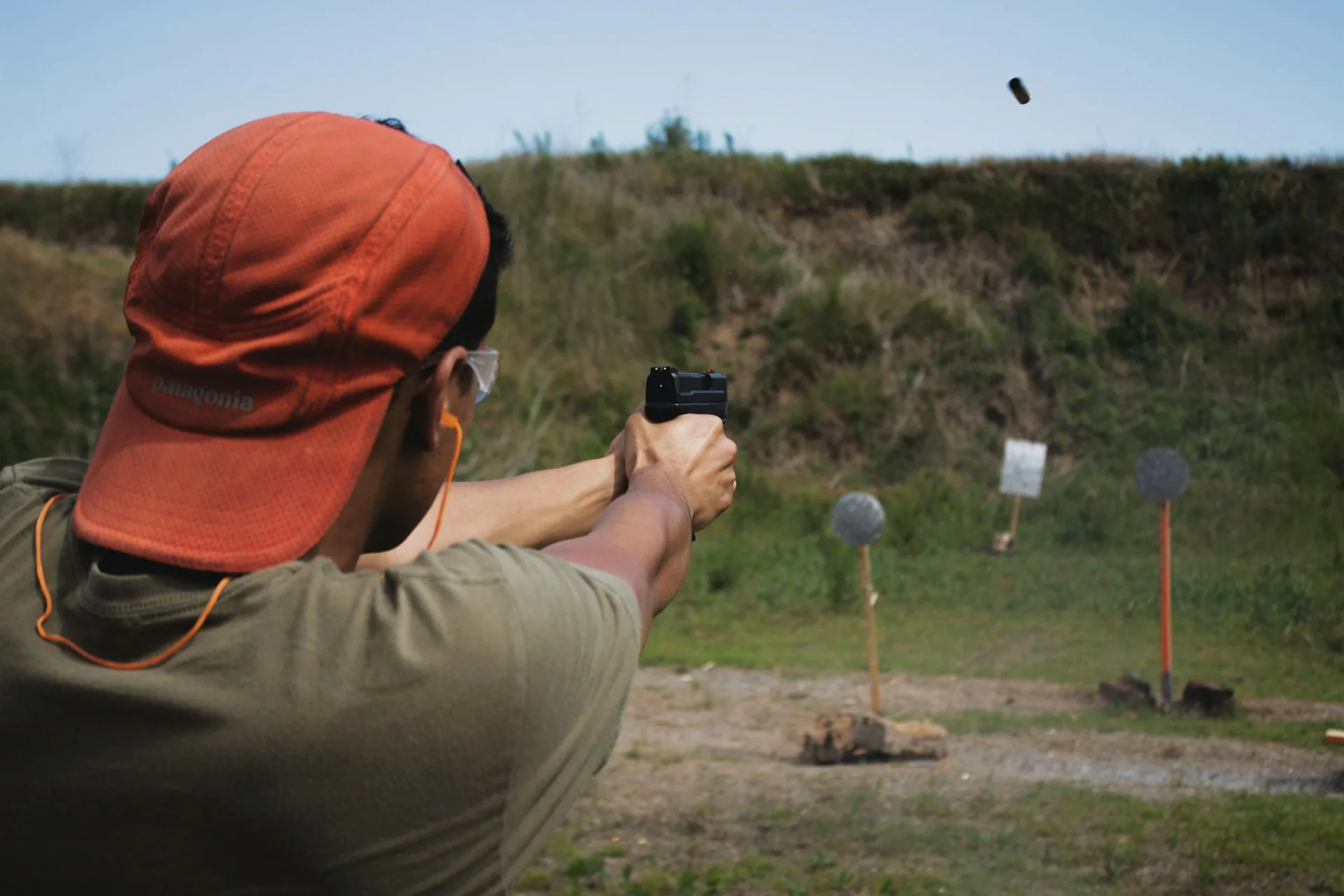
Most firearm accidents are not caused by faulty equipment. T hey come from habits: a finger resting on the trigger, a muzzle drifting toward a person, a gun assumed to be empty. The good news is that habits can be built before you ever step onto a firing line, and doing so makes your first range visit calmer and safer for everyone around you.
This guide covers seven habits worth practicing first. They are drawn from the widely taught universal safety rules plus the practical etiquette that range staff expect from newcomers. Rules and requirements vary by state and by range, so treat this as a foundation, not a substitute for a certified course or your local law.
1. Treat every gun as loaded, every time
This is the rule the others rest on. A gun you have just "checked" is still a gun you handle as loaded. When you pick one up, or when someone hands one to you, open the action and look into the chamber and magazine well yourself. Never rely on someone's word, as it is empty. Passing a firearm with the action open and visibly clear is also a courtesy that experienced shooters will notice and respect.
2. Control the muzzle
The muzzle should always point in a safe direction: downrange at the range, at the floor, or at a safe backstop when handling a gun at home. The test is simple: never let the muzzle cover anything you are not willing to destroy. Practice this at home with an unloaded, verified-empty gun (or a training replica) while turning, sitting, and walking through doorways. Muzzle awareness should feel automatic before you are nervous and holding a loaded firearm.
3. Keep your finger off the trigger until you are ready to shoot
Rest your finger straight along the frame, outside the trigger guard, until your sights are on target and you have decided to fire. Many negligent discharges happen because a finger was on the trigger during a flinch, a stumble, or a surprise. Rehearse the finger position with every grip change until the habit sticks.
4. Know your target and what is beyond it
A bullet does not stop at the target, and accuracy is a skill rather than a guarantee. At an established range, the backstops are meant to handle the threat of what’s beyond your target and should also help if you miss the target entirely because you aimed too far to the left. But this is a habit you should always keep in mind, because you’ll need it even more when you’re somewhere without built-in safety features, like when you’re hunting. Identify your target clearly, and be aware of what lies behind it before you take any shot, on or off the range. Follow your range's rules about approved targets and firing lanes.
5. Match ammunition to the gun, and check it
Caliber or gauge is stamped on the barrel or slide, and the cartridge headstamp tells you what the ammunition is. Match the two before loading anything. Understanding basic cartridge types helps too: this explainer on the difference between rimfire and centerfire ammunition notes that it comes down to where the primer sits. If you are ever unsure, don't load it; ask range staff or the shop where you bought it.
6. Gear up and learn the range's safety protocol
Eye and ear protection are not optional extras. Wear impact-rated shooting glasses and hearing protection, and many shooters double up with plugs under muffs at indoor ranges. Before you go, read the range's rules, find out where its first-aid kit is, and consider carrying a small kit of your own. A primer on gun range safety basics lists the same essentials: know the range's protocol, know where first aid is, bring your own, and wear hearing protection. Read the full post for the details.
7. Learn the range commands, and say it's your first time
Most ranges use standard commands such as "cold range" (no live fire, safe to go downrange) and "hot range" (live fire in progress). Don't touch a firearm when the range is cold, and never step past the firing line when it is hot. Tell the range safety officer you are new; they would much rather give you a quick orientation than watch you guess. Transport your gun unloaded and secured in a case, and check your state's transport rules before you leave the house.
The counter-argument: "It's only a range visit; how careful do I need to be?"
Some new shooters assume that range staff and rules will cover for any slip-ups. In practice, the opposite is true: the four core rules are deliberately redundant, so that if one fails (a finger slips onto the trigger, say), another (the muzzle points downrange) prevents injury. Staff is there to support good habits, not replace them. And a gun is just as dangerous in the car, the garage, or the living room as it is on the firing line.
After the range: storage and transfers
Safe handling continues at home. Store firearms unloaded, locked, and separate from ammunition where appropriate, particularly if children or visitors are in the home. Storage law differs by state. One situation people rarely plan for is inheriting firearms; this practical guide explains what to do with a loved one's firearms after they pass. Legal steps vary by location, so confirm requirements locally.
Where to go from here
Book a certified beginner course (a state hunter-education class, an NRA course, a state safety course, or a local range's intro session) and practice the habits above at home with an unloaded, verified-empty firearm.