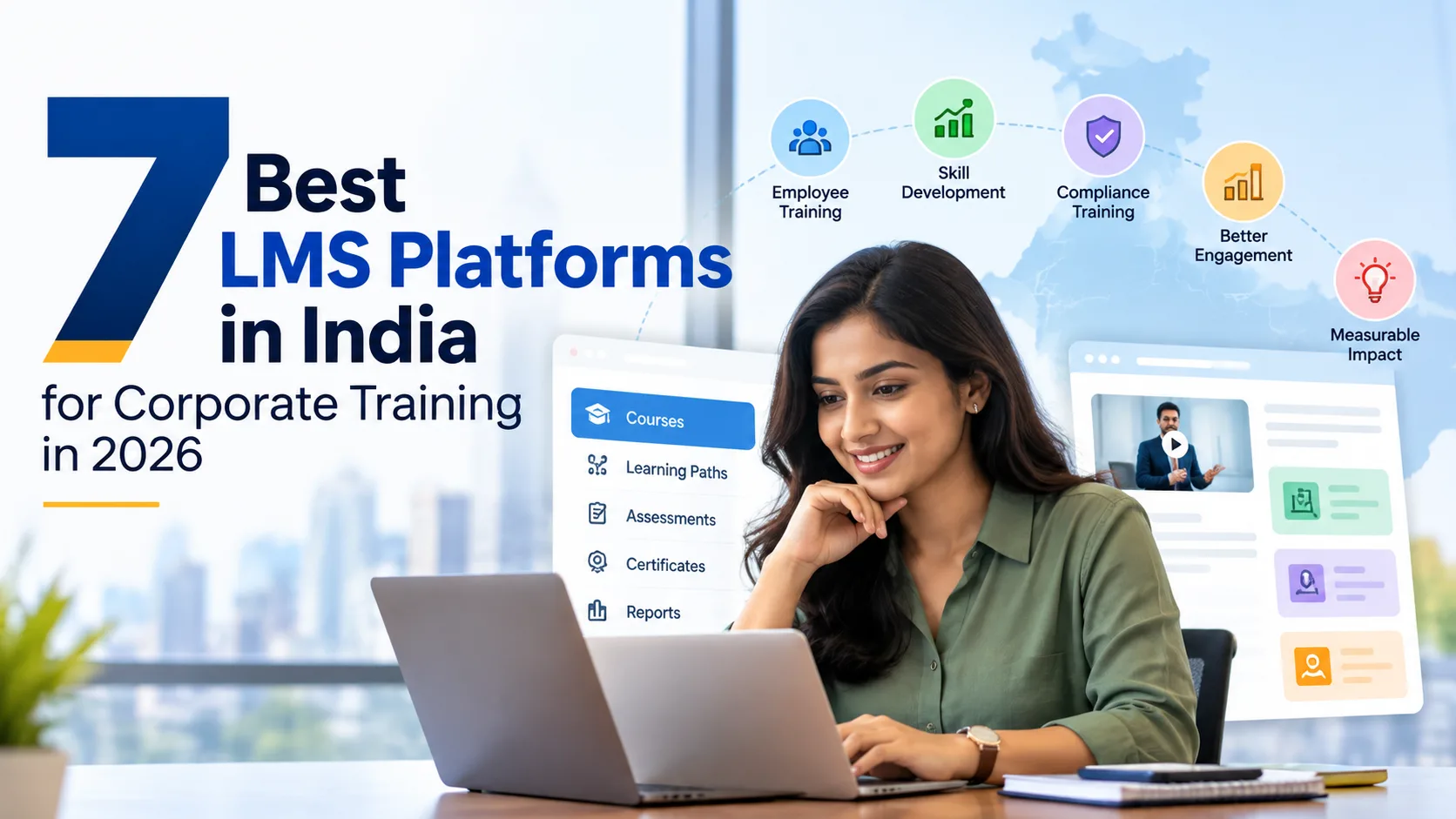
Corporate training has changed quite a bit. An LMS is no longer just a place where employees log in, watch a few videos and complete a quiz. Businesses today need learning platforms that can help people build skills, stay compliant, learn at their own pace and give managers a clear view of training progress.
With so many options available, finding the right platform can feel overwhelming. Some solutions are built for large enterprises, while others focus on flexibility, extended learning or customised corporate training.
To make the search easier, here are 7 LMS platforms in India and globally worth exploring for corporate and organisational learning in 2026.
1. Stratbeans
Stratbeans takes a corporate-first approach to learning technology, with a focus on understanding how organisations actually train and develop their people.
Stratbeans LMS solutions, including Bytecasting LMS, Bytecasting Evolve and ATUM LMS, are designed to accommodate different organisational learning requirements. From employee training and assessments to learning management and reporting, the platforms can be adapted according to business needs.
What makes Stratbeans particularly relevant for organisations is its experience working specifically with corporate learning requirements rather than taking a one-size-fits-all approach.
2. Docebo
Docebo is an enterprise-focused learning platform built for organisations that need more than basic course management.
The platform combines learning management with capabilities around AI, analytics, skills development and extended-enterprise learning. This makes it useful for companies managing learning across employees as well as customers, partners or other external audiences.
For larger organisations with evolving learning programmes, Docebo offers a broad set of capabilities within one learning ecosystem.
3. Cornerstone
Cornerstone goes beyond traditional learning management by bringing learning, talent and workforce development together.
This makes the platform particularly relevant for larger organisations where learning is closely connected with employee development and skills management.
Companies with complex training structures can use Cornerstone to manage learning programmes while also connecting them with broader workforce development initiatives.
4. SAP Litmos
SAP Litmos is built around corporate training and learning management, with capabilities covering employee development, compliance training, assessments and course administration.
For organisations that need a central place to manage structured training programmes, the platform provides tools for organising learning and keeping track of employee progress.
Its focus on business training makes it worth considering for companies where compliance and employee development are important parts of the learning strategy.
5. Absorb LMS
Absorb LMS supports a range of learning scenarios, from employee training to customer and partner education.
Along with core LMS functionality, the platform offers learning administration, reporting, engagement features and integrations that can help organisations manage training at scale.
It can be a useful option for businesses that want one learning environment to serve different audiences without managing completely separate systems.
6. LearnUpon
LearnUpon is designed for organisations that need to deliver learning to multiple audiences.
While employee training is a key use case, the platform can also support customer, partner and extended-enterprise learning. This makes it relevant for businesses where learning extends beyond the internal workforce.
Its approach is particularly useful when an organisation wants to bring different learning programmes together under a single platform.
7. Moodle Workplace
Moodle Workplace builds on the well-known Moodle ecosystem while adding capabilities designed specifically for organisational learning.
It provides tools for workplace training, administration and learning management, while offering the flexibility associated with the wider Moodle environment.
For organisations that value flexibility and want greater control over how their learning environment is structured, Moodle Workplace can be an option worth exploring.
How to Choose the Right LMS Platform in India
Choosing an LMS isn't simply about picking the platform with the longest feature list. What works well for one organisation may not work as well for another.
Before making a decision, businesses should consider factors such as number of learners, training objectives, reporting requirements, integrations, customisation, scalability, budget and overall user experience.
It is also worth thinking beyond the immediate requirement. An LMS may start with employee onboarding or compliance training, but over time it could become the central learning environment for skills development, leadership training and other organisational programs.
The best approach is to first understand what your organisation genuinely needs from a learning platform and then compare LMS platforms in India against those requirements.