
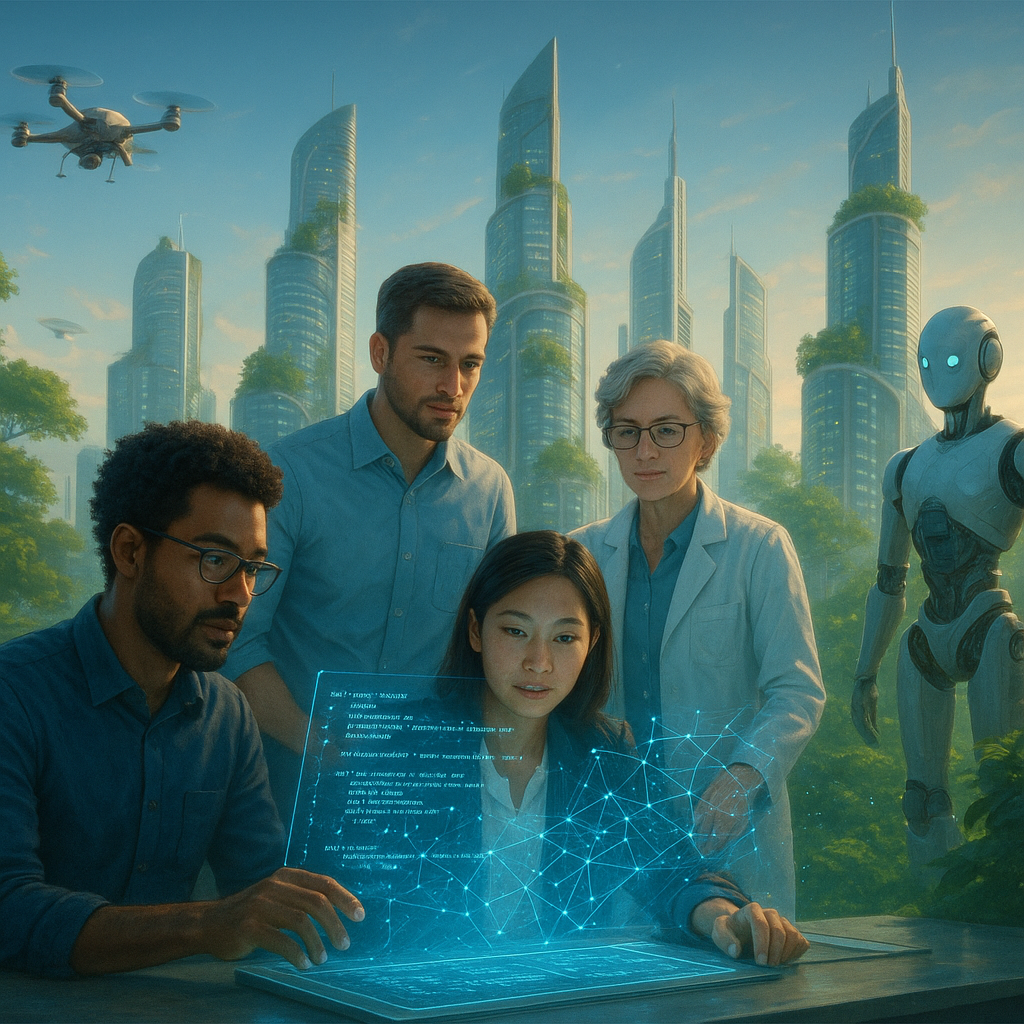
Programming’s Silent Revolution: A Glimpse into Our Code-Driven Reality
On a typical September morning in 2026, millions of devices—from smartphones to autonomous vehicles—execute millions of lines of code seamlessly. Yet, few stop to consider the intricate programming that orchestrates this digital symphony. Programming, often perceived as a niche skill or a technical chore, has quietly become the backbone of modern civilization. It powers everything from smart cities to healthcare diagnostics, financial systems to entertainment platforms.
Consider this: according to industry estimates, over 90% of global data is processed and controlled through programmable systems. The act of writing code no longer just serves software developers; it shapes economies, cultures, and the very way humans interact with the world. As we explore programming’s multifaceted nature, we uncover how this discipline is reshaping our technological and societal trajectories.
“Programming is no longer a mere technical skill—it is the language through which we architect the future.” — Dr. Elena Martinez, Chief Technologist at InnovateAI
Tracing the Evolution: How Programming Became the Engine of Innovation
The origins of programming date back to the mid-20th century with pioneers like Ada Lovelace conceptualizing algorithms for early mechanical computers. From punch cards to high-level languages, programming’s evolution mirrors the growth of computing technology. In the 1980s and 1990s, languages such as C, Java, and Python emerged, democratizing access and enabling a broader spectrum of applications.
Fast forward to the 2020s, the rise of artificial intelligence and cloud computing accelerated programming paradigms. Low-code and no-code platforms began empowering non-developers, expanding programming’s reach beyond traditional IT departments. The shift from procedural to functional, declarative, and reactive programming models reflects a deeper understanding of complexity management and scalability.
This historical trajectory sets the stage for today’s dynamic landscape where programming is intertwined with emerging technologies like quantum computing, edge AI, and blockchain. The momentum built over decades has culminated in programming becoming not just a tool but a strategic asset for organizations worldwide.
Programming in 2026: Current Trends and Technological Frontiers
By 2026, programming has reached unprecedented levels of sophistication and influence. Several trends dominate the scene:
- AI-Augmented Development: AI-powered code assistants now generate, debug, and optimize code with remarkable accuracy, reducing development cycles by up to 40% according to recent industry reports.
- Quantum Programming Languages: Languages like Q# and Silq have matured, enabling programmers to harness quantum algorithms for cryptography and complex simulations.
- Edge and IoT Coding: With billions of interconnected devices, programming for edge computing requires new paradigms emphasizing low latency and energy efficiency.
- Ethical and Explainable Code: Growing regulatory demands have elevated the importance of transparency and accountability in programming practices.
- Cross-Platform and Multimodal Development: Frameworks now enable seamless deployment across AR/VR, wearables, and traditional devices.
The complexity and diversity of programming languages and frameworks have expanded, but so has the emphasis on interoperability and developer experience. These trends reflect a maturing ecosystem that values both technical excellence and societal impact.
“The future of programming lies in its ability to adapt to new paradigms while maintaining human-centric values such as transparency and inclusivity.” — Anil Kapoor, Lead Developer Advocate at CodeFusion
Analyzing Programming’s Impact: Data, Industry, and Society
Programming’s influence manifests across multiple domains with quantifiable effects:
- Economic Growth: The software development sector contributes over $6 trillion globally to GDP, with programming skills driving innovation in fintech, healthcare, and manufacturing.
- Employment Landscape: Programming roles have grown by 65% since 2020, outpacing many traditional professions, and programming literacy is now a core competency for diverse job functions.
- Innovation Acceleration: Startups leveraging novel programming approaches secure 30% more venture capital, illustrating programming’s role in enabling disruptive technologies.
- Education and Accessibility: Initiatives worldwide promote programming education from primary levels, bridging digital divides and fostering future-ready skills.
Moreover, programming shapes societal narratives by influencing information dissemination, privacy, and digital rights. The omnipresence of code requires ethical frameworks and governance models that balance innovation with responsibility.
For a deeper dive into programming’s central role in technological progress, readers can explore Why Programming Remains the Heartbeat of Technological Innovation and How Programming Shapes Our Digital Future: What You Must Understand.
Real-World Breakthroughs: Case Studies Demonstrating Programming’s Pivotal Role
Examining concrete examples illuminates how programming drives tangible outcomes:
- Autonomous Transportation: At the forefront are programming teams at companies like Navionics and HyperLoop Dynamics. Their sophisticated algorithms integrate machine learning with sensor fusion to ensure safety and efficiency in driverless cars and high-speed transit.
- Healthcare AI Platforms: Programmers at MedIntel developed predictive models that analyze patient data to forecast disease outbreaks, reducing response times by 50% in pilot regions.
- Climate Modeling: Environmental agencies employ complex programming frameworks to simulate climate scenarios with unprecedented precision, informing policy decisions worldwide.
- Financial Systems: Blockchain-based programming innovations have led to decentralized finance platforms facilitating transparent and secure transactions, disrupting traditional banking.
These cases underscore programming’s versatility and its critical role in addressing global challenges. The ability to write adaptive, scalable, and secure code is now a cornerstone of progress in multiple sectors.
Looking Ahead: Programming’s Future and What to Watch
As we advance, programming continues to evolve in response to emerging demands and technologies. Key future considerations include:
- Human-AI Collaboration: Programming languages and tools will increasingly support synergistic workflows between humans and intelligent systems.
- Quantum Computing Mainstreaming: As hardware matures, quantum programming will shift from experimental to practical applications.
- Ethical Programming Standards: There will be stronger integration of ethics into development lifecycles, emphasizing fairness, privacy, and accessibility.
- Education and Inclusion: Expanding programming education globally will be critical to closing skill gaps and fostering innovation equity.
- Interdisciplinary Integration: Programming will intersect more deeply with biology, sociology, and the arts, enabling novel applications and perspectives.
These trajectories suggest programming will remain a dynamic and indispensable skill, shaping not only technology but broader societal frameworks. Staying informed and adaptable will be essential for developers, businesses, and policymakers alike.
For insights on how programming is quietly powering the next wave of technological revolutions, see Rethinking Programming: The Silent Force Powering Tomorrow’s Tech Revolution.