Opening the Door to the Unknown: A Snapshot of Science’s Vanguard
In the early summer of 2026, the scientific world stands at a crossroads where breakthroughs are not just anticipated—they are reshaping the very fabric of what humanity understands about the universe and itself. From unraveling the mysteries of quantum mechanics to revolutionizing human health with bioengineering, the top six scientific frontiers define an era of unprecedented exploration and innovation.
Consider the recent milestone announced by the International Quantum Consortium in March 2026, where the first stable quantum network spanning three continents was successfully demonstrated. This marks a pivotal step toward a global quantum internet, promising cybersecurity paradigms that could render classical hacking obsolete.
"The quantum internet isn’t merely an upgrade; it’s a fundamental shift in how we secure and transmit information," explains Dr. Lila Nakamura, lead scientist at the Quantum Communications Institute.
Such advancements underscore the profound momentum science has gathered, challenging pillars of prior knowledge and opening new avenues for technology and human progress. This article explores six of the most compelling scientific domains shaping 2026 and beyond, revealing how they intertwine with society’s future.
Tracing the Trajectory: How These Scientific Frontiers Emerged
The current landscape of scientific endeavor is the product of decades of incremental and sometimes revolutionary progress. To understand why these six areas have surged to prominence, it is essential to contextualize their historical and technological underpinnings.
Quantum science, for instance, emerged from early 20th-century physics but only recently harnessed for practical applications due to advances in materials science, cryogenics, and computational power. Meanwhile, synthetic biology has roots in molecular biology and genetic engineering dating back to the 1970s but exploded following CRISPR’s advent in the mid-2010s.
Likewise, climate science’s urgency is amplified by escalating environmental crises that have driven funding and interdisciplinary collaboration to new heights. The intersection of AI and neuroscience builds upon decades of cognitive research, now invigorated by machine learning’s ability to process vast neural data.
These frontiers share common catalysts:
- Exponential growth in computational resources enabling complex simulations and data analysis.
- Interdisciplinary collaboration breaking down traditional silos between physics, biology, and computer science.
- Global challenges, such as climate change and pandemics, demanding innovative scientific solutions.
Such factors have propelled these fields from theoretical curiosities to central pillars of contemporary research and application.
Core Analysis: The Six Scientific Frontiers Defining 2026
We now turn to a detailed exploration of each frontier, highlighting data, breakthroughs, and their implications.
1. Quantum Information Science
The quantum revolution continues with tangible implementations of quantum computing and communication. According to the Quantum Economic Development Consortium’s 2026 report, quantum hardware has achieved over 1,000 qubits with error-corrected stability, a tenfold improvement since 2023.
Breakthroughs include:
- Deployment of the first quantum-secured satellites by SpaceX Quantum Division.
- Commercial quantum cloud services expanding access to researchers worldwide.
- Quantum algorithms that outperform classical counterparts in optimization and material simulations.
These advances promise transformative impacts on cryptography, drug discovery, and financial modeling.
2. Synthetic Biology and Bioengineering
The field of synthetic biology has matured into a powerhouse for healthcare and sustainable manufacturing. In 2026, bioengineered organs grown from patient-derived stem cells have entered clinical trials in Europe and North America, reducing transplant waitlists by 15% according to the Global Transplant Registry.
Key developments include:
- Programmable microbial factories producing biodegradable plastics at scale.
- Gene therapies correcting previously untreatable genetic disorders.
- Advances in cellular agriculture yielding lab-grown meat with 40% lower carbon footprint than conventional farming.
These innovations are setting new standards for personalized medicine and environmental stewardship.
3. Climate Science and Geoengineering
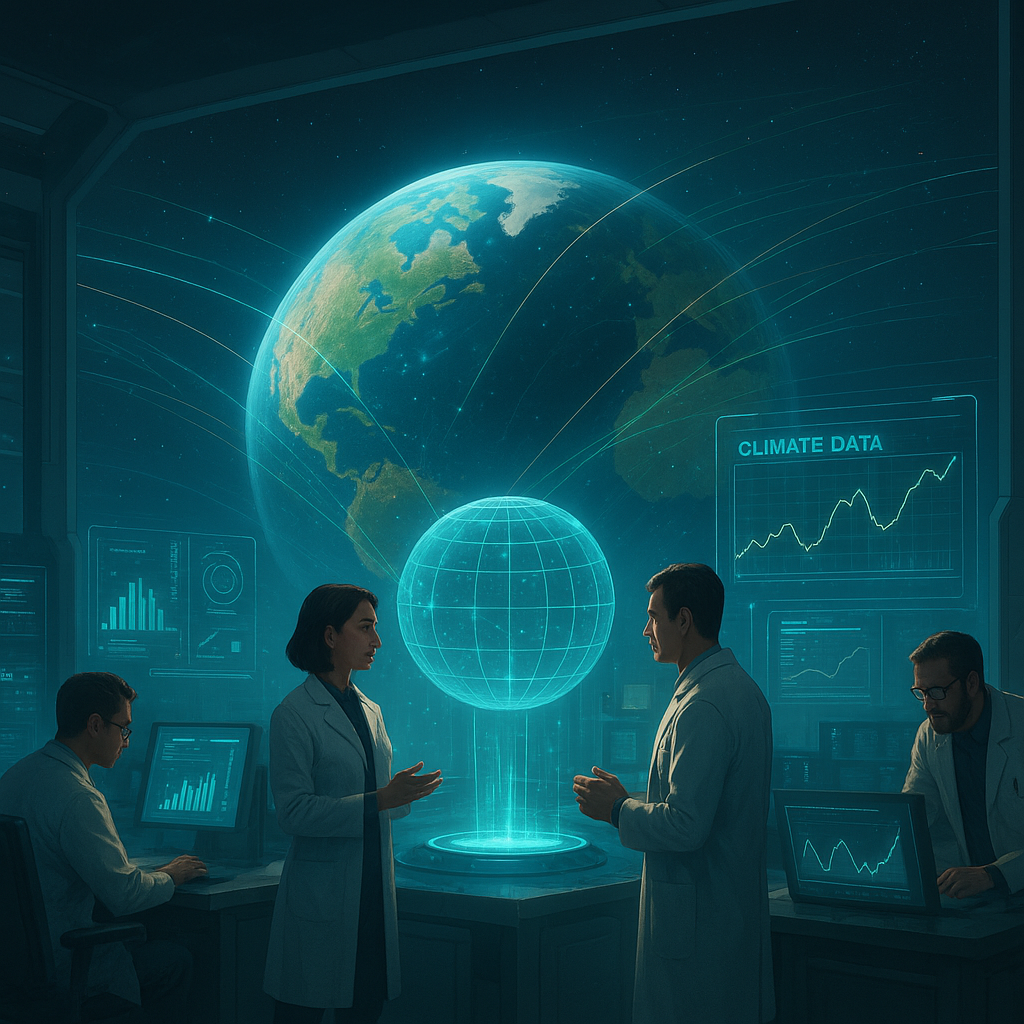
Amid escalating climate impacts, climate science has pivoted toward actionable interventions. The 2026 United Nations Climate Science Report highlights encouraging progress in carbon capture and storage (CCS) technologies, with global capacity reaching 1.2 gigatons annually.
Emerging geoengineering techniques include:
- Stratospheric aerosol injection pilot projects demonstrating localized temperature regulation without adverse weather effects.
- Ocean alkalinization efforts enhancing natural carbon sinks.
- AI-driven climate modeling improving predictions of extreme weather events with 30% higher accuracy.
"Geoengineering is not a silver bullet but a necessary tool in our climate response toolkit," states Dr. Ahmed El-Sayed, lead author of the UN report.
These strategies offer hope but require careful governance to mitigate risks.
4. Artificial Intelligence and Neuroscience Integration
AI’s fusion with neuroscience is redefining our understanding of cognition and brain health. Brain-computer interfaces (BCIs) have made remarkable strides, with over 10,000 implanted devices worldwide aiding patients with paralysis or sensory impairments, according to the 2026 NeuroTech Annual Review.
Highlights include:
- Development of adaptive AI algorithms that translate neural signals into precise motor commands.
- Neurofeedback systems improving mental health outcomes by modulating brain activity.
- Mapping of neural circuits underlying memory and decision-making at unprecedented resolution.
The potential to treat neurological diseases and augment human capabilities is increasingly within reach.
5. Space Exploration and Astrobiology
Renewed interest in the cosmos is fueled by robotic and crewed missions expanding humanity’s footprint beyond Earth. NASA’s Artemis program and private ventures have established sustainable outposts on the Moon, while Mars exploration is progressing with sample return missions planned for 2028.
Astrobiology breakthroughs include:
- Detection of biosignatures in exoplanet atmospheres by next-generation space telescopes.
- Discovery of complex organic molecules on Enceladus, Saturn’s icy moon.
- Advances in planetary protection protocols ensuring contamination-free exploration.
"Finding life beyond Earth would redefine our place in the universe," notes Dr. Priya Khatri, astrobiologist at the Jet Propulsion Laboratory.
These endeavors deepen existential questions while inspiring technological innovation.
6. Advanced Materials and Nanotechnology
Material science has unlocked new realms with two-dimensional materials and programmable matter. The 2026 Global Materials Science Report cites a 25% increase in the performance of energy storage devices due to novel nanocomposites.
Innovations include:
- Development of ultra-lightweight, self-healing materials for aerospace applications.
- Nanoscale drug delivery systems enhancing treatment precision and reducing side effects.
- Smart textiles integrating sensors for health monitoring.
These materials pave the way for next-generation electronics, medicine, and manufacturing.
2026 Highlights: What’s New This Year
The year 2026 has been pivotal in accelerating these scientific fields, with several landmark events and milestones.
- Quantum Leap: The establishment of the Global Quantum Network connecting labs in North America, Europe, and Asia to facilitate secure communication and collaborative research.
- Bioengineered Breakthrough: The FDA’s approval of the first fully synthetic organ implant for human use, marking a new era in regenerative medicine.
- Climate Action: Deployment of pilot-scale geoengineering projects under international regulatory frameworks, signaling cautious but tangible climate intervention efforts.
- AI-Neuroscience Integration: Commercial release of consumer-grade brain-computer interface devices enhancing cognitive training and accessibility.
- Space Milestones: Completion of the lunar research habitat’s second phase, supporting longer expeditions and in-situ resource utilization.
- Material Innovation: Rollout of nanomaterial-based energy storage solutions in electric vehicles, increasing range and charging speed.
These developments reflect a convergence of scientific ambition and societal needs, underscoring a year of profound progress.
Expert Perspectives: Impact and Implications
Leading scientists and industry experts weigh in on the significance of these frontiers and their broader implications.
"The integration of quantum technology into everyday infrastructure will redefine cybersecurity and data privacy," asserts Dr. Elena Morozova, CTO at QuantumNet Solutions.
"Synthetic biology’s potential to alleviate organ shortages and reduce environmental footprints is a testament to how science can directly improve quality of life," says Dr. Marcus Lee, director at the International Bioengineering Institute.
Beyond technical achievements, these breakthroughs raise ethical, economic, and geopolitical questions. For example, the equitable distribution of quantum technologies and synthetic biology treatments remains a pressing challenge. Climate geoengineering demands transparent international cooperation to avoid unintended consequences.
Meanwhile, the melding of AI with neuroscience prompts debates about privacy, consent, and the definition of human identity. Space exploration rekindles questions about planetary stewardship and humanity’s responsibility beyond Earth.
Experts emphasize that multidisciplinary collaboration and robust regulatory frameworks will be key to harnessing these advances responsibly and sustainably.
Looking Ahead: What to Watch in Science’s Next Chapter
As we look toward the next decade, several trends and challenges will shape the trajectory of these top scientific domains.
- Scaling Quantum Infrastructure: Efforts will focus on expanding quantum networks globally and developing fault-tolerant quantum computers capable of solving real-world problems.
- Personalized Bioengineering: Advances in gene editing and cellular therapies will enable highly individualized treatments, potentially curing complex diseases.
- Responsible Climate Intervention: Balancing innovation with caution, governance models for geoengineering will evolve, with public engagement playing a critical role.
- Human-AI Symbiosis: Continued integration of AI and brain technologies will enhance cognitive capabilities but require ethical safeguards against misuse.
- Deep Space Missions: Preparations for crewed Mars missions and asteroid mining ventures will accelerate, raising questions about space law and resource sharing.
- Smart Materials Revolution: Materials with embedded intelligence will transform industries from healthcare to construction, driving sustainability and efficiency.
These areas will demand sustained investment, interdisciplinary expertise, and inclusive discourse to realize their full potential.
For readers seeking a broader perspective on scientific progress this year, TheOmniBuzz’s Science in 2026: Breakthroughs, Challenges, and the Path Forward offers a comprehensive overview. Additionally, for insights on climate-related innovations, see Unveiling Climate Science Breakthroughs Shaping 2026’s Future.
Understanding these six scientific frontiers is essential not only to appreciate current achievements but also to engage with the transformative potential that science holds for humanity’s future.