
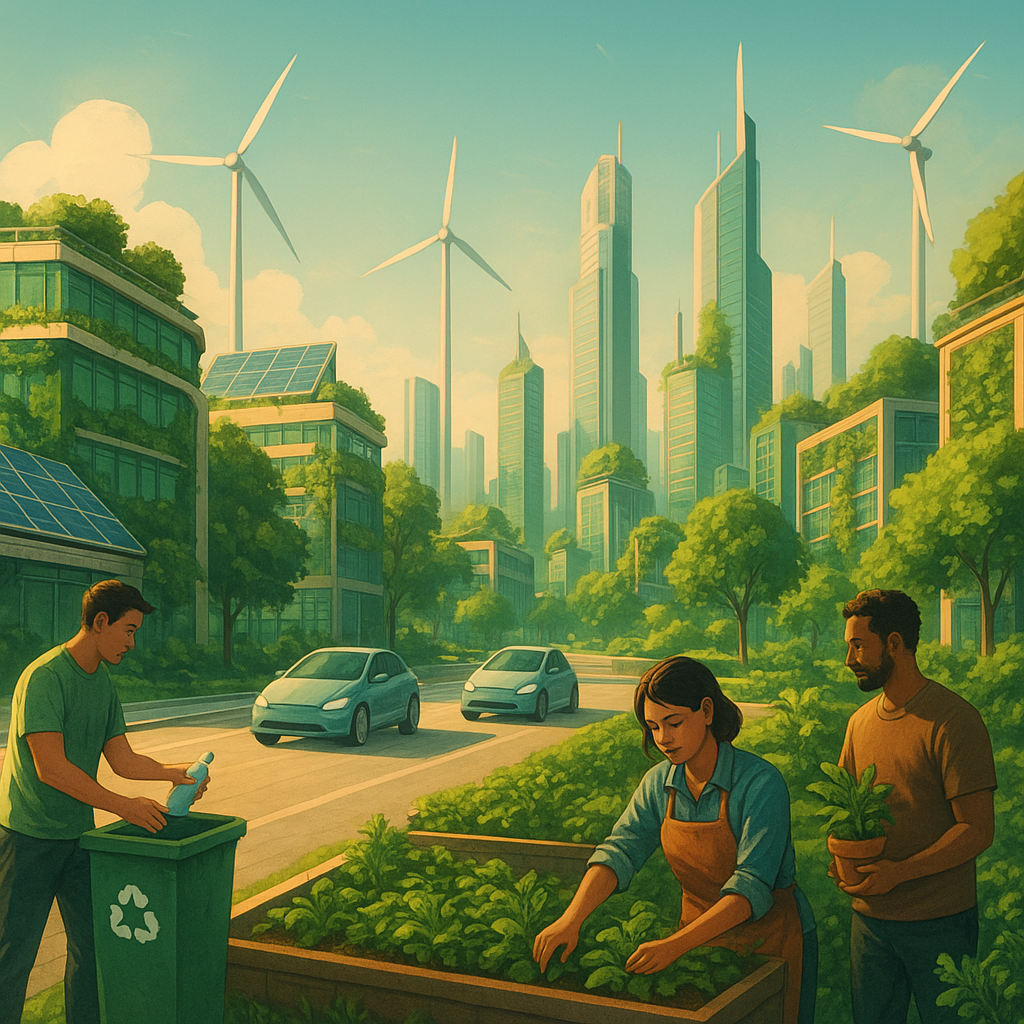
Setting the Stage: A Planet at a Crossroads
In 2026, the urgency of sustainability has never been more palpable. Global carbon emissions, though showing signs of plateauing, still hover near record highs, pushing average global temperatures toward the perilous 1.5°C threshold above pre-industrial levels. This critical juncture compels policymakers, industries, and communities to accelerate transformative actions. Sustainability today is no longer a fringe concept or a corporate buzzword—it's the foundation upon which economies and ecosystems must rebuild.
Consider this: According to the latest figures from the Global Carbon Project, while emissions dipped briefly during the pandemic years, 2025 saw a rebound with a 1.2% increase worldwide. Concurrently, extreme weather events have surged by 40% over the last decade, threatening food security and displacing millions. Against this backdrop, six sustainability trends are emerging as pivotal forces shaping how societies respond to these challenges.
“Sustainability is no longer optional; it is an imperative that defines our survival and prosperity,” says Dr. Elena Martinez, a climate policy expert.
1. Circular Economy Takes Center Stage
The linear 'take-make-dispose' model is rapidly losing ground to circular economy frameworks that emphasize reuse, repair, and resource regeneration. By 2026, nearly 35% of global manufacturing industries have integrated circular practices, up from 20% in 2020, according to the Ellen MacArthur Foundation's 2026 report. This shift is driven by both environmental necessity and economic incentives.
For instance, in the electronics sector, companies like FairTech and RenewCircuits have pioneered modular designs enabling easy component replacement, extending product lifespans by up to 50%. In fashion, brands are embracing textile recycling technologies that convert discarded garments into new fibers without quality loss. These innovations not only reduce landfill waste but also curb the demand for virgin materials, mitigating mining and deforestation impacts.
- Global circular economy market size: Estimated $5 trillion by 2028
- Resource savings: Up to 30% reduction in raw material use in circular models
- Job creation: Circular economy sectors expected to generate 15 million new jobs by 2030
“Circularity transforms waste into wealth, making sustainability economically viable,” notes Jessica Lee, CEO at GreenLoop Consulting.
2. Renewable Energy Scale-Up and Innovations
Renewables dominate new power capacity additions worldwide, now contributing over 45% of global electricity generation, a dramatic rise from 30% in 2020. Solar photovoltaic (PV) and wind technologies have become cost-competitive with fossil fuels, aided by breakthroughs in energy storage and grid management.
In 2026, the advent of solid-state batteries and next-gen green hydrogen production techniques promise to further decarbonize hard-to-abate sectors such as heavy industry and shipping. For example, Hyundai Heavy Industries recently launched a fleet of green hydrogen-powered cargo ships, reducing lifecycle emissions by over 70% compared to conventional vessels.
Government policies are also playing a crucial role. The European Union’s Green Deal and China’s 14th Five-Year Plan together allocate over $1 trillion in clean energy investments over the next decade, accelerating the transition at an unprecedented scale.
- Global renewable capacity: 4,200 GW installed as of early 2026
- Battery cost decline: Solid-state batteries down 60% since 2023
- Renewable jobs: 40 million employed worldwide in clean energy sectors
3. Nature-Based Solutions Gain Momentum
Conservation and restoration of natural ecosystems are recognized as key tools for climate mitigation and adaptation. In 2026, nature-based solutions (NBS) account for approximately 25% of new climate finance flows globally, reflecting a growing acknowledgment of their dual benefits for biodiversity and carbon sequestration.
Large-scale reforestation projects, wetland restoration, and regenerative agriculture practices are scaling up. The Amazon Forest Restoration Initiative, backed by a coalition of governments and NGOs, has successfully reforested 3 million hectares over the past five years, sequestering an estimated 150 million tons of CO2. Additionally, regenerative farming techniques that build soil organic matter are improving yields while reducing emissions.
These efforts are complemented by innovative financing mechanisms such as carbon credits linked to verified ecosystem services, enhancing incentives for landowners and indigenous communities to engage in sustainable land stewardship.
- Carbon sequestration potential: NBS can offset up to 30% of global emissions
- Global investment in NBS: $200 billion annually and rising
- Restored ecosystems: Over 500 million hectares targeted worldwide
4. Sustainable Urban Development and Smart Cities
Urban areas, home to over 60% of the global population, are focal points for sustainability innovation. Smart city initiatives integrate digital technologies with ecological design to optimize energy use, waste management, and mobility.
By 2026, more than 100 megacities have adopted smart grids that dynamically balance electricity supply and demand, incorporating distributed renewables and electric vehicle (EV) charging infrastructure. Cities like Copenhagen and Singapore lead in net-zero urban districts, combining green building standards with circular water and waste systems.
Furthermore, the rise of green public transportation—electric buses, bike-sharing, and pedestrian-friendly infrastructure—is reducing urban carbon footprints. TheOmniBuzz’s analysis in “Sustainability in 2026: Progress, Challenges, and Future Pathways” highlights how these developments not only curb emissions but enhance quality of life and equity.
“Smart cities are proving that sustainability and livability are two sides of the same coin,” states urban planner Mia Tan.
5. Corporate Sustainability and Climate Accountability
Corporate sustainability has evolved from voluntary reporting to rigorous climate accountability frameworks. In 2026, over 75% of the world’s largest 2,000 companies have committed to science-based targets aligned with limiting warming to 1.5°C, according to the Science Based Targets initiative (SBTi).
This shift is driven by investor demands, regulatory pressure, and consumer preferences. ESG (Environmental, Social, Governance) metrics are now integral to capital allocation decisions, with sustainable assets under management surpassing $50 trillion globally. Companies in sectors ranging from apparel to technology are embedding circularity, renewable energy procurement, and supply chain transparency into their core operations.
Innovations like AI-enabled emissions tracking and blockchain-based supply chain verification are enhancing data accuracy and stakeholder trust. TheOmniBuzz’s feature “How AI and Sustainability Are Revolutionizing Ecommerce” underscores AI’s role in optimizing resource use and reducing waste in fast-moving industries.
- Companies with net-zero targets: 1,500+ globally
- ESG investment growth: 12% annual increase since 2022
- Supply chain emissions visibility: Improved by 40% through digital tools
6. Food Systems Transformation
Food production accounts for roughly one-third of global greenhouse gas emissions, making sustainable agriculture and dietary shifts critical. In 2026, plant-based and cultured meat alternatives capture 15% of the global protein market, up from 5% in 2020, driven by rising consumer awareness and technological advances lowering costs.
Regenerative farming practices that restore soil health and biodiversity are expanding rapidly. Initiatives like the Global Soil Partnership promote agroecology and reduced synthetic fertilizer use, which is vital considering fertilizer production contributes about 2% of global CO2 emissions.
Urban farming and vertical agriculture are also reshaping food supply chains, reducing transportation emissions and water use. Cities like Tokyo and New York have integrated vertical farms into their food networks, improving resilience and local access.
“Transforming food systems is essential not just for climate but for human health and equity,” emphasizes Dr. Amina Hassan, food sustainability researcher.
Looking Ahead: What to Watch in Sustainability
The trajectory of these six trends will depend on several factors: governmental policy coherence, technological breakthroughs, and societal engagement. As 2026 unfolds, key dynamics include:
- Climate policy integration: The effectiveness of new international agreements and national policies in accelerating emissions reductions
- Technology diffusion: Whether innovations like green hydrogen and AI-driven resource management become widely accessible
- Equity and inclusion: Ensuring marginalized communities benefit from sustainability transitions
- Corporate leadership: How companies balance profit motives with genuine climate responsibility
- Consumer behavior: The role of awareness and demand in driving sustainable products and lifestyles
Future pathways hinge on coordinated action across sectors. TheOmniBuzz’s article “How Green Tech Is Transforming Sustainability Beyond the Buzz” offers an in-depth view of technology’s role in this evolution. Likewise, insights from “Why Fashion’s Future Lies Beyond Trends and Into Sustainability” reveal how even traditionally polluting industries are reinventing themselves.
In conclusion, these six sustainability trends represent more than isolated initiatives—they are interconnected pillars of a global effort to secure a livable future. Their scaling and integration will determine whether humanity can avert the worst impacts of climate change and foster resilient, thriving societies.