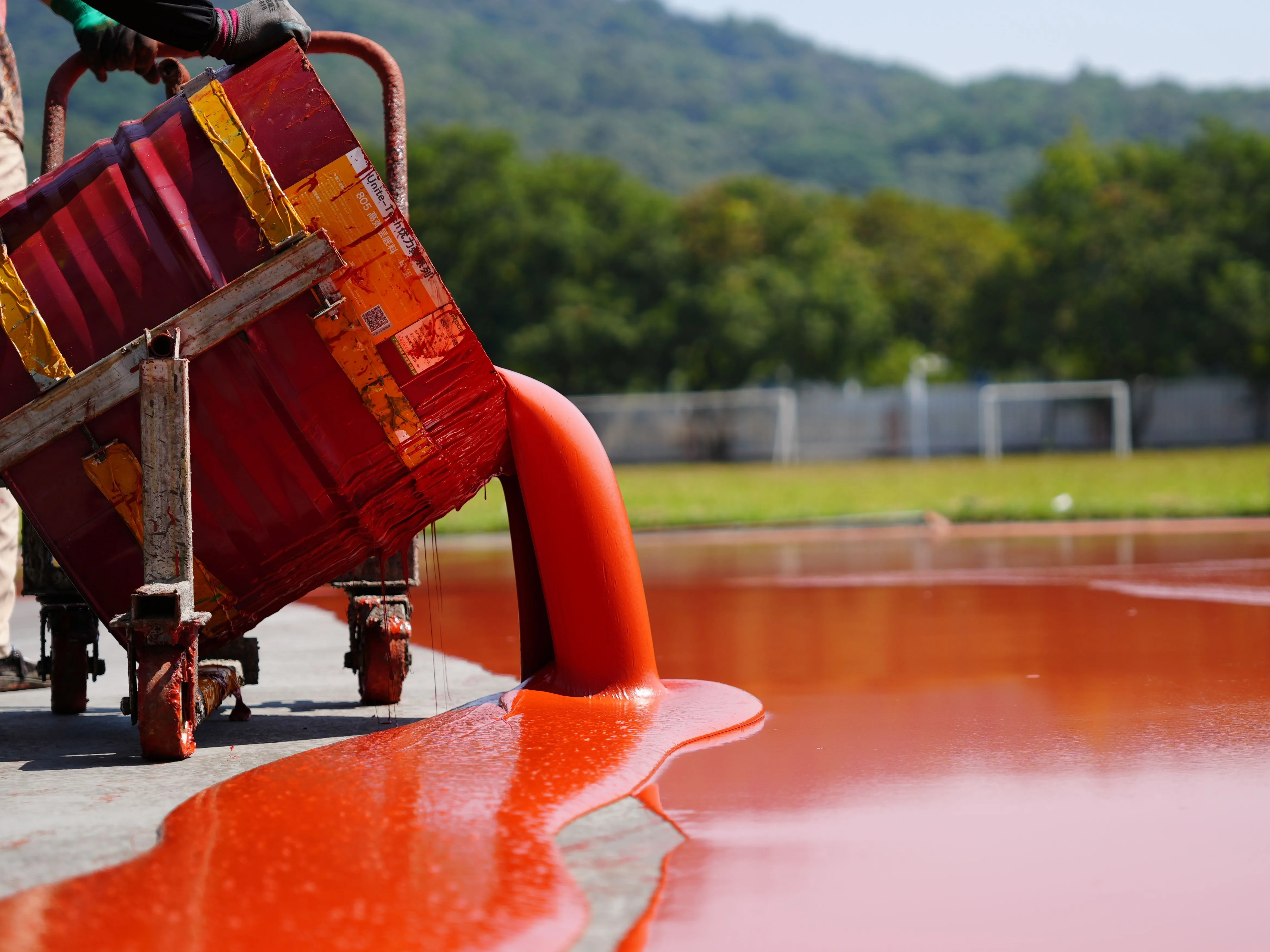
The construction of synthetic running tracks is heavily influenced by outdoor weather conditions. In rainy regions, sudden downpours can frequently interrupt installation work and threaten project quality.
If you are dealing with unexpected weather, here is a comprehensive guide to handling and repairing rain-damaged synthetic track materials.
The Impact of Rain on Uncured Synthetic Tracks
When uncured synthetic track materials are exposed to rainwater, the curing process is severely disrupted. Moisture prevents the polyurethane from setting properly, which can lead to disastrous structural defects.
In cases of heavy exposure, all uncured, rain-damaged sections must be completely removed. Construction teams must thoroughly sand the damaged area until the underlying concrete base is fully exposed. While starting the installation process from scratch consumes extra materials and labor, it is the only way to guarantee a fully cured track without hidden defects.
5 Steps to Repair Partial Rain Damage
In practical construction, rain often causes partial surface damages, such as blistering or small pits formed by heavy raindrops hitting the elastic layer.
If your track experiences partial rain damage, follow these 5 essential remediation steps:
- Cut out defects: Carefully cut off all blistered or delaminated areas using a sharp utility knife.
- Fill the gaps: Fill the raindrop pits and repaired blister zones with an elastic compound. Apply this in multiple thin coats rather than one thick layer.
- Smooth the surface: Use a belt sander to sand the entire surface, smoothing out the raindrop pits as much as possible.
- Level the track: If slight unevenness remains after sanding, apply another thin layer of elastic material to perfectly level the area.
- Apply top coating: Finally, apply the top weather-resistant coating to finish the repair and seal the track.
Key Prevention Strategy: Keep Moisture Away
Prevention is always better than repair. Synthetic track materials — especially polyurethane surfacing — must be kept strictly away from water during construction. Exposure to moisture leads to partial blistering and delamination, a problem often exacerbated by improper base compaction.
To prevent this, the compactness of the base layer must be strictly controlled to avoid loose areas in the asphalt base course. Always monitor local weather forecasts closely and implement protective tarping measures before rain arrives.
Choose JRACE Sports for Professional Track Installation
To guarantee track quality and service life, partner with experienced professionals. JRACE Sports specializes in cast-in-place, semi-prefabricated, and prefabricated running track and walkway materials, as well as FIBA-certified court systems and acrylic sports surfacing.
As a professional sports surfacing manufacturer integrating R&D, production, sales, and on-site construction technical guidance, we ensure your project is done right — rain or shine.