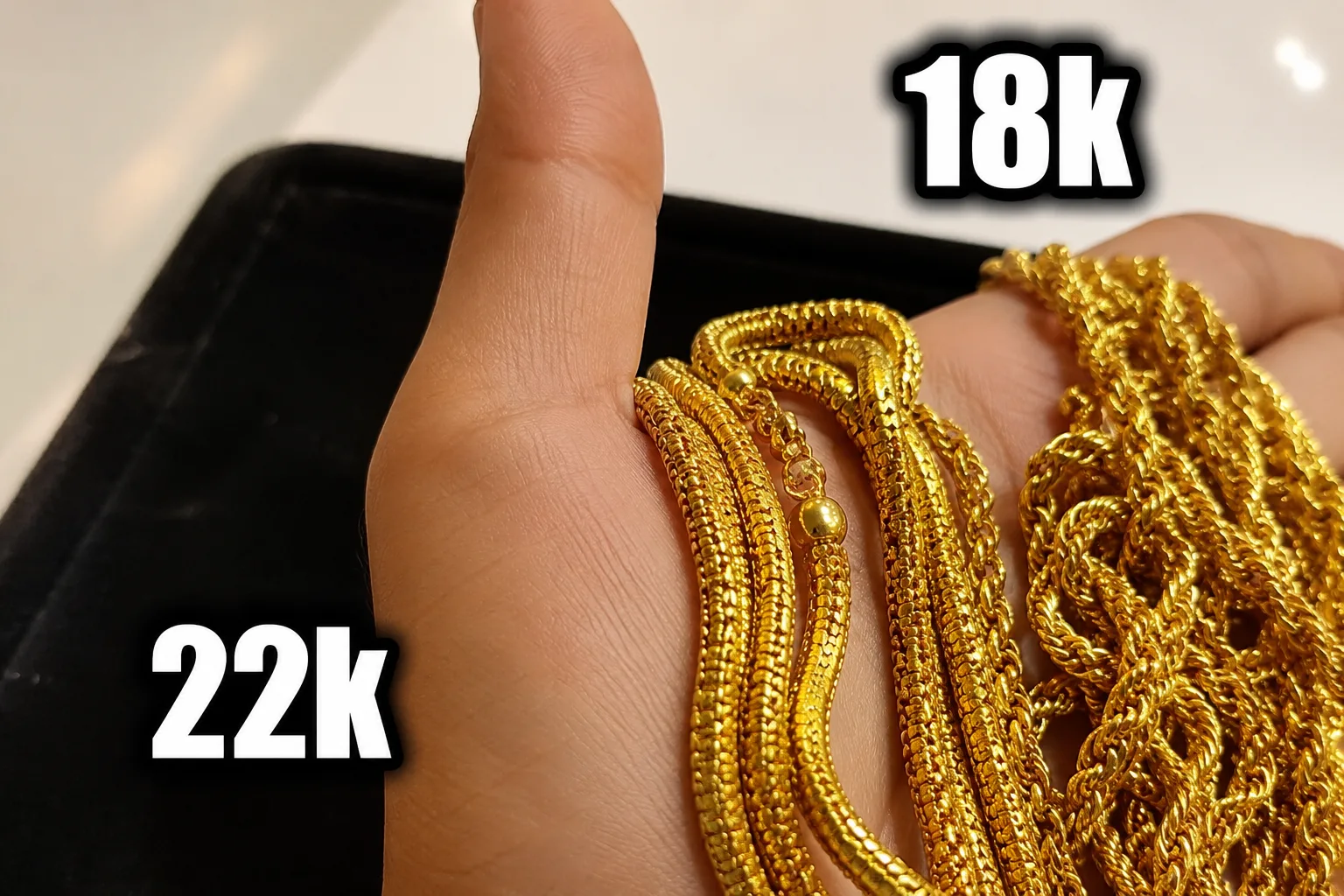
Gold jewellery is more than just a beautiful accessory. For many buyers, it represents tradition, personal style, celebration, and long-term value. But when you start shopping for gold jewellery, one question often comes up: Should you choose 24K, 22K, or 18K gold?
The answer depends on what you are buying, how often you plan to wear it, your preferred design, and how much gold purity matters to you.
Although 24K, 22K, and 18K are all genuine gold grades, they differ significantly in purity, strength, appearance, and suitability for different types of jewellery. Understanding these differences can make your buying decision much easier.
What Does 24K, 22K and 18K Gold Mean?
The "K" or karat refers to the proportion of pure gold in a piece. Gold purity is measured out of 24 parts.
- 24K gold contains approximately 99.9% pure gold.
- 22K gold contains approximately 91.6% pure gold.
- 18K gold contains 75% pure gold.
The remaining portion consists of other metals that are added to improve strength and make the gold more suitable for jewellery.
This means a higher karat does not automatically mean that a particular jewellery piece is the best choice. Instead, each purity level has its own advantages.
24K Gold: Maximum Purity
24K is the highest commonly available gold purity. With approximately 99.9% gold content, it has the strongest connection to the natural properties and colour of pure gold.
However, pure gold is relatively soft. It can scratch, bend, or become damaged more easily than gold alloys containing other metals. For this reason, 24K gold is generally more suitable for investment-oriented products such as coins and bars than for intricate everyday jewellery.
For buyers specifically interested in the highest gold purity, Tajvi Gold offers a dedicated 24-kt Gold Jewellery collection with pieces designed around this premium gold grade.
Explore 24-kt Gold Jewellery at Tajvi Gold
When should you consider 24K gold?
24K can be a suitable option when:
- Maximum gold purity is your priority
- You are looking for gold primarily for its metal value
- You prefer the rich natural yellow appearance of high-purity gold
- The jewellery will be worn occasionally and handled carefully
If durability for everyday wear is your main concern, however, a lower-karat alloy may be more practical.
22K Gold: A Popular Choice for Traditional Jewellery
22K gold contains approximately 91.6% pure gold, with the remaining percentage made up of other metals. This combination gives it more strength than 24K while retaining a high level of gold purity.
This balance makes 22K particularly popular for traditional gold jewellery. Necklaces, bangles, chains, earrings, and other classic designs are commonly made in 22K gold.
The colour is also typically rich and warm, making it especially appealing for traditional jewellery and festive occasions.
If you want a combination of high gold purity and practical strength, 22K can be a strong middle ground.
Tajvi Gold's 22kt Gold Jewellery collection offers another option for shoppers who prefer this balance.
Explore 22kt Gold Jewellery at Tajvi Gold
When should you consider 22K gold?
22K may be right for you if:
- You want high gold purity
- You prefer traditional gold jewellery
- You are shopping for wedding or occasion jewellery
- You want a richer yellow-gold appearance
- You want more durability than 24K offers
For many buyers, 22K represents a practical balance between purity and wearability.
18K Gold: Designed for Style and Durability
18K gold contains 75% pure gold, with approximately 25% consisting of other metals. The additional alloy content makes it harder and generally more resistant to everyday wear than higher-purity gold.
This makes 18K particularly useful for jewellery that features detailed designs, gemstones, or pieces intended for frequent wear.
18K gold can also be produced in different colour variations depending on the metals used in the alloy, including yellow gold, white gold, and rose gold.
For buyers who prioritise modern designs, durability, and everyday practicality, 18K can be an attractive choice.
Tajvi Gold also has a dedicated 18kt Gold Jewellery collection for shoppers looking for this combination of gold content and versatility.
Explore 18kt Gold Jewellery at Tajvi Gold
When should you consider 18K gold?
18K can be a good choice if:
- You plan to wear your jewellery regularly
- You prefer contemporary designs
- You want greater durability
- You are buying jewellery featuring diamonds or gemstones
- You like different gold colours and finishes
24K vs 22K vs 18K: At a Glance
Feature24K Gold22K Gold18K GoldApprox. gold purity99.9%91.6%75%Gold contentHighestHighModerateDurabilityLowerModerateHigherColourRich yellowRich yellowVaries by alloyBest suited forHigh-purity gold/investmentTraditional jewelleryModern & everyday jewelleryEveryday wearLess suitableSuitable for many piecesGenerally more suitableGemstone designsLess practicalSuitable for selected designsVery suitableThe key point is that purity and durability work differently. As the gold content increases, the amount of alloy generally decreases, making the metal softer. Lower-karat gold can therefore offer greater strength and design flexibility.
So, Which Gold Should You Buy?
There isn't one answer that works for everyone.
If purity is your top priority, 24K is the obvious choice. It offers the highest gold content, but its softness means you need to be more careful when using it as jewellery.
If you want traditional jewellery with high gold content, 22K is worth considering. It offers a useful balance between purity and strength and is particularly popular for classic jewellery styles.
If your priority is everyday wear, modern styling, or gemstone jewellery, 18K may be the better fit. Its higher alloy content gives the jewellery greater strength and design flexibility.
Think about how you will use the jewellery
Instead of asking, "Which gold is best?", ask:
"Which gold is best for me?"
For example:
- Gold for investment or maximum purity: Consider 24K.
- Traditional wedding jewellery: Consider 22K.
- Daily-wear jewellery: Consider 18K or 22K depending on the design.
- Diamond or gemstone jewellery: 18K can offer useful durability and setting flexibility.
- Occasional statement pieces: 22K or 24K may suit buyers who prioritise higher gold content.
Don't Choose Gold Purity Based on Price Alone
A lower price does not necessarily mean better value, just as the highest purity does not automatically make a piece the best purchase.
When comparing jewellery, look beyond the gold rate. Consider the purity, weight, design, making charges, gemstones, certification or hallmarking, and intended use.
Most importantly, purchase from a trusted jeweller and check the purity marking and relevant certification before completing your purchase.
The Bottom Line
24K, 22K, and 18K gold each serve different purposes.
24K gives you the highest gold purity but is softer. 22K offers a strong balance between purity and practicality, making it a popular choice for traditional jewellery. 18K contains less pure gold but offers greater strength and versatility, making it particularly suitable for modern and frequently worn jewellery.
So, whether you are looking for the highest-purity gold, traditional jewellery for a special celebration, or a durable piece for everyday styling, understanding the difference between 24K vs 22K vs 18K gold helps you choose with confidence.
Explore Tajvi Gold's collections to find the gold purity that fits your style and purpose — from 24-kt Gold Jewellery to 22kt Gold Jewellery and 18kt Gold Jewellery.