Implementing SA8000:2026 is not simply about having policies in place. Organizations need practical procedures that explain how social accountability requirements are applied, monitored, and improved in day-to-day operations. Well-defined SA8000:2026 procedures can help establish consistent processes for protecting worker rights, managing social risks, and maintaining evidence for audits.
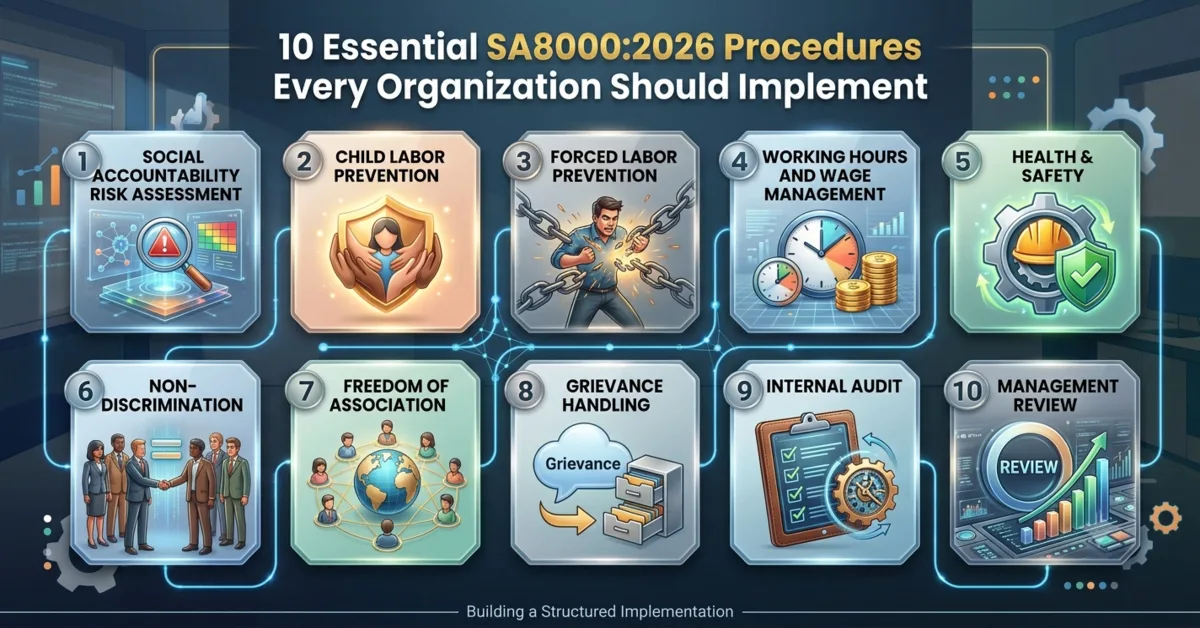
Here are 10 important procedures organizations should consider when developing an effective SA8000 management system.
1. Social Accountability Risk Assessment Procedure
Begin by identifying risks related to labor practices, working conditions, worker rights, discrimination, health and safety, and other relevant social accountability issues. A documented risk assessment procedure helps determine where controls and corrective actions are needed.
2. Child Labor Prevention Procedure
Organizations should establish clear controls for preventing child labor and verifying applicable age requirements during recruitment. The procedure should also explain how potential cases are identified, addressed, and documented.
3. Forced Labor Prevention Procedure
A documented procedure should define controls for preventing forced or compulsory labor, including practices related to recruitment, employment conditions, freedom of movement, and worker rights.
4. Working Hours and Wage Management Procedure
Organizations need a consistent process for monitoring working hours, overtime, wages, benefits, and applicable legal requirements. Proper records provide useful evidence of SA8000 compliance and support transparent workforce management.
5. Health and Safety Management Procedure
A workplace health and safety procedure should explain how hazards are identified, risks are evaluated, controls are implemented, incidents are reported, and improvements are monitored. This helps integrate worker safety into everyday operations.
6. Non-Discrimination and Equal Treatment Procedure
Organizations should define how discrimination, harassment, and unequal treatment are prevented and addressed. Clear responsibilities and reporting mechanisms can help create a respectful workplace while supporting relevant SA8000 requirements.
7. Freedom of Association Procedure
Workers should understand their rights relating to representation, association, and collective bargaining where applicable. A documented procedure can establish responsibilities for respecting these rights and handling related concerns.
8. Grievance and Complaint Handling Procedure
An effective grievance mechanism gives workers a structured way to raise concerns without fear of retaliation. The procedure should cover submission, investigation, confidentiality, response, corrective action, and follow-up.
9. Internal Audit and Corrective Action Procedure
Internal audits help organizations evaluate whether their social accountability processes are implemented as planned. An SA8000 audit checklist, objective evidence, findings, corrective actions, and follow-up activities can make audit preparation more systematic.
10. Management Review and Continual Improvement Procedure
Management should periodically review social accountability performance, audit results, grievances, risks, corrective actions, and improvement opportunities. This helps ensure that SA8000 documentation remains relevant and supports continual improvement.
To make these procedures practical, organizations should also understand how SA8000:2026 requirements connect with procedures and records so that each requirement is supported by appropriate documented evidence.
Each procedure should be adapted to the organization’s size, activities, workforce, and identified social risks. Maintaining clear responsibilities, controlled documents, and supporting records can also make SA8000 implementation more consistent. This structured approach helps organizations demonstrate how their processes address applicable requirements, provides useful evidence during internal reviews and certification assessments, and supports continual improvement.
Build a More Structured SA8000 Implementation
Creating these procedures from scratch can require considerable time, particularly when organizations must connect requirements with policies, forms, records, responsibilities, and audit evidence. A structured set of editable SA8000:2026 procedures can provide a practical starting point for developing and customizing the required SA8000:2026 documents.
The right documentation should reflect the organization's actual activities rather than simply creating paperwork for SA8000 certification. When procedures are implemented effectively and supported by appropriate records, organizations can make social accountability processes easier to manage, monitor, and demonstrate during assessments.