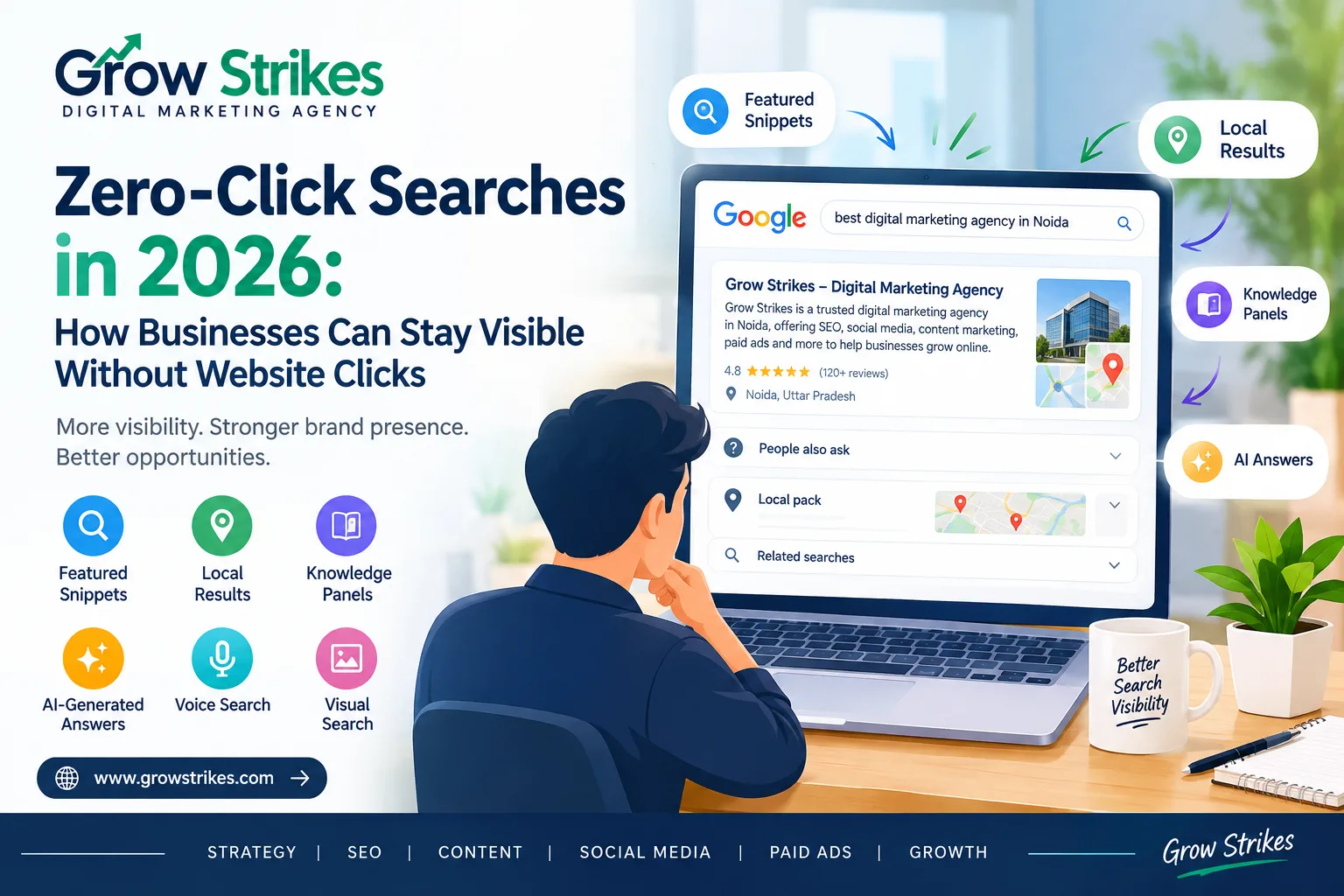
Search behavior is changing rapidly. People no longer depend entirely on traditional search results to find answers online. Search engines increasingly provide information directly on results pages through featured snippets, local results, knowledge panels, AI-generated answers and other search features.
This has created a growing focus on zero-click searches, where users find the information they need without visiting a website from the search results.
For businesses, this does not mean SEO is becoming irrelevant. Instead, it means brands need to think beyond website clicks and focus on overall search visibility, brand recognition and useful information.
What Are Zero-Click Searches?
A zero-click search happens when a user receives an answer directly within the search results and does not need to click through to another website.
For example, someone might search for a business's opening hours, a definition, a quick calculation or a local business. Search engines can sometimes display the answer directly.
This behavior is becoming increasingly important because users often want fast answers.
Businesses therefore need to consider how their information appears within search experiences rather than focusing only on traditional organic website traffic.
Why Zero-Click Searches Matter
Website traffic is still valuable, but it is not the only way people interact with a brand.
A business can appear in search results, provide an answer, show its location or become visible for a relevant question even when the user does not immediately visit its website.
This can contribute to brand awareness.
For example, if someone repeatedly sees a company name while researching a particular service, that company may become familiar to the potential customer.
Therefore, modern SEO strategy 2026 should consider visibility, relevance and brand presence in addition to clicks.
1. Create Content That Answers Real Questions
One of the most effective ways to improve search visibility is to understand what customers actually want to know.
Businesses should research common questions related to their products and services.
For example, a digital marketing business might create content answering questions such as:
- What is SEO?
- How does social media marketing work?
- Why does a business need a website?
- How can local businesses improve online visibility?
- What is the difference between SEO and paid advertising?
Clear answers can make content easier for both users and search engines to understand.
2. Use Clear and Organized Content
Search engines need to understand the structure of a webpage.
Businesses should organize their content using clear headings, short paragraphs, lists and descriptive sections.
Instead of creating one extremely long block of text, information should be divided into logical sections.
For example, an article can use headings such as "What Is Local SEO?", "Why Does Local SEO Matter?" and "How Can Businesses Improve Local Visibility?"
This structure improves readability and makes important information easier to identify.
3. Focus on Search Intent
Keywords are important, but understanding search intent is equally important.
A user searching "SEO agency" may be looking for a service provider, while someone searching "what is SEO" is probably looking for educational information.
Businesses should create different types of content for different search intentions.
Service pages can explain what a company offers, while blog articles can answer informational questions.
Matching content with intent can make a website more useful and relevant.
4. Strengthen Local Search Visibility
Local businesses can benefit from optimizing their online presence for location-based searches.
Accurate business information, relevant local content, customer reviews and a properly maintained Google Business Profile can support local visibility.
For example, a business targeting customers in Noida can create useful content related to services in that market.
A digital marketing agency in Noida may also use local SEO, content marketing and social media to increase its overall online presence.
5. Build Brand Authority
Zero-click search makes brand recognition increasingly important.
If a business consistently provides useful information across its website and other online channels, people may begin to recognize the brand as a useful source.
Businesses can build authority by publishing educational articles, answering customer questions, sharing industry insights and maintaining accurate online information.
Consistency matters because authority is usually built over time rather than through a single piece of content.
6. Optimize for Featured Search Results
Search engines can display information in different formats, including featured snippets and other enhanced search results.
Businesses can improve the clarity of their content by answering questions directly.
For example, if an article discusses "What is content marketing?", the page could provide a short, clear definition before expanding on the topic.
Lists, step-by-step explanations and concise answers can also make information easier to understand.
However, there is no guarantee that a particular page will appear in a specific search feature. Businesses should focus on quality and usefulness rather than trying to manipulate search results.
7. Don't Ignore Website Traffic
Zero-click searches do not mean businesses should stop trying to attract website visitors.
A website remains an important place where customers can learn more about services, compare options, read detailed information and make enquiries.
The goal should be to create content that provides enough value to appear in search while also giving users a reason to explore the website when they need more information.
8. Use Multiple Digital Channels
Search visibility should not depend entirely on one platform.
Businesses can combine SEO with social media, email marketing, online advertising, video content and other digital channels.
For example, an article can be published on a website, summarized in a social media post and discussed in a short video.
This creates multiple opportunities for customers to discover the brand.
An integrated digital marketing strategy can therefore provide broader visibility than relying on SEO alone.
9. Measure More Than Clicks
Traditional SEO reporting often focuses heavily on traffic and rankings.
Businesses should also consider other indicators, such as:
- Search impressions
- Brand searches
- Website enquiries
- Conversion rates
- Local visibility
- Engagement
- Leads
- Returning visitors
A page may generate fewer clicks but still increase brand awareness by appearing frequently for relevant searches.
Businesses should therefore evaluate SEO based on broader business objectives.
10. Prepare for the Future of Search
Search technology will continue to evolve. AI-powered search, voice interfaces, visual search and new search features may change how people discover information.
Businesses that focus on clear information, useful content and strong brand identity can adapt more easily to these changes.
Instead of optimizing only for one specific search feature, businesses should build a strong digital foundation.
That foundation can include a technically sound website, helpful content, local visibility, consistent branding and a clear understanding of customer needs.
Conclusion
Zero-click searches are changing how businesses should think about SEO in 2026. Getting a website visit remains valuable, but visibility itself can also contribute to brand awareness and customer discovery.
SEO is becoming less about simply achieving a ranking and more about being useful wherever customers search for information.
For businesses looking to improve their online presence through SEO, social media, content marketing and other digital channels, Grow Strikes provides digital marketing solutions for businesses seeking sustainable online growth. As search continues to evolve, businesses that focus on helpful information and genuine customer value can build a stronger foundation for long-term digital visibility.