
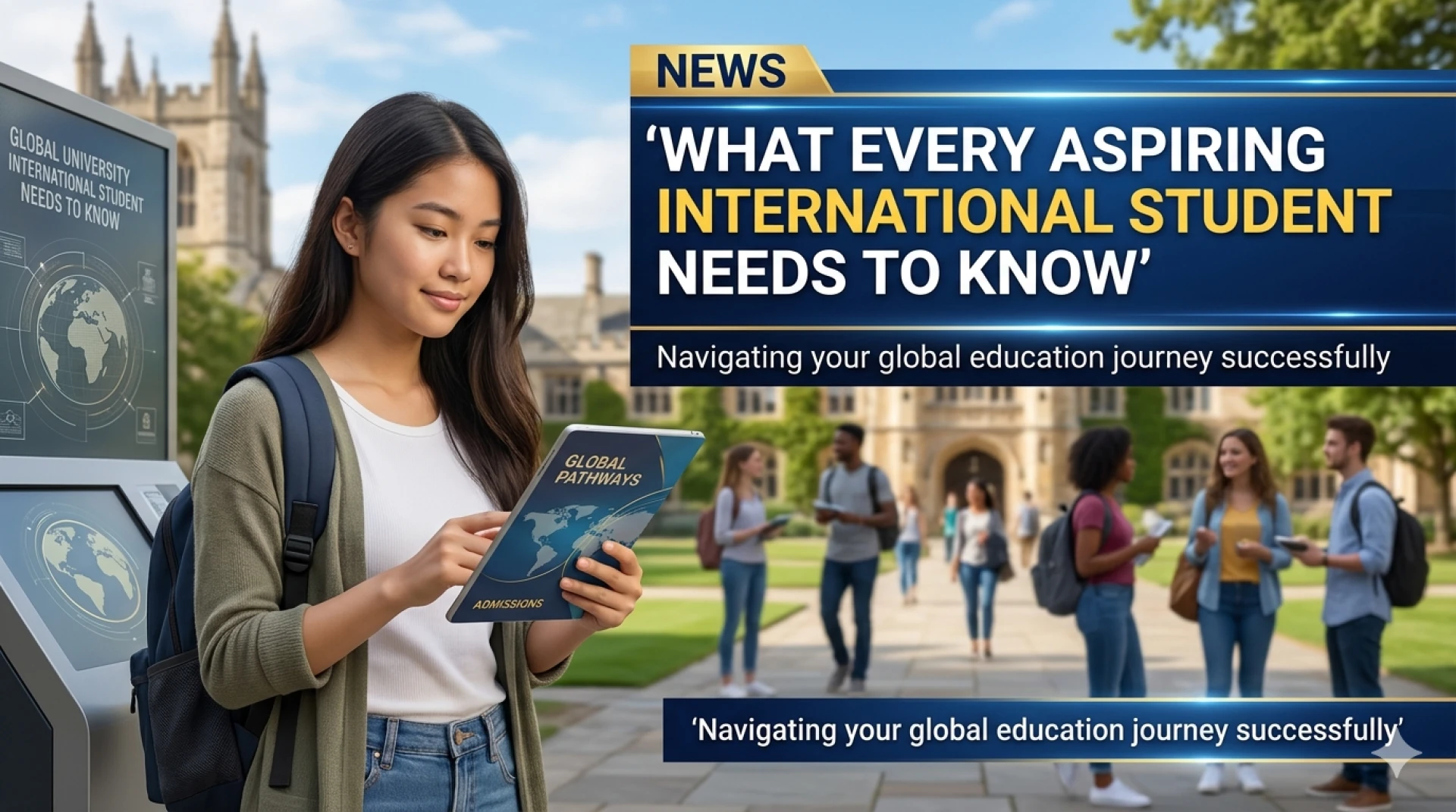
Few academic journeys carry the prestige, the depth, or the lifetime of professional dividends that a United Kingdom education delivers. From the cobbled courtyards of Oxford and Cambridge to the innovation-driven campuses of Imperial College London and the University of Edinburgh, British universities have shaped some of the most influential minds in science, literature, law, business, and technology for centuries.
Today, the United Kingdom remains one of the world's top three destinations for international students—and for very good reason. Shorter degree durations, globally respected qualifications, a rich multicultural campus experience, and a post-study work route that genuinely opens doors make the UK a compelling choice for students from virtually every corner of the world.
But getting there requires more than ambition and academic merit. It requires a precise understanding of the UK's student visa system—one of the most structured, document-intensive, and deadline-sensitive immigration processes in the world.
Why the United Kingdom Continues to Attract the World's Best Students
The United Kingdom hosts over 600,000 international students annually, drawn from more than 200 countries. Its universities consistently rank among the world's finest — the UK holds more top-100 QS World University Rankings positions per capita than any other country on earth.
What makes the UK particularly attractive, however, is not just the prestige of its institutions. It is the efficiency of the degree structure. Most undergraduate degrees are completed in three years rather than four, and postgraduate master's programs are typically one-year intensive courses. This means students spend less time and money achieving a qualification that carries the same — often greater — global weight as degrees from other leading destinations.
The United Kingdom also offers the Graduate Route visa, introduced in 2021, which allows international students to remain in the UK for two years after graduation (three years for PhD graduates) to seek and undertake skilled work. This post-study work pathway has dramatically enhanced the UK's appeal for students who see their degree as the foundation of an international career.
Understanding the UK Student Visa (Previously Tier 4)
The primary route through which international students enter the UK for full-time study is the student visa, which replaced the former Tier 4 (General) student visa under the UK's points-based immigration system introduced in 2021.
To be eligible for a UK student visa, applicants must meet a clearly defined set of criteria. They must hold an unconditional offer from a UKVI-licensed sponsor—a university or institution that has been granted permission by the UK Visas and Immigration authority to sponsor international students. They must demonstrate sufficient English language proficiency, typically through IELTS for UKVI, PTE Academic, or an equivalent approved test. And they must provide evidence of adequate financial means to cover both tuition fees and living costs for the duration of their studies.
The financial requirement is one of the most frequently misunderstood aspects of the UK student visa. As of the most recent guidelines, international students must demonstrate that they have held the required funds in their bank account for a minimum of 28 consecutive days before the visa application date. The specific amounts vary depending on whether the student is studying in London or outside London, as living costs in the capital are assessed at a higher threshold.
The CAS Number: The Document That Unlocks Your Visa
Once a student accepts their university offer and meets all pre-sessional requirements, the institution issues a Confirmation of Acceptance for Studies (CAS) number. This unique reference number is the cornerstone of the student visa application—without it, no visa can be submitted.
The CAS number contains detailed information about the course, the institution, the course start date, and the fee structure. It is valid for six months from the date of issue, and the visa application must be submitted within this window.
Timing is everything. Students should plan their CAS request, financial documentation preparation, and visa submission on a carefully coordinated timeline that accounts for processing times, English test scheduling, and university enrollment deadlines. A delay in any one of these areas can create a cascade of complications that is far more stressful — and costly — to resolve than it is to prevent.
English Language Requirements: Choosing the Right Test
All international students applying for a UK student visa from a non-majority English-speaking country must provide an approved English language test score. The most widely accepted tests are IELTS for UKVI and SkillsforEnglish, though some universities also accept PTE Academic or Cambridge English qualifications.
The required score varies by institution and program level. Most UK universities require a minimum overall IELTS band score of 6.0 to 6.5 for undergraduate entry and 6.5 to 7.0 for postgraduate programs. Some highly competitive courses — law, medicine, and certain social sciences — may require a 7.0 or above.
It is important to note that IELTS for UKVI is a specific test variant approved by the UK Home Office for visa purposes. While academically equivalent to standard IELTS Academic, it must be taken at an approved UKVI test center. Submitting a standard IELTS Academic score in place of an IELTS for UKVI score can result in a visa refusal—a costly error that expert advisors consistently help candidates avoid.
Why Expert Visa Guidance Is Not a Luxury — It Is a Necessity
The UK student visa application process involves a level of documentation precision that goes well beyond submitting a form and attaching a bank statement. Financial evidence must be formatted correctly and cover the exact time window specified. Supporting documents — including academic transcripts, offer letters, English test certificates, and passport copies — must be presented in the exact format required by UKVI. Any discrepancy, any missing document, or any ambiguity in the application can result in a refusal or significant delay.
For students based in Gujarat, partnering with a qualified UK student visa consultant in Ahmedabad provides the kind of meticulous, application-specific guidance that dramatically reduces the risk of refusal and ensures every document is prepared, verified, and submitted correctly the first time.
Experienced visa consultants also prepare students for the Student Route visa interview, which the Home Office may request in certain cases. Knowing how to articulate your academic intentions, financial position, and post-study plans in a structured, credible manner is a skill that benefits enormously from professional preparation.
Top UK Universities for International Students: Beyond the Famous Names
While Oxford, Cambridge, and the London institutions attract the most global attention, the United Kingdom's academic excellence extends far beyond its most famous postcodes.
Universities such as the University of Manchester, University of Glasgow, University of Warwick, University of Birmingham, and Newcastle University consistently produce graduates who are highly sought after by international employers. Many of these institutions offer generous scholarship programs specifically for international students—merit-based awards that can reduce tuition fees substantially and make the overall cost of a UK education far more accessible than the headline figures suggest.
Building the right university list—balancing academic ambition with realistic admission prospects, available funding, and specific program strengths—is a strategic exercise that experienced education advisors approach with both data and nuance.
The Graduate Route: Your Bridge From Degree to Career
Perhaps the most strategically significant development in UK international education in recent years is the Graduate Route visa. Launched in July 2021, this route allows international graduates from UKVI-licensed universities to remain in the United Kingdom for two years after completing their degree — or three years for doctoral graduates — to work, look for work, or pursue further study.
The Graduate Route requires no employer sponsorship and places no restrictions on the type of work a graduate may undertake. It is, in effect, an open work authorization that allows graduates to build their UK career credentials, accumulate professional experience, and explore pathways toward longer-term skilled worker visas.
For students who view their UK degree as the first chapter of an international career, the Graduate Route transforms the value proposition of a British education significantly.
Conclusion: A UK Education Is Within Your Reach — With the Right Preparation
The United Kingdom offers one of the most powerful combinations in international education: world-class academic credentials, an efficient degree structure, a genuinely supportive graduate employment pathway, and a campus culture that enriches every student who experiences it.
But the distance between aspiration and arrival is bridged by preparation—meticulous, expert-led preparation that ensures your university applications, visa documentation, and financial planning all work together toward a single, successful outcome.
At Rayna Overseas, that bridge is exactly what we build—one student, one carefully crafted journey at a time. Because every student who dreams of a UK education deserves guidance that is as ambitious and as precise as the goal itself.