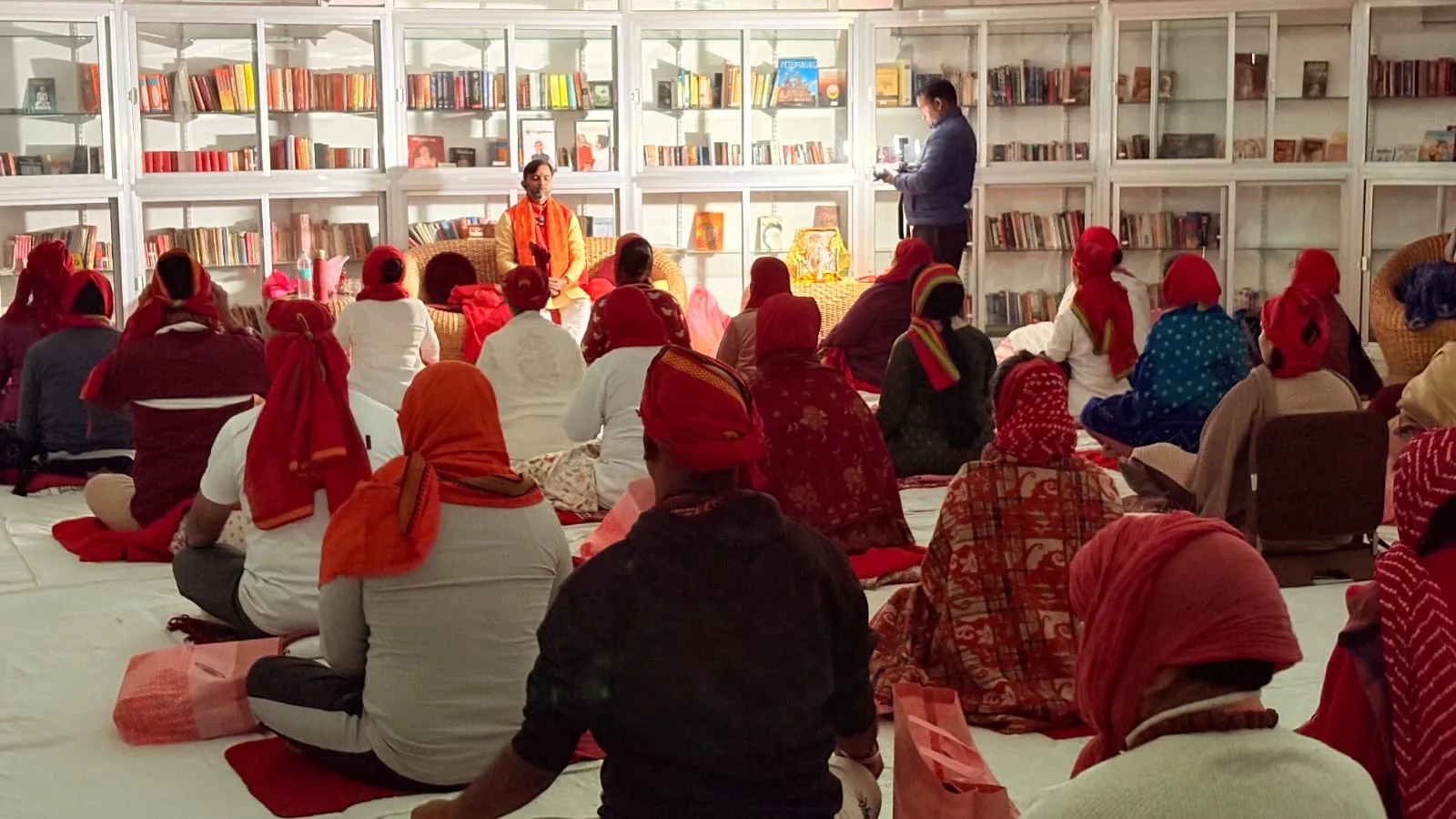
People often describe themselves through their physical appearance, thoughts, emotions, memories and social roles. These experiences shape everyday identity, but spiritual inquiry asks whether there is a deeper dimension of the self. What is the relationship between the body and the soul? How does the mind influence the way people experience life? Can a person observe thoughts and emotions without becoming controlled by them?
Yoga Base explores these questions through its Soul Journey programme. The course introduces the yogic understanding of Atma and guides participants through reflection on the body, mind and soul. Its central invitation is to turn attention inward and explore the self beyond everyday identification.
The soul and body meditation online experience is guided by Yog Guru Shree Ashish Yogi Ji. It also explores karma, relationships, Mauna and the ways in which expectations influence human interactions. The online format allows seekers to learn from their own location and follow a structured programme without travelling to Lucknow.
Why Explore the Relationship Between Soul and Body?
The body is the physical form through which a person moves, communicates and experiences the world. It changes with age, activity, health and environment. The mind processes experiences through thoughts, memories, feelings and interpretations.
In the yogic framework presented by Yoga Base, the soul is understood as the deeper presence that lives in the body but is not identical to the body. This distinction is central to the Soul Journey programme.
Exploring the relationship between soul and body can encourage a person to look at experience from a different perspective. For example, physical discomfort may be noticed without allowing it to define every aspect of identity. A difficult emotion may be acknowledged without automatically turning it into an action.
This is not about rejecting the body or ignoring its needs. Physical care remains important. Instead, the course invites participants to consider the difference between the physical form, mental activity and the awareness that observes experience.
What Is Soul and Body Meditation Online?
The phrase soul and body meditation online describes a guided inward practice focused on exploring the relationship between the physical body and the soul. At Yoga Base, this subject forms part of the wider Soul Journey course.
The programme encourages participants to observe their own experience. They may begin by noticing bodily sensations, then observing thoughts and emotions, and gradually reflecting on the awareness that notices these experiences.
The aim is not to force a particular sensation or claim that every participant will have the same experience. The course treats self-understanding as a gradual process that benefits from patience and guidance.
Understanding the Three Dimensions: Body, Mind and Soul
The body
The body is the physical aspect of human experience. It allows people to walk, work, communicate and interact with their surroundings. It has practical needs, including rest, food, movement and care.
In meditation, the body can become the starting point for observation. A participant may notice posture, breathing and physical sensations without immediately judging them.
The mind
The mind is associated with thoughts, feelings, memories, imagination and interpretation. It may revisit past events or anticipate future situations. Sometimes this activity is useful, while at other times it can become repetitive.
Meditation can provide an opportunity to notice thoughts rather than automatically follow them. A person may recognise that a thought has appeared and allow it to pass without treating it as an instruction.
The soul
In the course's yogic understanding, the soul is the deeper self that witnesses the body and mind. This is a spiritual teaching explored through reflection and guided practice.
The course encourages participants to examine this distinction personally instead of treating it only as an intellectual idea.
How Guided Meditation Supports Self-Observation
Guided meditation can provide structure for people who are learning to direct attention inward. Rather than trying to control every thought, participants can learn to observe what is happening.
A simple observation exercise may include:
- Sit in a comfortable position where you can remain undisturbed for a short period.
- Notice the body's posture and physical sensations.
- Observe the natural flow of breathing without forcing it.
- Notice thoughts and emotions as they arise.
- Return attention gently when the mind becomes distracted.
- Reflect on the difference between the experience being observed and the awareness noticing it.
This is a general reflection exercise, not a substitute for the course's full instruction. Yoga Base encourages learning the deeper practices with appropriate guidance.
Understanding Atma in Everyday Life
The idea of Atma can seem abstract when discussed only through philosophical language. Soul Journey attempts to connect this idea with ordinary experiences.
Consider a situation in which someone criticises you. The body may respond with tension, the mind may produce thoughts and emotions, and an immediate reaction may follow. Through observation, a person can begin to notice these stages.
Instead of responding instantly, they may pause, understand what has happened and choose a more thoughtful response. This does not mean agreeing with unfair criticism. It means creating room for a conscious decision.
The course's emphasis on inner observation can therefore be connected with communication, responsibility and everyday conduct.
Karma and the Relationship Between Actions and Experience
Karma is another central subject in Soul Journey. In the programme's spiritual framework, karma is connected with the impressions created by actions and the experiences that shape an individual's life.
The course invites participants to reflect on why different people may encounter different comforts and challenges. It also encourages them to examine how their own choices influence their relationships.
A practical approach to this subject is to focus on present actions. Participants can ask whether they are communicating honestly, treating others fairly and responding thoughtfully when disagreements arise.
Karma should not be used to blame people for illness, suffering or difficult circumstances. The course's reflective approach is better understood as an invitation to examine personal conduct and develop greater awareness.
The Three Circles of Relationships
Yoga Base introduces the three circles of the soul as a way to understand human connections.
First circle: This includes close family relationships such as parents, spouse and siblings. These connections often carry strong emotional significance and responsibilities.
Second circle: This includes close but changeable relationships, such as friends, colleagues and relatives who may be involved in important decisions or everyday life.
Third circle: This includes acquaintances, extended family and familiar people with whom interactions may be occasional or less personal.
The framework helps participants observe how different relationships affect their thoughts and actions. It also encourages them to understand where expectations arise and why certain interactions may have a stronger emotional impact.
Karma and Relationships Meditation: Learning to Pause
A disagreement can quickly become more difficult when people react without considering the consequences of their words. The Soul Journey programme explores the practice of becoming a “shock absorber”: receiving a difficult interaction calmly rather than immediately sending the same intensity back.
This idea is connected with the course's understanding of karma and relationships. When a person pauses before reacting, they may avoid adding unnecessary conflict to an already difficult situation.
Calmness, however, should never be confused with accepting harm. A person can set clear boundaries, leave unsafe situations and seek support. The purpose of conscious response is not to remove self-respect; it is to act with greater awareness.
The Three Stages of Relationships
The course describes relationships through three stages.
Active: A person gives and receives support, often with an expectation of care in return.
Inactive: A person continues to fulfil responsibilities but begins to reduce the expectation of receiving something back.
Detached: A person performs responsibilities without allowing another person's response to control their inner state.
These stages encourage participants to reflect on their motivations. They can ask whether they are helping because they care, because they expect approval or because they feel unable to say no.
Detachment, in this context, is not a recommendation to become emotionally cold. It is an invitation to examine attachment and expectation while maintaining respect and responsibility.
Mauna: Silence as a Practice of Awareness
Mauna is the practice of silence. In Soul Journey, it is explored as a way to quiet unnecessary expression and observe the mind.
Silence can reveal how often people feel the need to respond, explain, defend or comment. During a period of quiet, thoughts may become more noticeable. This provides an opportunity to understand habitual patterns.
The purpose is not to force the mind into an artificial state. It is to practise observation and allow greater clarity to develop gradually.
Who May Be Interested in This Course?
The Soul Journey course may be relevant to people who:
- Want to explore the relationship between the soul and body.
- Are interested in Atma and self-realisation.
- Wish to understand the role of the mind in everyday experience.
- Want to reflect on karma and relationships.
- Are curious about Mauna and inward observation.
- Prefer a guided online spiritual programme.
It is suitable for sincere seekers who are willing to learn patiently. Those with questions about the practice can contact Yoga Base before enrolling.
Learn with Yoga Base
Yoga Base presents Soul Journey as a guided programme led by Yog Guru Shree Ashish Yogi Ji. The course moves through the nature of the soul, the experience of the soul within, relationships, karma, Mauna and the distinction between body, mind and soul.
Its online format makes it possible to begin from different locations. Interested participants can review the course page, understand the topics and follow the registration instructions provided by Yoga Base.
Conclusion
The soul and body meditation online approach at Yoga Base encourages participants to explore the relationship between physical experience, mental activity and the soul. Through guided reflection, the programme introduces the yogic understanding of Atma and connects it with karma, relationships and silence.
For people who want to look beyond routine ideas about identity and develop a more reflective approach to daily life, Soul Journey offers a structured opportunity for spiritual inquiry under the guidance of Yog Guru Shree Ashish Yogi Ji.
Frequently Asked Questions
1. What is soul and body meditation online?
It is an online meditation and self-inquiry approach focused on exploring the relationship between the physical body and the soul. Yoga Base covers this subject through its Soul Journey programme.
2. What does the Soul Journey course teach about the body?
The course presents the body as the physical home of the soul. It encourages participants to understand the body as an important part of experience while exploring the soul as distinct from the physical form.
3. What is the difference between body, mind and soul?
The body is the physical form, the mind is associated with thoughts and emotions, and the soul is understood in the course's yogic framework as the deeper witnessing self.
4. Is this a guided meditation programme?
Yoga Base describes Soul Journey as a guided inward exploration led by Yog Guru Shree Ashish Yogi Ji. It includes reflection on the soul, karma, relationships and silence.
5. Can beginners explore this course?
People interested in spiritual inquiry can review the course. If you are new to meditation, contact Yoga Base to understand the learning format and any practice expectations.
6. What is Atma?
Atma is a Sanskrit term for the soul or inner self in Indian spiritual traditions. The course explores Atma through the distinction between the soul, body and mind.
7. Does the programme discuss the mind?
Yes. The course includes the distinction between body, mind and soul and encourages participants to observe thoughts and emotions rather than automatically react to them.
8. What is the connection between karma and relationships?
The programme explores how actions, expectations and reactions influence relationships. It encourages participants to reflect on their own conduct and respond more consciously.
9. What is the purpose of Mauna?
Mauna is silence. In the course, it is used as a practice for quieting external expression and turning attention inward.
10. Can I join from outside Lucknow?
Yes. The course page says that Soul Journey is available online, so travelling to Lucknow is not required to begin.
11. Does the course promise a particular spiritual experience?
The course invites participants to explore the soul through guided reflection. Individual experiences can differ, and inner inquiry should be approached patiently rather than as a guaranteed or instant result.
12. How can I enrol in Yoga Base Soul Journey?
Visit the official Soul Journey course page, review the course information and use the enrolment option. You can contact Yoga Base for help with any questions.