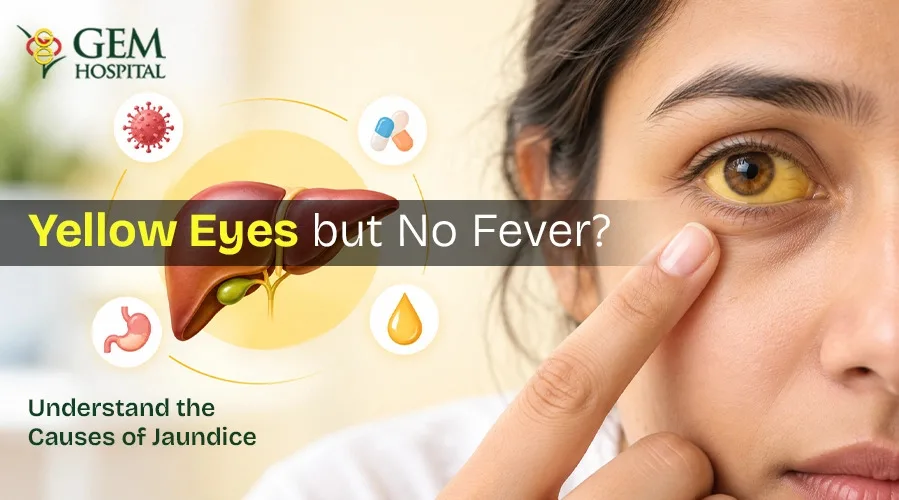
Have you noticed a yellowish colour in your eyes even though you do not have a fever? It is natural to wonder whether this is something temporary or a sign of an underlying health problem. While fever is commonly associated with certain infections, yellow eyes can develop independently and may indicate changes in liver function, bilirubin levels or bile flow.
Many people postpone a medical consultation because they feel normal apart from the change in eye colour. However, yellowing of the eyes deserves attention, even when there is no pain or fever. Understanding the possible reasons can help you make informed decisions about your health. If you notice these changes, consulting a Jaundice Doctor in Coimbatore can help identify the underlying cause and guide further evaluation.
Why Do the Whites of Your Eyes Become Yellow?
The white portion of your eyes is called the sclera. When this area develops a yellow appearance, it is commonly associated with a condition called jaundice.
Jaundice develops when bilirubin builds up in the bloodstream. Bilirubin is a yellow substance produced when the body breaks down old red blood cells. Normally, the liver processes this substance and removes it through bile.
When this process is interrupted, bilirubin levels can increase, causing yellowing of the eyes and sometimes the skin.
The absence of fever does not rule out jaundice. Some liver and bile-related conditions develop gradually without noticeable discomfort. A Jaundice Doctor in Coimbatore can evaluate these changes and recommend suitable investigations.
6 Possible Reasons for Yellow Eyes Without Fever
Yellow eyes can develop for different reasons. Identifying the underlying cause is more important than focusing only on the visible symptom.
1. Silent Liver Inflammation
The liver performs several essential functions, including processing nutrients, filtering waste products and managing bilirubin.
Conditions such as viral hepatitis, autoimmune liver disease and certain medication-related injuries can cause inflammation or damage to liver cells.
In some cases, patients may not experience fever or significant abdominal discomfort. Yellow eyes, tiredness, reduced appetite and dark urine may be among the noticeable changes.
2. Gallstones Affecting Bile Flow
Gallstones are hardened deposits that develop inside the gallbladder. Although many gallstones do not cause symptoms, a stone can sometimes move into the common bile duct and block the normal flow of bile.
This can lead to increased bilirubin levels and yellowing of the eyes.
Patients may notice:
- Yellowish eyes or skin.
- Dark-coloured urine.
- Pale stools.
- Itching.
- Upper abdominal discomfort.
A Jaundice Doctor in Coimbatore may recommend an ultrasound or additional investigations if a bile duct obstruction is suspected.
3. Fatty Liver-Related Complications
Fat accumulation in the liver is relatively common. However, simple fatty liver does not usually cause jaundice.
In some individuals, fatty liver disease can progress to inflammation, advanced liver injury and cirrhosis. These complications may affect normal liver function and bilirubin processing.
Patients with existing liver conditions should seek medical attention if they notice new yellowing of their eyes.
4. Gilbert Syndrome
Gilbert syndrome is an inherited condition in which the liver processes bilirubin less efficiently than usual.
It can cause occasional increases in bilirubin, resulting in mild yellowing of the eyes. Episodes may occur during fasting, dehydration, illness or periods of physical stress.
Although this condition is generally harmless, doctors need to exclude other possible causes before confirming the diagnosis.
5. Blood-Related Conditions
Sometimes, yellow eyes are not caused by a primary liver problem.
When red blood cells break down faster than normal, the body produces additional bilirubin. This can result in a condition known as haemolytic jaundice.
Certain inherited blood disorders, immune-related conditions and other medical problems may contribute to increased red blood cell destruction.
Doctors may recommend blood investigations to understand whether this is responsible for the symptoms.
6. Medication-Related Liver Injury
Some medications and herbal products can affect liver function in certain individuals.
If you notice yellow eyes after starting a new medicine or supplement, inform your healthcare provider. The doctor can review your medication history and decide whether further evaluation or a change in treatment is required.
Do not stop prescribed medicines without medical advice.
Warning Signs That May Accompany Yellow Eyes
Yellow eyes are sometimes the first visible indication of an underlying health concern. Other symptoms may develop depending on the condition responsible.
Pay attention to the following changes:
- Dark or tea-coloured urine.
- Unusually pale or clay-coloured stools.
- Persistent itching.
- Unexplained tiredness.
- Reduced appetite.
- Nausea or vomiting.
- Discomfort in the upper abdomen.
- Yellowing of the skin.
- Unexplained weight loss.
These symptoms do not necessarily indicate a serious disease, but they should be evaluated by a healthcare professional.
If you experience yellow eyes along with severe abdominal pain, fever and chills, confusion, unusual drowsiness or repeated vomiting, seek emergency medical attention.
How Do Doctors Find the Actual Cause of Jaundice?
Identifying the reason behind yellow eyes requires more than observing their colour. Doctors generally combine clinical examination, medical history, laboratory tests and imaging investigations.
Depending on your symptoms, the following tests may be recommended.
Bilirubin Test: Measures the amount of bilirubin in the blood and helps identify abnormalities in bilirubin processing.
Liver Function Test: Evaluates liver-related enzymes and proteins to understand possible liver injury or problems with bile flow.
Complete Blood Count: Helps identify anaemia and other blood abnormalities.
Ultrasound Abdomen: Provides images of the liver, gallbladder and bile ducts to identify structural changes or possible blockages.
CT or MRI Scan: May be recommended when more detailed examination of the liver, pancreas or bile ducts is necessary.
Not every patient requires every investigation. The doctor selects tests according to the patient's condition and initial findings.
What Treatment Is Available for Yellow Eyes?
There is no single treatment that works for every type of jaundice. Management depends on the medical condition responsible for increased bilirubin.
For example:
- Liver inflammation may require condition-specific medication and regular monitoring.
- Viral hepatitis management depends on the type of infection.
- Gallstone-related bile duct obstruction may require an endoscopic procedure or other appropriate intervention.
- Blood-related conditions require treatment directed at the underlying cause.
- Gilbert syndrome generally requires reassurance and medical guidance rather than specific treatment.
Patients should avoid unverified liver detox products, self-medication and restrictive diets. Proper diagnosis is the first step towards selecting appropriate care.
If you are searching for a Jaundice Doctor in Coimbatore, seek medical advice promptly rather than waiting for the symptoms to become more noticeable.
How Can You Support Your Liver Health?
Although lifestyle changes cannot treat every cause of jaundice, healthy habits can support overall liver health.
Consider the following practices:
- Maintain a balanced diet with vegetables, fruits, whole grains and adequate protein.
- Drink sufficient water throughout the day.
- Avoid alcohol, particularly when liver disease is suspected.
- Maintain a healthy body weight through suitable physical activity.
- Avoid unnecessary medications and unverified herbal supplements.
- Follow recommended medical advice and attend scheduled follow-up appointments.
- Discuss hepatitis vaccination and prevention with your healthcare provider.
These measures support general health but should never replace medical evaluation when yellow eyes are present.
Why Consult GEM Hospital for Jaundice Evaluation in Coimbatore?
Choosing the right healthcare facility is an important part of understanding liver-related symptoms. Patients experiencing unexplained yellowing of the eyes may need clinical assessment, laboratory investigations and, in some cases, specialist evaluation.
GEM Hospital offers specialised digestive and liver-related medical services. Patients can enquire about jaundice evaluation, liver conditions and gallbladder-related concerns at the Coimbatore centre.
The appropriate course of care depends on the patient's symptoms, examination findings and investigation results.
For people looking for a Jaundice Doctor in Coimbatore, timely consultation can help identify the reason behind yellow eyes and determine the next steps in medical management.
Frequently Asked Questions
1. Can Yellow Eyes Occur Without Fever?
Yes. Yellow eyes can develop without fever due to liver conditions, bile duct obstruction, Gilbert syndrome or increased breakdown of red blood cells. The underlying cause needs medical assessment.
2. Does Yellow Urine Mean Jaundice?
Not always. Dark urine can occur due to dehydration and other conditions. However, dark urine together with yellow eyes may indicate increased bilirubin and should be investigated.
3. Can Gallbladder Problems Cause Yellow Eyes?
Yes. A gallstone that blocks the common bile duct can interrupt bile drainage and cause bilirubin to accumulate in the bloodstream.
4. Is Jaundice Always Related to Liver Disease?
No. Jaundice can also result from increased red blood cell breakdown or obstruction of the bile ducts. Medical investigations help distinguish between these causes.
5. Which Doctor Should I Consult for Yellow Eyes?
You should seek prompt medical evaluation from a qualified doctor. Depending on the findings, you may need assessment by a gastroenterologist, hepatologist or another appropriate specialist.
6. Can Yellow Eyes Become Normal Again?
Yellowing may improve when the underlying cause is appropriately managed. The time required depends on the condition and the individual's response to treatment.
Conclusion
Yellow eyes without fever should never be dismissed simply because you feel healthy otherwise. Changes in bilirubin levels, liver inflammation, gallstones and certain blood conditions can all contribute to yellowing of the eyes.
Paying attention to early symptoms and seeking appropriate medical advice can help identify the underlying problem. Rather than relying on home remedies or waiting for additional symptoms, arrange a medical evaluation when unexplained yellowing appears.