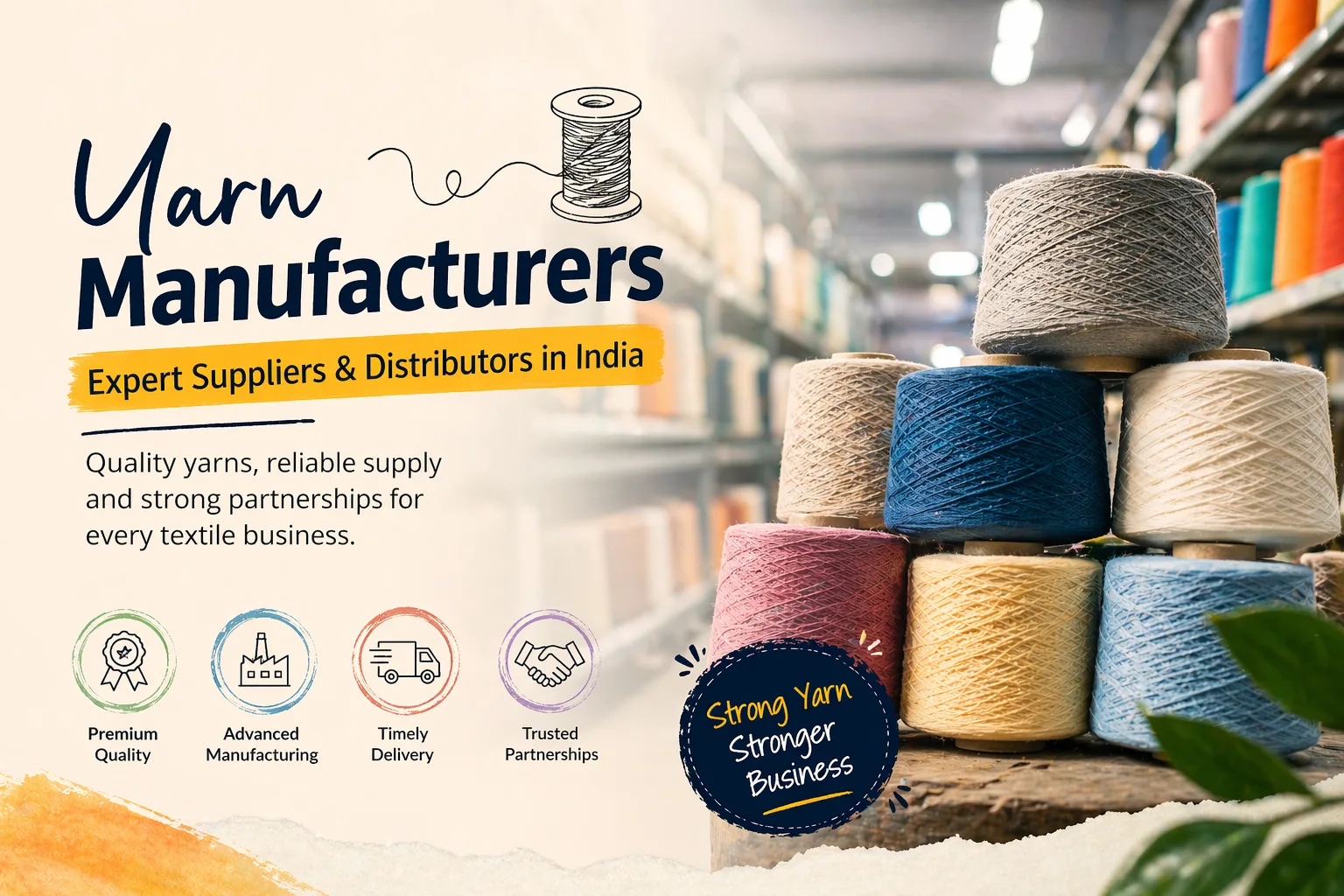
If you’ve been in the textile or garment business for even a short time, you already know one thing: everything starts with yarn. Before the fabric, before the design, before the final product… It’s the yarn that decides how things will turn out.
And honestly, finding the right yarn manufacturers isn’t always easy. There are plenty of options in the market, but not all of them give you the consistency and reliability you actually need.
Let’s talk about this in a simple, practical way.
Why India Has Become a Go-To for Yarn?
There’s a reason why buyers across the world keep coming back to yarn manufacturers in India.
It’s not just about cost (though that helps). It’s about experience. Textile production has been part of India for generations. Today, that traditional knowledge is backed by modern machinery, better processes, and a much stronger supply chain.
What you get is a mix of:
- Skilled people who know the work
- Access to good raw materials
- A wide variety of yarn types
- Pricing that works for both small and large buyers
From cotton belts to industrial yarn hubs, India covers almost every requirement.
Why Yarn Quality Matters More Than You Think?
It’s easy to focus on fabric or design, but problems usually start much earlier.
If the yarn isn’t right, you’ll notice it later:
- Uneven fabric texture
- Weak strength
- Dyeing issues
- Higher rejection rates
That’s why businesses prefer working with trusted yarn manufacturers for bulk orders. When you’re producing at scale, even small inconsistencies can cost a lot.
Types of Yarn You’ll Commonly Find
Depending on your end use, your yarn choice changes. Here’s a quick, real-world breakdown:
Cotton Yarn
This is the most common one. Comfortable, breathable, and widely used in garments and home textiles.
Polyester Yarn
Stronger and more durable. Often used where longevity matters more than softness.
Blended Yarn
A mix of natural and synthetic fibers. Many businesses prefer this because it balances comfort and strength.
Specialty Yarn
This includes organic, recycled, or purpose-based yarns. Demand for these is growing, especially in export markets.
What Actually Makes a Good Yarn Supplier?
Let’s be honest, price is important. But it’s not everything.
Good yarn suppliers usually stand out in a few simple ways:
- They deliver consistent quality
- They don’t keep changing specs batch to batch
- They communicate clearly
- They deliver on time
- They don’t disappear when there’s an issue
That last point matters more than most people admit.
The Shift Towards Bulk Buying
A lot of businesses today prefer working with bulk yarn suppliers, and it makes sense.
When you buy in bulk:
- You get better rates
- Quality stays consistent
- You avoid repeated sourcing headaches
- Planning production becomes easier
Of course, this only works if your supplier can actually handle volume without compromising quality.
Why Trust Is a Big Deal in This Industry?
You don’t really “test” a supplier in one order. You understand them over time.
Working with trusted yarn manufacturers for bulk orders gives you peace of mind. You’re not constantly worrying about delays, quality issues, or last-minute surprises.
That’s one of the reasons companies like Jindaltex have built long-term relationships with buyers; they focus on being reliable, not just competitive.
How Technology Is Changing Yarn Manufacturing?
Things aren’t the same as they were 10–15 years ago.
Today’s yarn manufacturers are using better machines, automation, and quality checks. That means:
- More uniform yarn
- Fewer defects
- Better efficiency
For buyers, it simply means fewer headaches down the line.
What About Sustainability?
This is something more buyers are asking about now.
Many yarn manufacturers in India are slowly moving toward:
- Eco-friendly fibers
- Better waste management
- Reduced water usage
It’s still evolving, but it’s definitely moving in the right direction, especially if you’re working with export markets.
Common Problems Buyers Face
Even experienced buyers run into issues sometimes.
Some common ones:
- Price fluctuations
- Delayed deliveries
- Quality variation
- Poor communication
Most of these problems don’t come from the product—they come from choosing the wrong supplier.
How to Choose the Right Manufacturer (Without Overthinking It)?
You don’t need a complicated process. Just keep it simple:
Start with your requirement
Know your yarn type, count, and use.
Shortlist a few suppliers
Don’t go with the first option.
Ask for samples
Always test before placing a big order.
Check how they communicate
This tells you a lot about future experience.
Start small
Then scale once you’re confident.
Where Distributors Fit In?
Not everyone buys directly from manufacturers.
Distributors are useful when:
- You need smaller quantities
- You want quicker delivery
- You’re still testing suppliers
They act as a bridge, especially for smaller businesses.
Why Many Businesses Stick with Indian Suppliers?
Over time, many buyers realize that working with yarn manufacturers in India just makes things easier.
You get:
- Variety
- Better pricing
- Scalable supply
- Growing focus on quality
Whether you’re a small unit or a large exporter, there’s usually something that fits your requirements.
Final Thoughts
At the end of the day, choosing the right yarn manufacturers is less about finding the cheapest option and more about finding the right partner.
Someone who:
- Understands your needs
- Delivers consistently
- Communicates clearly
Because once your yarn is sorted, everything else becomes easier.
And if you get it wrong… well, you’ll feel it at every stage of production.
So take your time, test properly, and choose wisely.