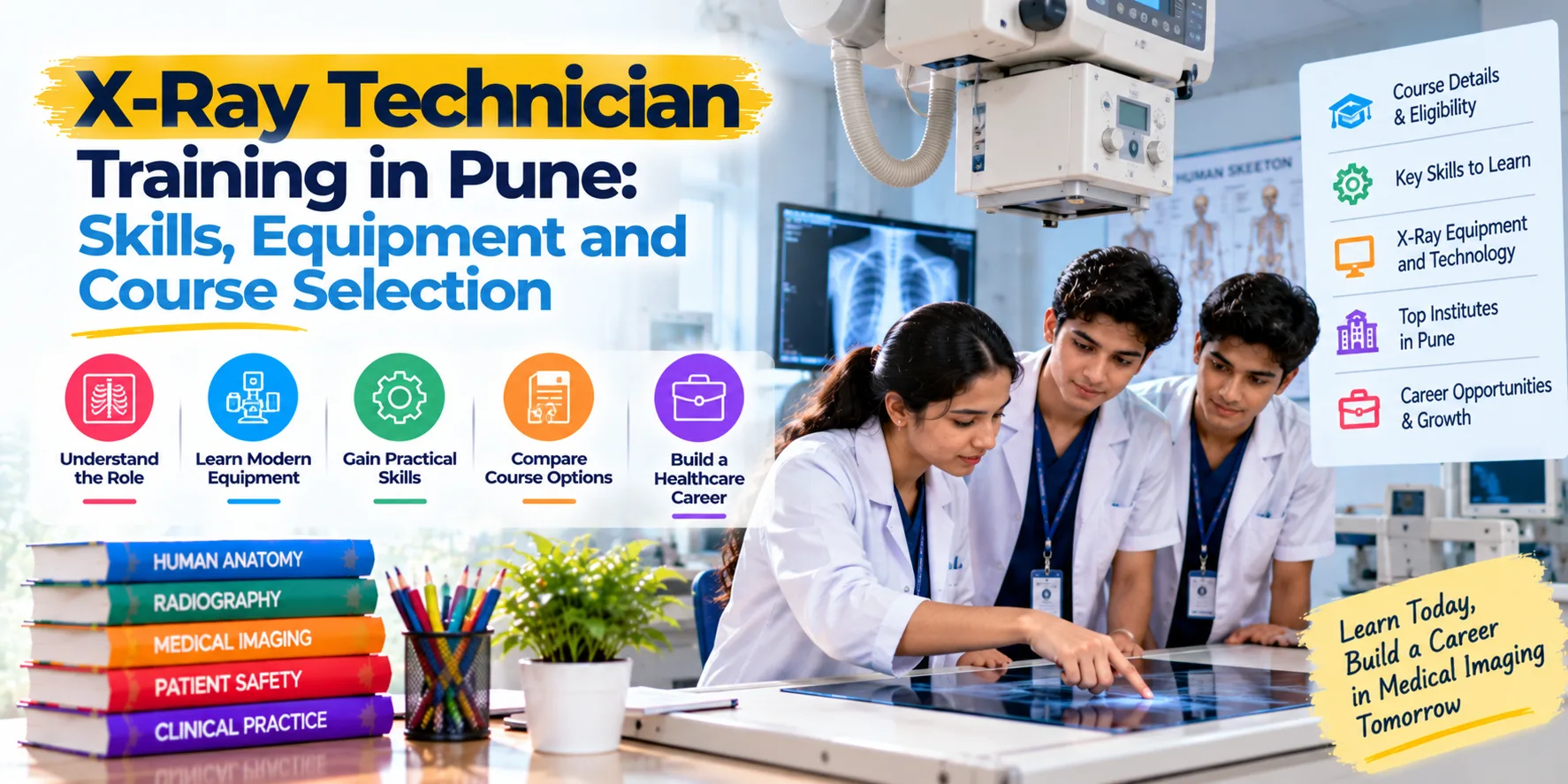
Medical imaging plays an important role in helping healthcare professionals examine internal structures of the body. Students interested in diagnostic equipment may consider an x ray technician course in Pune to explore this technical area of healthcare. Before applying, it is important to understand the training involved, the safety practices required and the differences between available qualifications.
What Does X-Ray Technology Involve?
X-ray imaging uses a controlled form of ionising radiation to produce images of structures inside the body. Healthcare professionals use these images as part of the diagnostic process.
The imaging process involves more than operating a machine. Appropriate patient identification, preparation, positioning, equipment checks and radiation safety procedures are essential. The specific duties of a technician depend on the qualification, workplace policies and applicable regulations.
Students considering this field should be comfortable learning technical procedures, following instructions and paying close attention to detail.
What Students May Learn During Training
Course content varies by institution and qualification. Depending on the programme, students may be introduced to the following areas.
1. Basic Anatomy and Physiology
Understanding the human body helps learners recognise the purpose of different imaging procedures. Anatomy provides a foundation for learning about body structures and patient positioning.
2. Imaging Principles
Students may study the basic principles behind X-ray production and image formation. They may also learn about image quality and factors that can affect the result.
3. Equipment Familiarisation
Training may introduce learners to imaging equipment, controls, accessories and routine preparation procedures. Equipment handling should follow established protocols and the level of training provided.
4. Patient Preparation and Positioning
Patient positioning can affect the quality and usefulness of an image. Students may learn how to communicate with patients, explain basic procedures and prepare them according to instructions.
5. Radiation Safety
Radiation protection is a core consideration in X-ray imaging. Training should address relevant safety procedures, protective measures, equipment protocols and applicable requirements. Students must follow the rules and supervision requirements that apply to their role.
6. Image Quality and Documentation
Learners may study common factors that affect image quality, the importance of accurate records and the process for reporting technical issues to the appropriate professional.
Why Practical Training Is Important
Imaging procedures require technical understanding and careful execution. Practical learning can help students become familiar with equipment and understand how classroom concepts apply to imaging workflows.
Before enrolling, ask how practical training is organised and whether the programme includes suitable supervised learning. Confirm which equipment is used, how skills are assessed and what facilities are available.
Students should not assume that all programmes offer the same practical exposure. Ask for details about the course's actual training structure instead of relying solely on general promotional claims.
Eligibility and Course Duration
Entry requirements and duration vary according to the qualification and institution. Some programmes may require a specific educational background, particular subjects or other admission conditions.
Before applying, confirm the minimum qualification, required marks, course duration, examination schedule and documents needed for admission. Request the current details directly from the institution.
It is also important to identify the qualification awarded. A certificate, diploma and degree may have different academic outcomes and professional implications.
How to Choose an Appropriate Programme
When comparing imaging courses, start with the syllabus. Check which imaging principles, safety topics and practical components are included.
Next, verify the programme's applicable recognition or affiliation. Confirm whether the qualification meets the requirements for the type of work you intend to pursue.
You should also ask about the total cost, including tuition, examinations, practical requirements and other charges. A written fee structure makes comparisons easier.
Finally, review employer requirements for relevant roles. This helps you understand whether the course provides the educational background you need or whether additional training or credentials may be required.
Career Opportunities and Responsibilities
Depending on the qualification, training and applicable requirements, graduates may explore suitable entry-level opportunities in diagnostic imaging departments, hospitals or imaging centres.
The actual responsibilities assigned to a graduate depend on employer policies, competence, supervision and relevant regulations. Students should understand that completing a course does not automatically authorise them to perform every imaging procedure independently.
Employment and salary outcomes also vary. Reviewing current job descriptions can provide a more realistic understanding of the qualifications and skills employers expect.
X-Ray Training and Other Imaging Courses
Students researching an x ray technician course in Pune may also come across programmes related to radiology or MRI. These areas are connected to medical imaging, but their equipment, methods and training requirements are not identical.
X-ray imaging uses ionising radiation, while MRI uses a strong magnetic field and radiofrequency energy. A course focused on one modality should not be assumed to prepare students for every other imaging system.
Before choosing a programme, read the syllabus carefully and confirm which technologies are covered.
Exploring Healthcare Education in Pune
Scope College provides paramedical education options for students researching healthcare-related career pathways. Visit scopecollege.co.in to explore available programmes and confirm current details, eligibility and qualification information directly with the institution.
Conclusion
X-ray technology combines technical learning, patient communication and careful attention to safety. Students should compare course content, eligibility, practical training, duration and the qualification awarded before making a decision.
Researching these details helps you understand what a programme offers and whether it aligns with your educational background and career plans.