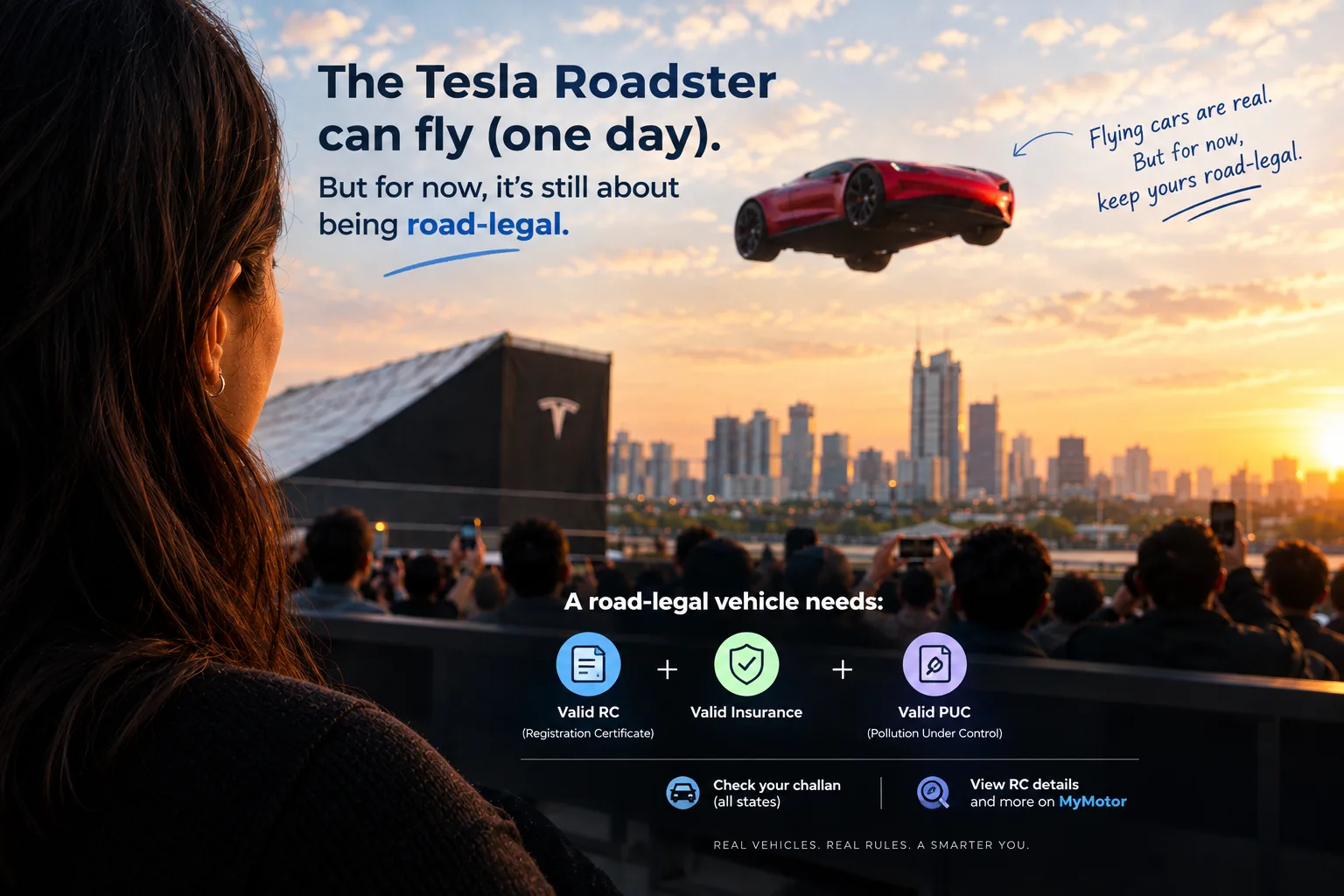
When the Tesla Roadster was flipping through the air this week, my first thought was "wow".
My second thought, after a few seconds of dwelling on the previous one, was "who would give it a challan?"
I kid you not, that's the type of question you'd ask after having dealt with too much paperwork. But I actually asked the question out loud and my friend responded immediately, saying, "The owner, obviously."
I wasn't convinced, and I couldn't get off that thought.
For context, the flying Roadster isn't going to be tested. Tesla's website states clearly that the flying prototype isn't fit for public roads, and production isn't estimated before 2028. I couldn't find any information about an Indian launch either. So for now, it's all about the regular cars in our regular parking lots
Who gets the challan?
Here is the real-world scenario - a traffic challan is generally issued to the registered owner of the vehicle unless there are specific instructions otherwise.
It's possible that the notice could be sent to a different address based on certain conditions, but the rules and procedures for challans are often determined by local authorities, so it's best to check the official process in your area.
That knowledge alone was enough to change my perspective on the vehicle in our parking lot. I had lent it to my brother, my cousin, and even a friend who "had to" borrow it for a few hours before. I never checked what came back with the vehicle.
A cousin in Jaipur told me she runs an echallan Rajasthan search every time her car comes back from someone else’s hands. I’d laughed at her for it. I wasn’t laughing now. A friend in Kolkata does a quick WB challan the same way, every time his car is back from a weekend loan.
So here's me doing a challan check
I opened the MyMotor challan check app, entered the vehicle number and waited with a beating heart. It took two minutes before the screen showed that there were no pending challans. For once, I'm happy to report that I was not disappointed with the result.
What surprised me was the other information that came up with the challan checking. Here's what I found:
- RC details: information about my vehicle so that I can cross-verify the owner name and vehicle class
- Garage: my car and my brother's bike in one place
- Glovebox: my insurance and documents on my phone so I don't have to rummage through a physical copy at the petrol pump
- EV charging finder: because the Roadster had me day-dreaming about electric vehicles
Three useful habits I developed from this experience
Doing a challan check before any long drives
Checking up on a vehicle after I've lent it to someone
Looking at my RC details every now and then to ensure the address and number are correct
None of it is a big deal, but in a situation where a challan notice can come days after you've driven past, or never reach you because the number on file is old, being proactive is better than being reactive. My two-minute task ensured peace of mind.
Cars might fly in the future, but for now, open MyMotor, enter your vehicle number, and check your challans and RC details. Add your vehicles to the Garage and scan your documents and insurance to the Glovebox.
Quick questions
Q.Who gets the challan, the owner or the driver?
A.Challans are generally issued to the registered owner of the vehicle, although there might be specific procedures in certain cases. It's best to follow the official instructions in such scenarios.
Q.Is the Tesla flying car legal on public roads?
A.Not as of now, as Tesla's website mentions that the flying prototype isn't fit for public roads.
Q.How do I do challan checking?
A.You can enter your vehicle number in a challan checking app like MyMotor and see if there are any pending challans.