
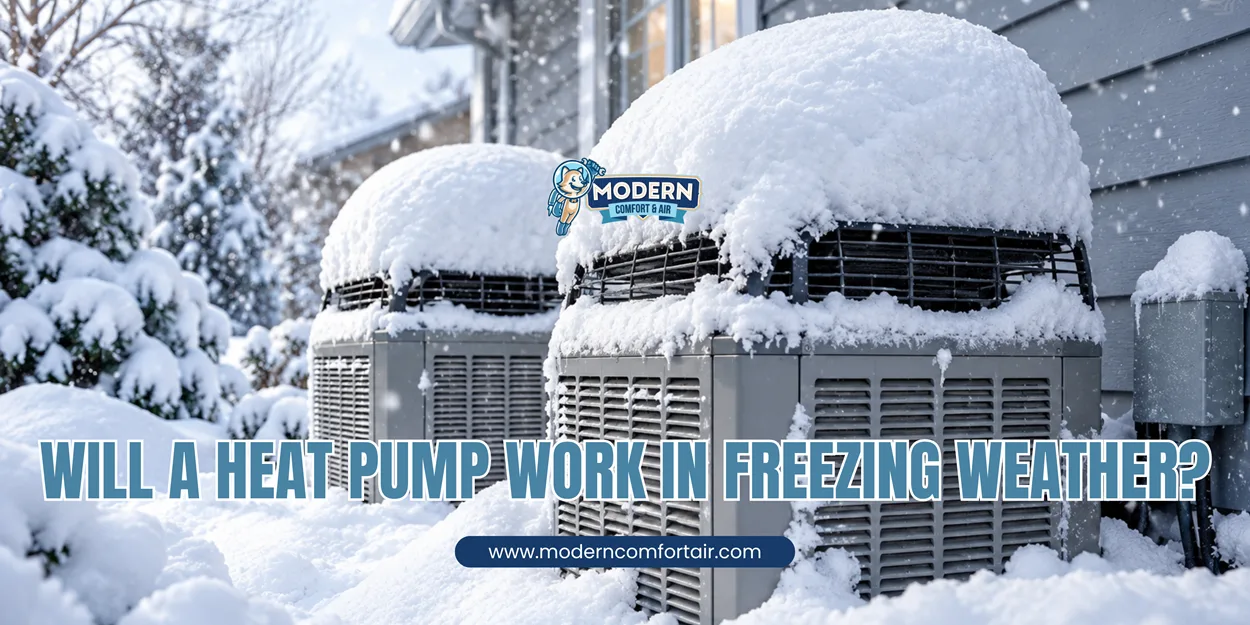
Yes, Modern heat pumps can heat homes in freezing weather, and some models are specifically designed to operate in temperatures well below freezing. However, how effectively they heat your home depends on the equipment, outdoor conditions, and how well the system is installed.
Unlike a gas furnace, which generates heat by burning fuel, a heat pump transfers heat from the outdoor air into your home. Even when the air feels extremely cold, it still contains thermal energy that a heat pump can extract.
The important question isn’t simply whether a heat pump works in freezing weather. It’s whether your particular system can deliver enough heat to keep your home comfortable without excessive energy use.
How Does a Heat Pump Work When Temperatures Drop Below Freezing?
An air-source heat pump uses refrigerant to absorb heat from outdoor air and transfer it indoors. Its compressor raises the refrigerant’s pressure and temperature, allowing the system to release heat inside your home.
As outdoor temperatures fall, extracting heat becomes more difficult. The system may need to work harder, and its heating capacity and efficiency can decrease.
However, this doesn’t mean every heat pump struggles at the same temperature. Standard models and cold-climate heat pumps have different operating limits. Some modern cold-climate models can continue producing useful heat at temperatures around 5°F or lower, depending on the specific equipment.
Always check the manufacturer’s performance specifications rather than relying on a single temperature threshold.
What Happens to a Heat Pump at 32°F or Below?
A heat pump can continue heating your home below freezing, but three things may affect its performance.
Heating Efficiency Decreases
As the outdoor temperature drops, the system generally consumes more electricity to deliver the same amount of heat. Its heating capacity may also decline, meaning it might run longer to maintain your thermostat setting.
The exact change depends on the model, outdoor temperature, and your home’s heating requirements.
Frost Can Develop on the Outdoor Unit
During heating, the outdoor coil can become cold enough for moisture in the air to freeze on its surface. A thin layer of frost is normal, particularly in damp weather near freezing temperatures.
Heat pumps have an automatic defrost cycle that temporarily changes the system’s operation to warm the outdoor coil and melt accumulated frost. You might notice the outdoor fan stopping briefly, a change in operating noise, or steam rising from the unit.
These signs don’t automatically indicate a malfunction.
Supplemental Heating May Be Needed
When the heat pump cannot produce enough heat to meet your home’s demand, an auxiliary heating system may help. Depending on your setup, this could be electric resistance heat or a separate furnace in a dual-fuel system.
Backup heat is not necessary in every home, but it can be important in colder climates or when the system’s heating capacity is insufficient.
Is It Normal for a Heat Pump to Blow Cold Air in Freezing Weather?
During a defrost cycle, a heat pump temporarily redirects heat to the outdoor coil to melt frost. Depending on the system, the indoor fan may slow down or stop, or you may notice cooler-than-usual air from the vents. Some systems use supplemental heat to reduce this effect.
However, your home should not become progressively colder because of repeated defrost cycles. If the system blows genuinely cold air for extended periods, struggles to maintain the thermostat setting, or develops a thick layer of ice that does not clear, have an HVAC technician inspect it.
Defrosting behavior varies by model and weather conditions, so there is no single cycle frequency that applies to every heat pump.
How Can You Help Your Heat Pump Perform Better in Winter?
A few practical steps can help your system operate reliably when temperatures drop.
- Replace or Clean the Air Filter: A clogged filter restricts airflow and can affect heating performance. Follow the manufacturer’s recommended maintenance schedule.
- Keep the Outdoor Unit Clear: Remove leaves, snow, and other obstructions around the unit without damaging the coil. Maintain the manufacturer’s recommended clearance.
- Avoid Frequent Thermostat Adjustments: Large temperature increases can trigger auxiliary heat on some systems, potentially increasing electricity consumption. Choose a comfortable setting and let the system maintain it.
- Seal Drafts and Improve Insulation: Reducing heat loss helps your heat pump maintain indoor comfort with less effort.
- Schedule Regular Maintenance: A technician can check refrigerant levels, airflow, electrical components, defrost controls, and overall system operation.
Never chip ice off the outdoor coil or pour boiling water over it. If the unit is encased in ice, refer to the manufacturer’s guidance and arrange professional service if the ice persists or airflow is obstructed.
When Should You Repair or Replace a Heat Pump?

Occasional frost, longer run times, and brief defrost cycles are not necessarily reasons to replace your system. The key is identifying whether the behavior is normal for your equipment or evidence of a problem.
- Consider a repair if your heat pump suddenly loses heating performance, develops unusual noises, repeatedly freezes over, or runs without adequately warming the house. A professional diagnosis is necessary to identify the actual fault.
- Consider replacement if your unit is older, needs frequent costly repairs, or cannot meet your home’s heating requirements even after its condition and settings have been checked.
If you’re considering heat pump installation in Jurupa Valley, CA, choose a system based on your home’s heating and cooling loads rather than selecting equipment by square footage alone. Correct sizing, suitable equipment, and proper installation all matter for year-round comfort.
Likewise, heat pump repair in Jurupa Valley, CA, may resolve winter performance problems without requiring a complete system replacement. If replacement is necessary, a qualified technician can help determine which model and backup heating arrangement suit your home.
Final Thoughts
Yes, a heat pump can work in freezing weather. Modern systems, especially cold-climate models, can provide reliable heating well below the freezing point. However, efficiency and heating capacity vary with outdoor temperatures, equipment specifications, and home conditions.
The goal is to choose a system that can meet your home’s heating needs, maintain it properly, and recognize when unusual winter behavior requires professional attention.
For help evaluating your system, scheduling heat pump replacement in Jurupa Valley, or planning a new installation, contact Modern Comfort and Air to discuss your home’s heating needs and find a practical solution for dependable comfort.