Seeing your website rank well while organic clicks decline can be frustrating, especially when your positions appear stable in Google Search Console. Rankings matter, but they no longer tell the full story because search results now include AI-generated answers, featured snippets, local packs, shopping results, videos and other elements competing for attention. A business can therefore rank on page one while receiving a much smaller share of available clicks. Working with the best SEO agency UK can help identify whether the problem comes from search intent, SERP changes, weak titles, declining demand or increasing competition. The solution begins with understanding why visibility is no longer translating into visits.
Rankings and Clicks Are Different SEO Metrics
A ranking tells you approximately where Google displays your page for a particular search, while clicks show how often users actually choose your result. These two numbers can move in completely different directions because the search results page itself is constantly evolving. Your average position may remain stable while additional features appear above your listing and push it further down the visible screen. Changes in search behaviour can also reduce the number of people clicking traditional organic listings. This is why modern SEO reporting should examine impressions, click-through rate, clicks and conversions alongside rankings.
Average Position Can Be Misleading
Google Search Console calculates average position using data across queries, devices, locations and appearances. A page might rank third for one valuable term but twentieth for dozens of lower-volume variations, creating an average that does not accurately reflect what users experience. Personalisation and location can also change the order of results. Mobile and desktop layouts may present the same ranking very differently. Instead of focusing only on average position, analyse performance query by query and device by device.
AI Search Results Are Taking More SERP Space
AI-generated answers have changed how users interact with informational search results. In some cases, people can receive enough information directly from the results page that they do not need to visit another website. This can create declining clicks even when your rankings remain relatively strong. An experienced AI SEO agency can help structure content so that your brand remains visible across both traditional rankings and AI-driven discovery. SEO strategies increasingly need to consider visibility beyond the standard ten blue links.
Zero-Click Searches Can Reduce Traffic
A zero-click search occurs when someone finds the information they need without visiting an external website. Featured snippets, knowledge panels, local packs and AI answers can all contribute to this behaviour. Informational queries are particularly vulnerable because simple questions can often be answered directly within Google. This does not mean informational content has lost value, but it needs to offer reasons for users to continue beyond the SERP. Original insights, tools, comparisons and detailed solutions can make a click more worthwhile.
Your Title Tag May Not Be Convincing Enough
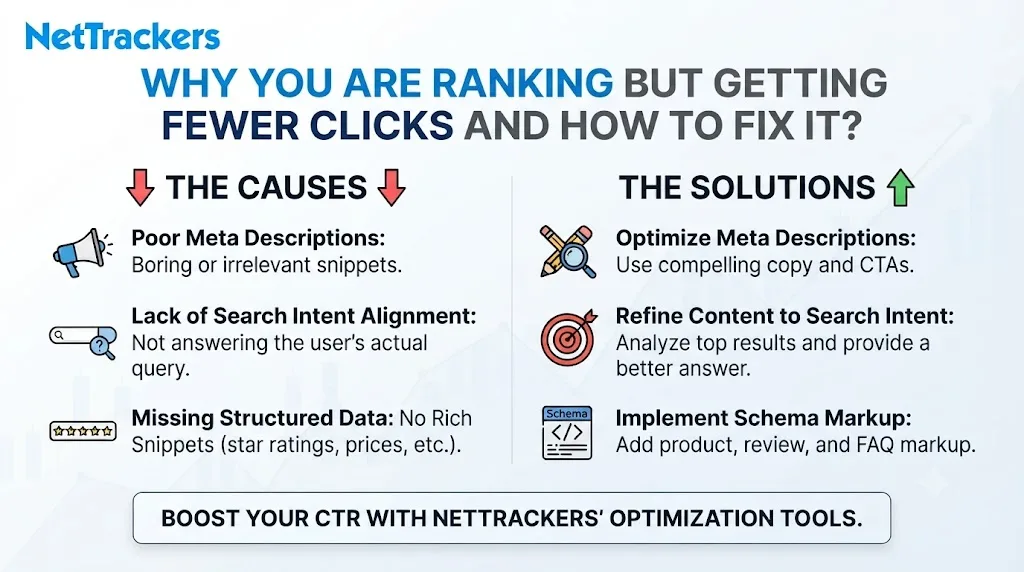
Ranking well does not guarantee that users will choose your result over nearby competitors. Your title tag is often the first element they compare, so generic or unclear wording can significantly reduce click-through rate. A strong title should communicate relevance, value and differentiation while accurately describing the page. Avoid simply repeating the keyword without giving users a reason to click. The best SEO agency UK should regularly test and optimise titles on high-impression pages with disappointing CTR.
Match the Searcher's Actual Question
Imagine someone searching for the cost of an SEO service and seeing a title that simply says “Professional SEO Solutions”. The page may technically be relevant, but the title does not directly answer the searcher's intent. A title such as “SEO Costs in the UK and What Your Budget Should Include” is much more specific. Clear alignment between query and title helps users understand immediately why the result deserves attention. Relevance is often more persuasive than clever wording.
Your Meta Description May Be Underperforming
Meta descriptions do not directly determine rankings, but they can influence whether users click when Google displays them. A weak description may repeat the title, offer no meaningful benefit or fail to address the searcher's problem. Write descriptions that summarise the page clearly and explain what users will gain from visiting it. Include important keywords naturally because Google may bold matching terms. Better SERP messaging can improve clicks without requiring a ranking increase.
Avoid Empty Marketing Language
Phrases such as “industry-leading solutions” and “best-in-class services” rarely explain why someone should visit a page. Users want specific information relevant to their query. Describe what the service, guide or resource actually provides. Numbers, locations, outcomes and clear differentiators can make a result more compelling when they are genuinely supported by the page. Specificity usually produces stronger search snippets than generic promotional language.
Your Competitors May Have Better SERP Listings
Your ranking may not have changed, but competitors around you may have improved their presentation. Better titles, review stars, stronger brand recognition, recent dates or additional SERP features can attract more attention. Competitive SEO therefore involves more than comparing positions. Search the priority query manually and evaluate what makes neighbouring results more clickable. A skilled SEO consultant London can identify these differences and determine which improvements are realistically achievable.
Study What Appears Above You
Analyse whether competitors are appearing in featured snippets, image packs, People Also Ask boxes or other enriched results. A competitor positioned below you organically might still receive more clicks because their listing occupies more visual space. Review their title structures, content angles and structured data without simply copying them. The objective is to understand what Google and users currently reward for that particular query. Search intent should guide your response.
Search Intent May Have Changed
Google continually reassesses what users appear to want from a particular query. A keyword that previously returned guides may gradually shift towards service pages, product categories or comparison content. Your page can technically maintain a similar position for some queries while becoming less attractive to users because its format no longer matches dominant intent. Analyse the pages currently winning clicks and determine what type of experience they provide. A content refresh may need to change the page structure rather than simply add more words.
Look Beyond the Keyword Itself
Two people can use similar keywords while expecting very different answers. Someone searching “SEO services” may want an agency, while someone searching “how SEO services work” probably expects educational content. Pages should be built around the underlying goal behind the search. Misalignment creates impressions without meaningful engagement. Understanding the intent behind each query is essential for stronger click-through rates and conversions.
Your Search Demand May Be Falling
Sometimes the problem is not SEO performance at all. Search interest for a topic can decline because of seasonality, market changes, economic conditions or changing terminology. A page may hold the same position while the total number of searches drops, naturally producing fewer clicks. Compare impressions over time to see whether search demand has changed alongside traffic. If impressions fall significantly while position remains stable, declining demand may be the main explanation.
Expand Into Related Search Opportunities
If one keyword category is shrinking, look for adjacent queries where demand is increasing. Businesses using SEO services UK should continuously review keyword portfolios rather than depending on a small group of historical terms. New problems, technologies and customer questions can create fresh organic opportunities. Expanding topical coverage also helps reduce dependence on one query or page. Search behaviour evolves, and content strategies should evolve with it.
Featured Snippets May Be Taking Your Clicks
Google may extract an answer from a page and show it directly above organic results. If another website owns the featured snippet, your conventional ranking can receive fewer clicks even if it has not moved. The same can happen with definition boxes, tables and People Also Ask results. Structuring content with concise answers, useful headings and clear lists can improve your eligibility for some of these features. Winning more SERP real estate can partially offset declining clicks from standard results.
Answer the Question Quickly
Long introductions can make it harder for search engines and users to locate the core answer. Place a direct, useful response near the relevant heading before expanding with additional detail. This structure improves readability while potentially increasing snippet eligibility. Do not deliberately make answers vague in an attempt to force users to click. Helpful content builds stronger long-term search visibility than artificial withholding.
Your Brand May Have Lower Recognition
Users often click brands they already recognise even when another result appears slightly higher. This means brand awareness can significantly influence organic CTR. Digital PR, social visibility, reviews and consistent messaging can increase familiarity before someone reaches the search results page. A stronger brand may therefore outperform a technically similar competitor without dramatically higher rankings. SEO and brand-building increasingly work together rather than functioning as completely separate channels.
Branded Search Is Valuable
Monitor whether searches containing your brand name are increasing over time. Branded searches usually indicate that users already know who you are and may have stronger purchase intent. They can also reduce dependence on competitive generic queries. Content, PR and social activity all contribute to creating brand demand. SEO becomes more resilient when users actively look for your business rather than discovering it only through generic keywords.
Mobile Search Results May Be the Problem
A result that looks prominent on desktop may appear much further down the screen on mobile. Search features, ads, local packs and expandable modules consume significant vertical space on smaller displays. Since many searches now happen on smartphones, device-level CTR analysis can reveal problems hidden in overall averages. Compare mobile and desktop performance in Google Search Console. If rankings are similar but mobile CTR is significantly weaker, SERP layout may be contributing to declining clicks.
Mobile Titles Need Immediate Clarity
Long titles can be truncated differently across devices and result formats. Put the most important information early rather than saving the meaningful part for the end. Avoid unnecessary branding or filler that pushes the core topic beyond the visible portion. A user should understand what the page offers within seconds. Clear mobile snippets can improve organic performance even without ranking changes.
Local Search Results Can Change Click Behaviour
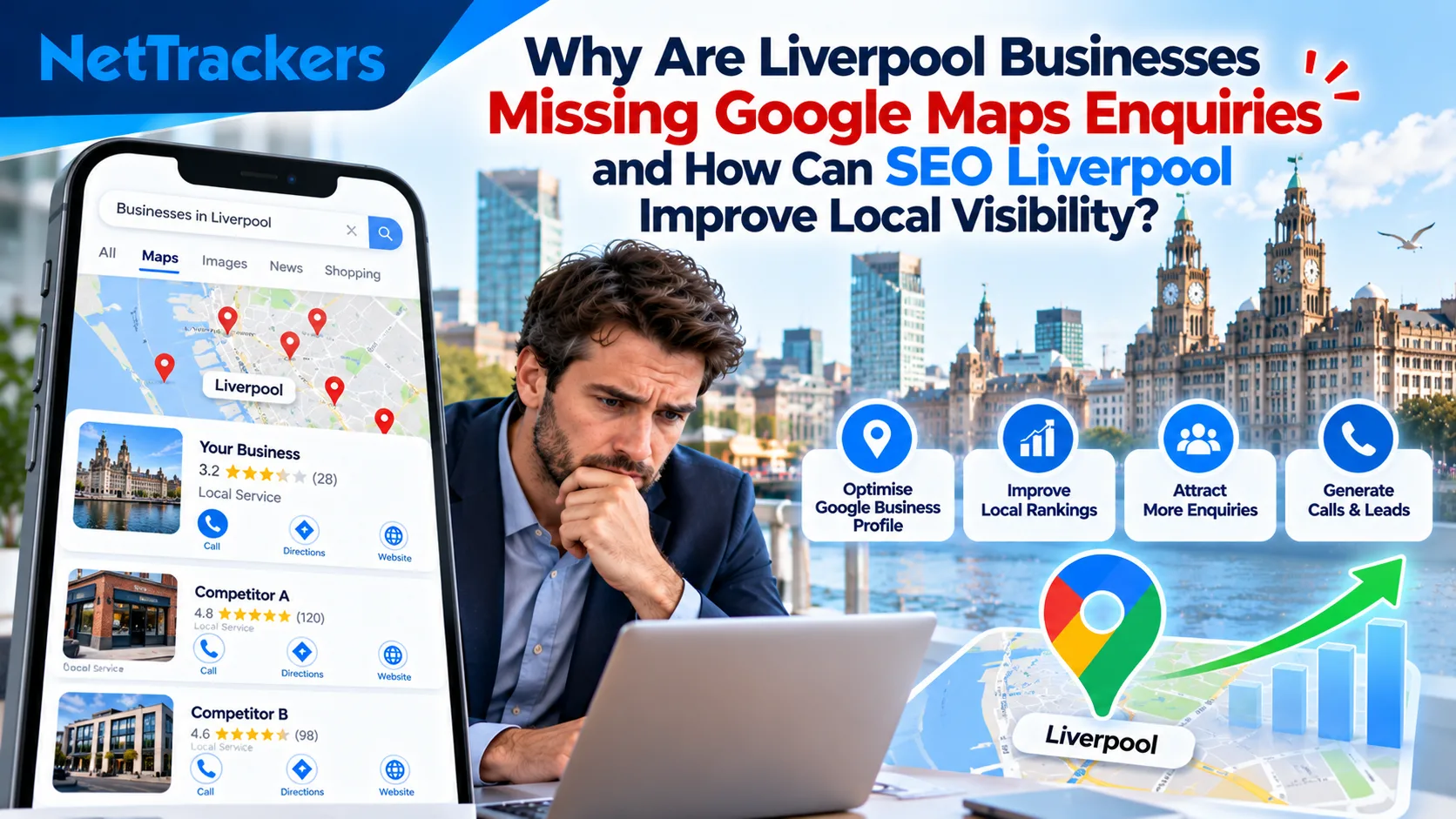
For location-based searches, Google Business Profiles and map results can absorb a significant share of clicks before users reach standard organic listings. Businesses targeting SEO Glasgow, SEO Liverpool, SEO Sheffield, SEO Edinburgh or SEO Manchester therefore need strong local visibility alongside traditional rankings. A high organic position does not compensate fully for weak map-pack presence on strongly local queries. Local SEO needs its own measurement and optimisation strategy.
Your Google Business Profile Matters
Keep business categories, opening hours, services, photographs and contact information accurate and current. Genuine reviews can improve trust when users compare businesses within local search results. Respond professionally to customer feedback and maintain consistent business information across reputable platforms. Local pages should also provide meaningful information rather than swapping city names into identical templates. Strong local relevance improves the complete search experience.
Your Content May Be Ranking for the Wrong Queries
A page can generate thousands of impressions from queries that are only loosely related to its commercial purpose. These impressions can make visibility look strong while CTR and conversion rates remain weak. Export query data from Search Console and identify which terms are actually triggering the page. You may discover that Google understands the content differently from the way you intended. Reworking headings, internal links and page focus can improve relevance.
Prioritise Qualified Clicks
Not every organic click has equal business value. One visitor searching specifically for a service may be more valuable than dozens researching a loosely related topic. An SEO agency London should therefore measure leads and revenue alongside traffic. Optimising exclusively for click volume can push a website towards irrelevant informational searches. The real objective is qualified organic visibility.
Your Content May Be Outdated
A page can retain rankings temporarily while becoming less appealing than newer competing results. Search users often notice publication dates, outdated screenshots or obsolete recommendations before clicking. Refresh statistics, examples, screenshots and recommendations when the subject changes quickly. Update the page meaningfully rather than simply changing the date at the top. Freshness should reflect genuinely current information.
Search Results Reward Relevance
A three-year-old article can still rank well when its information remains useful, but fast-changing topics demand more frequent updates. SEO, AI, software and regulatory content are obvious examples. Review high-value pages on a regular schedule based on how quickly their subject matter changes. Remove obsolete claims rather than continually adding new sections around them. A focused updated page is often stronger than a bloated historical one.
Cannibalisation May Be Splitting Your Visibility
Keyword cannibalisation occurs when multiple pages compete for the same or very similar search intent. Google may alternate which URL it displays, creating unstable rankings and weaker relevance. You may therefore see strong overall visibility without one page becoming the obvious result users want. Map primary queries to specific pages and review overlapping content. Consolidating or differentiating pages can strengthen both rankings and click-through performance.
Internal Linking Can Clarify Page Purpose
Internal links help search engines understand which page is most important for a particular topic. Use descriptive anchor text and link supporting articles towards the main commercial or authoritative page. Avoid creating several nearly identical service pages unless they genuinely serve different intent. Logical site architecture strengthens relevance signals. It also helps visitors navigate from informational content towards commercial pages naturally.
Your Structured Data May Be Missing
Structured data helps search engines understand certain types of page information more clearly. When eligible, enhanced search appearances can make listings more noticeable and useful. The exact rich-result opportunities depend on the page type and Google's current supported features. Implement schema accurately rather than adding markup solely in the hope of displaying extra SERP elements. Invalid or misleading structured data can create more problems than benefits.
Rich Results Can Improve Visibility
Enhanced results may provide additional information before users click. Depending on the supported format, this can make one listing stand out from neighbouring results. However, schema does not guarantee that Google will display an enhancement. The underlying content still needs to meet quality and eligibility requirements. Think of structured data as supporting search understanding rather than a shortcut to higher rankings.
Paid Ads May Be Taking More Above-the-Fold Space
Competitive commercial queries can display several paid listings before organic results. Your number-one organic result may therefore be visually positioned below multiple advertisements. This can reduce organic CTR even when your ranking remains unchanged. Compare current SERPs with historical screenshots if available to see whether paid competition has increased. SEO reporting should distinguish between ranking position and actual screen visibility.
Commercial Queries Are Especially Competitive
Service searches usually attract more advertising than broad informational terms because advertisers expect greater commercial value. Users may also click maps, directories or comparison websites before reaching organic agency listings. This makes snippet quality and brand recognition even more important. The best SEO agency UK should analyse the complete SERP landscape rather than reporting a ranking in isolation. Visibility is ultimately about what the searcher actually sees.
How to Diagnose a Declining CTR Properly
Start in Google Search Console and compare equivalent periods while considering seasonality. Review clicks, impressions, CTR and average position for individual queries and landing pages rather than only site-wide totals. Separate branded from non-branded traffic because their click behaviour is very different. Segment desktop and mobile performance and examine countries when your website attracts international traffic. This process helps determine whether declining clicks come from demand, rankings, snippets or changes to the SERP itself.
Focus on High-Impression Opportunities
Pages with strong impressions, reasonable rankings and unusually low CTR are often the best places to start. Small improvements to these pages can produce meaningful additional traffic because visibility already exists. Rewrite weak titles and descriptions, improve intent alignment and examine competing results. Monitor changes over several weeks rather than judging them after two days. SEO testing requires enough data to distinguish real improvement from normal fluctuation.
Should You Rewrite Every Meta Title?
No. Changing every title simultaneously can make it difficult to understand what actually improved performance. Prioritise pages where the current snippet clearly underperforms relative to ranking and impressions. Test meaningful differences rather than making minor cosmetic changes. Keep an accurate record of what was changed and when. Data-led optimisation is more reliable than repeatedly rewriting titles based on intuition.
Protect Pages That Already Perform Well
If a page has a strong CTR, high-quality traffic and good conversions, avoid unnecessary experimentation. SEO improvements should target identifiable weaknesses rather than changing things simply because optimisation is ongoing. Successful pages provide useful models for weaker areas of the site. Compare their titles, intent alignment and content structure. Learn from what already works within your own website.
Why Conversion Data Matters More Than Clicks Alone
A decrease in clicks is concerning only when it affects meaningful business outcomes. Sometimes traffic decreases because low-value informational visits disappear while leads remain stable. In that situation, the SEO programme may still be delivering commercial value. Track form submissions, calls, purchases and other important actions from organic sessions. A smaller number of qualified visitors can outperform a large amount of irrelevant traffic.
Connect Search Console With Analytics
Search Console explains what happens before the click, while analytics platforms provide information about what visitors do after arriving. Combining these perspectives creates a much stronger diagnostic picture. A page with excellent CTR but poor conversion may have a landing-page problem rather than an SEO problem. Conversely, a high-converting page with poor CTR may represent a major growth opportunity. Measure the complete journey rather than stopping at rankings.
How Professional SEO Can Recover Lost Clicks
Recovering click-through performance usually involves several disciplines working together. Technical SEO ensures pages remain crawlable and competitive, content optimisation improves search intent, and SERP testing strengthens titles and descriptions. Local optimisation and AI-search strategies may be necessary where new search features have changed user behaviour. Professional SEO services UK should connect these activities with measurable leads and revenue rather than focusing solely on ranking reports. The right strategy treats clicks as part of the customer journey rather than an isolated vanity metric.
Choose Strategy Over Random Fixes
Changing titles, publishing more articles and building links will not solve every CTR decline. The solution depends entirely on why clicks have fallen. Diagnose the problem first, establish a hypothesis and then test an appropriate change. This is where support from the best SEO agency UK can help businesses avoid wasting resources on fixes unrelated to the real problem. Good SEO begins with accurate diagnosis.
Frequently Asked Questions
Why Are My Impressions Increasing but Clicks Decreasing?
This often means your website is appearing for more searches without attracting a proportional number of visitors. New impressions may come from lower-ranking or less relevant queries, while SERP features may also be reducing traditional organic clicks. Review query-level data before assuming rankings have failed. A falling CTR can coexist with growing visibility. The commercial value of those impressions should also be assessed.
Does a Higher Ranking Always Mean More Clicks?
Usually higher rankings create greater click potential, but there is no guaranteed relationship. Ads, local results, AI answers, featured snippets and brand recognition all influence which result users select. Position three in a clean SERP may receive more attention than position one beneath several rich features. Analyse actual CTR rather than estimating traffic solely from position. Search layouts differ substantially by query.
Can AI Overviews Reduce Organic Clicks?
They can affect click behaviour for certain searches because users may receive information directly from the results page. However, AI-driven search also creates new opportunities for brands whose content becomes referenced or visible within these experiences. The strategy should therefore expand beyond conventional ranking measurement. An AI SEO agency can help businesses adapt content and authority strategies for this changing environment. Traditional SEO fundamentals still remain essential.
Should I Worry About a Small CTR Drop?
Not automatically. Short-term fluctuations can result from seasonality, query mix, device changes or temporary SERP experiments. Compare meaningful periods and examine whether conversions have also declined. A sustained drop across high-value queries deserves closer investigation. Decisions should be based on patterns rather than daily changes.
Conclusion
Ranking well but receiving fewer clicks does not necessarily mean your SEO has stopped working. SERP features, AI-generated answers, stronger competitor snippets, changing search intent, falling demand and local results can all reduce traffic without causing an obvious ranking decline. The solution is to examine Search Console data alongside the actual results pages and identify exactly where attention is being lost. Working with the best SEO agency UK can help connect technical SEO, content, CTR optimisation, local visibility and emerging AI search into one measurable strategy. In modern SEO, rankings remain important, but the real objective is earning qualified clicks that ultimately turn into customers.