Summary
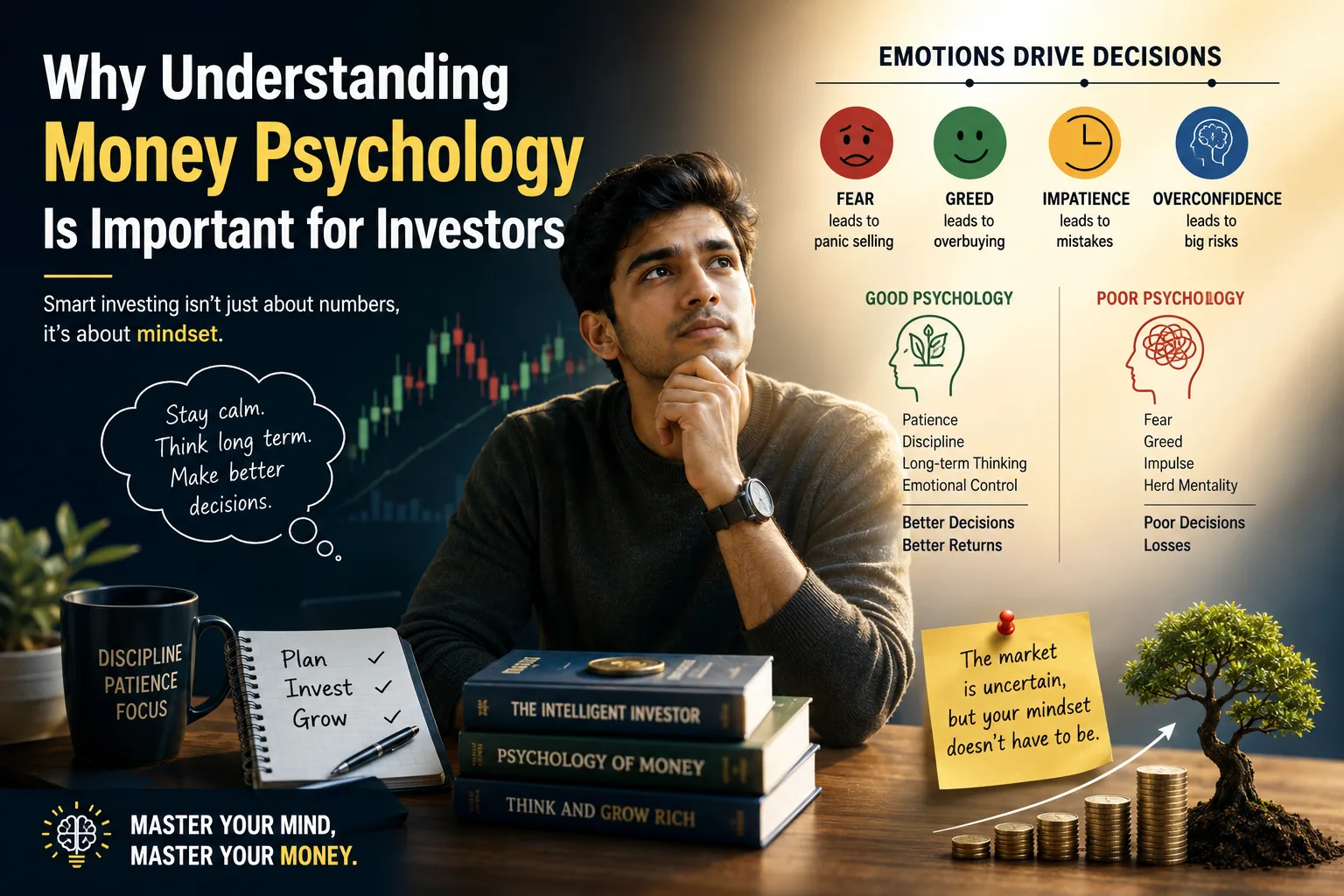
Most people think investing is only about numbers, charts, and market knowledge. But in reality, emotions play a much bigger role than most investors realize. Fear, greed, impatience, and overconfidence quietly influence financial decisions every single day. Understanding money psychology helps investors make smarter choices, avoid emotional mistakes, and build long-term wealth with more clarity and discipline.
Introduction
The stock market is often described as a game of numbers.
But honestly? It’s also a game of emotions.
Two people can look at the exact same stock and make completely different decisions. One panics and sells. The other stays calm and hold. The difference usually isn’t intelligence. It’s psychology.
That’s something many investors learn only after losing money.
Because investing sounds simple in theory. Buy good assets, stay patient, think long term. Easy, right? Until the market crashes 10% in a week and suddenly logic disappears. Fear takes over. Headlines become terrifying. Every red candle feels personal.
And that’s exactly why understanding money psychology matters.
Money Decisions Are Emotional More Than Rational
Most people believe they make financial decisions logically.
But emotions quietly sit in the background influencing everything.
People buy stocks because everyone else is making money. They panic-sell because the market falls for a few days. They hold bad investments too long because accepting losses feels painful.
It’s human nature.
The problem is the market rewards discipline far more than emotion. And emotional decisions often lead to costly mistakes.
Sometimes the biggest enemy of an investor isn’t the market itself. It’s their own mindset.
Fear and Greed Control the Market
If you observe the market closely, almost everything comes back to two emotions: fear and greed.
When markets rise rapidly, greed takes over. People start believing prices will only go higher. Risk suddenly feels invisible. Investors become overconfident and start chasing quick profits.
Then the market falls.
And fear enters the room just as aggressively.
The same people who were excited to buy at high prices suddenly become scared to invest at lower prices. It’s strange when you think about it. Investors often feel safest when markets are expensive and most fearful when opportunities actually improve.
Psychology flips logic upside down.
Social Media Made Emotional Investing Worse
Today’s investing culture moves incredibly fast.
One viral post can create hype around a stock overnight. One negative headline can trigger panic everywhere. Social media constantly amplifies emotions because dramatic content gets attention.
Profits get posted everywhere. Losses usually stay hidden.
That creates unrealistic expectations, especially for beginners. Many new investors start believing successful investing means making fast money every week. Nobody talks enough about patience, boring phases, or slow wealth creation.
The pressure to constantly “win” financially affects decision-making more than people admit.
And that’s dangerous.
Patience Is a Psychological Skill
One of the hardest parts of investing is doing nothing.
Seriously.
People often think successful investors are constantly making smart moves. In reality, many long-term investors succeed because they avoid unnecessary decisions. They stay patient during chaos.
That sounds easy until emotions get involved.
Patience becomes difficult when everyone online looks richer than you. When markets become volatile. When fear starts whispering that you’re making the wrong decision.
This is where psychology matters most.
Because wealth creation is usually slow. Quiet. Repetitive. And honestly, sometimes boring.
But consistency often beats emotional reactions over time.
Self-Awareness Creates Better Investors
Understanding money psychology doesn’t mean becoming emotionless.
That’s impossible.
It simply means becoming more aware of your behavior. Understanding why you panic. Why you chase trends. Why losses hurt more than gains feel good.
Once investors recognize these patterns, decision-making improves naturally.
They stop reacting to every market movement emotionally. They focus more on strategy and less on noise. And over time, that mindset becomes more valuable than constantly trying to predict the market.
Because markets will always be uncertain.
Human behavior, however, repeats itself constantly.
Conclusion
Understanding money psychology is important because investing is never just about money. It’s about behavior, emotions, habits, and decision-making under pressure.
Most investors already know what they should do:
- Stay patient
- Avoid panic
- Think long term
- Manage risk
The difficult part is actually doing those things consistently.
That’s where psychology enters the picture.
At the end of the day, successful investing is often less about finding the perfect stock and more about learning how to manage yourself during uncertainty.
And honestly, that lesson is valuable far beyond the market itself.
Key Takeaways
- Investing decisions are often emotional, not purely logical.
- Fear and greed heavily influence market behavior.
- Social media can increase emotional investing and unrealistic expectations.
- Patience and discipline are more important than constant action.
- Self-awareness helps investors make calmer and smarter financial decisions.
FAQs
1. What is money psychology?
Money psychology refers to how emotions and behavior influence financial decisions.
2. Why do emotions affect investing so much?
Because money is deeply connected to fear, security, success, and personal confidence.
3. What are the biggest emotional mistakes investors make?
Panic-selling, chasing hype, overconfidence, and emotional trading.
4. Can understanding psychology improve investing?
Yes. It helps investors stay disciplined and avoid impulsive decisions.
5. Why is patience important in investing?
Because real wealth creation usually takes time, consistency, and emotional control.