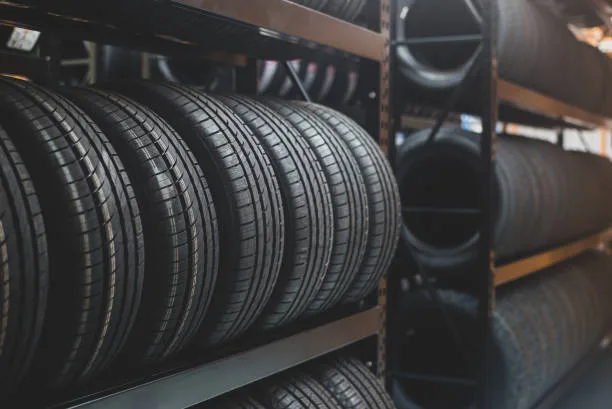
Why do the front tyres on a passenger car wear down faster than the rears? Many people looking for tyres in Canterbury only notice this problem at service. One fitter will point at two bald tyres while the other two are almost perfect. Tyre rotation is a simple mechanical fix for this common problem.
Moving the tyres between wheel positions spreads wear evenly over their life. Without rotation, the driven wheels take all the friction and steering wear. This leads motorists to buy new tyres in mismatched pairs. Understanding tyre wear helps drivers protect vehicle handling and avoid early replacements.
The Mechanical Forces That Cause Uneven Tread Wear
Several clear forces combine to wear tyre tread unevenly between the front and rear axles:
- The heavy engine and gearbox are constantly pushing down on the front axle.
- Braking forces shift the vehicle's weight forward and create very high friction on the front contact patch.
- Steering scrub pivots the front tyres across coarse tarmac while guiding the car through turns.
- Engine torque on front-wheel-drive cars forces the driven wheels to deliver grip and propulsion at the same time.
RWD and AWD will create different wear patterns. Even with that, every layout will wear one axle down faster than the other.
How Regular Rotation Protects Vehicle Balance
Can a car be safely handled when the front and rear tyres have completely different tread depths? Balanced tread wear is essential for stable, predictable handling. This is especially important on wet roads, where tyres need to displace standing water quickly. If the rear tyres lose tread depth much faster than the fronts, the car is prone to oversteer, and the rear end will tend to slide out on a slippery bend.
Swapping the wheels between the axles balances the rubber wear and maintains essentially the same grip in all four corners. It ensures the tread grooves are deep enough to channel water away from the contact patch, reducing the risk of aquaplaning. It also means stability control systems work properly, as both axles have the same grip. The car will stop straight in an emergency without the systems having to fight against differing levels of grip.
Common Rotation Patterns and Tyre Construction
Tyre rotation follows a set pattern depending on the tyre build and the car's drive layout. Directional tyres in Canturbury have an arrow on the sidewall (on the outer vertical face of the tyre) which indicates the one direction they are meant to rotate. You can only move these tyres from the front axle to the rear axle on the same side of the car.
Asymmetrical tyres in Canterbury have different tread patterns on the inside and the outside edge. They clear water very effectively and will keep the car stable through the corners. Technicians can of course swap non-directional and asymmetrical tyres between the left and right sides of the car. They'll use an X pattern or a cross pattern depending on the driven axle. If you're one of the people who book in for a mobile tyre fitting Canterbury, you'll probably talk to your fitter about this too. It's a check that the directional arrows are pointing the correct way.
Wheel Alignment, Camber Angles, and Wear Diagnosis
Swapping the wheels gives the technician a clear opportunity to inspect the tread face. They'll look at the central three-quarters of the tyre for any signs of uneven wear. Uneven wear on one tyre is generally a sign of bad suspension or tracking rather than axle weight. If the inside edge is wearing very smoothly and the outside edge is thick, then negative camber (the wheel being inwards) is likely out of specification.
Excessive toe (i.e., the amount the wheels are pointing in or out when viewed from above) will result in feathering across the tread ribs. Moving a tyre to a new corner without correcting those underlying geometry problems, just exposing a fresh patch of rubber to the same scrubbing forces. Do a quick visual check of the wheels when you swap them, as it will often reveal a bent control arm or a worn rubber bushing before the damage spreads through the set.
When to Move Wheels and When to Replace
Tyre rotation is best done as preventative maintenance rather than as an emergency measure when you've got heavily worn rubber. Once the tyre is down to the UK legal minimum tread depth of 1.6 mm across the central three quarters, it's pretty much pointless to rotate it. Putting worn tyres in Canterbury on the rear makes the back end loose. Putting them on the front is bad for wet braking and steering.
Vehicle handbooks will, of course, give the specific rotation schedule the manufacturer recommends. If you've got two tyres which are completely flat on the inside shoulder due to poor tracking, then the only option is to replace the pair. Only rotate tyres when they have a healthy, even tread depth. That will ensure that the wear is even across the car.
Final Thoughts
Tyre rotation is one of the simplest things you can do to keep your car balanced and safe. It spreads wear across both axles, which in turn extends the life of your tyres. It also keeps the car stable in the wet. Checking your tread wear and getting your wheel alignment checked will keep your tyres safe, give you reliable grip, and extend the life of your set. You can book in for a check-up with the team at a1tyres-kent.com to have your tread depth and wheel condition checked.
Frequently Asked Questions
When should a car have its tyres rotated?
Drivers must adhere to the rotation schedule in their vehicle handbook. Rotating during routine servicing balances tread wear between both axles and prevents large depth differences from developing between the front and rear.
Should new tyres always go on the rear axle?
Industry tests have shown that fresh tyres on the rear provide the best grip in the wet. The deep rear tread prevents nasty oversteer slides, which the average driver finds far more difficult to manage than the gentle understeer at the front.
Can directional tyres be swapped from left to right?
Directional tyres must never be crossed from one side of the car to the other without unmounting them from the rims. Their tread pattern is designed to evacuate surface water effectively only when the tyre rolls in the direction indicated on the sidewall.
Does rotating tyres stop uneven wear caused by poor tracking?
Rotating wheels won't fix the uneven wear that's caused by poor alignment or worn suspension components. You'll just move a badly worn tyre onto a good piece of rubber and effectively ruin it. That's where booking a mobile tyre fitting in Canterbury comes in. It's a service that fits you with fresh tyres and gets your vehicle back to a safe condition.