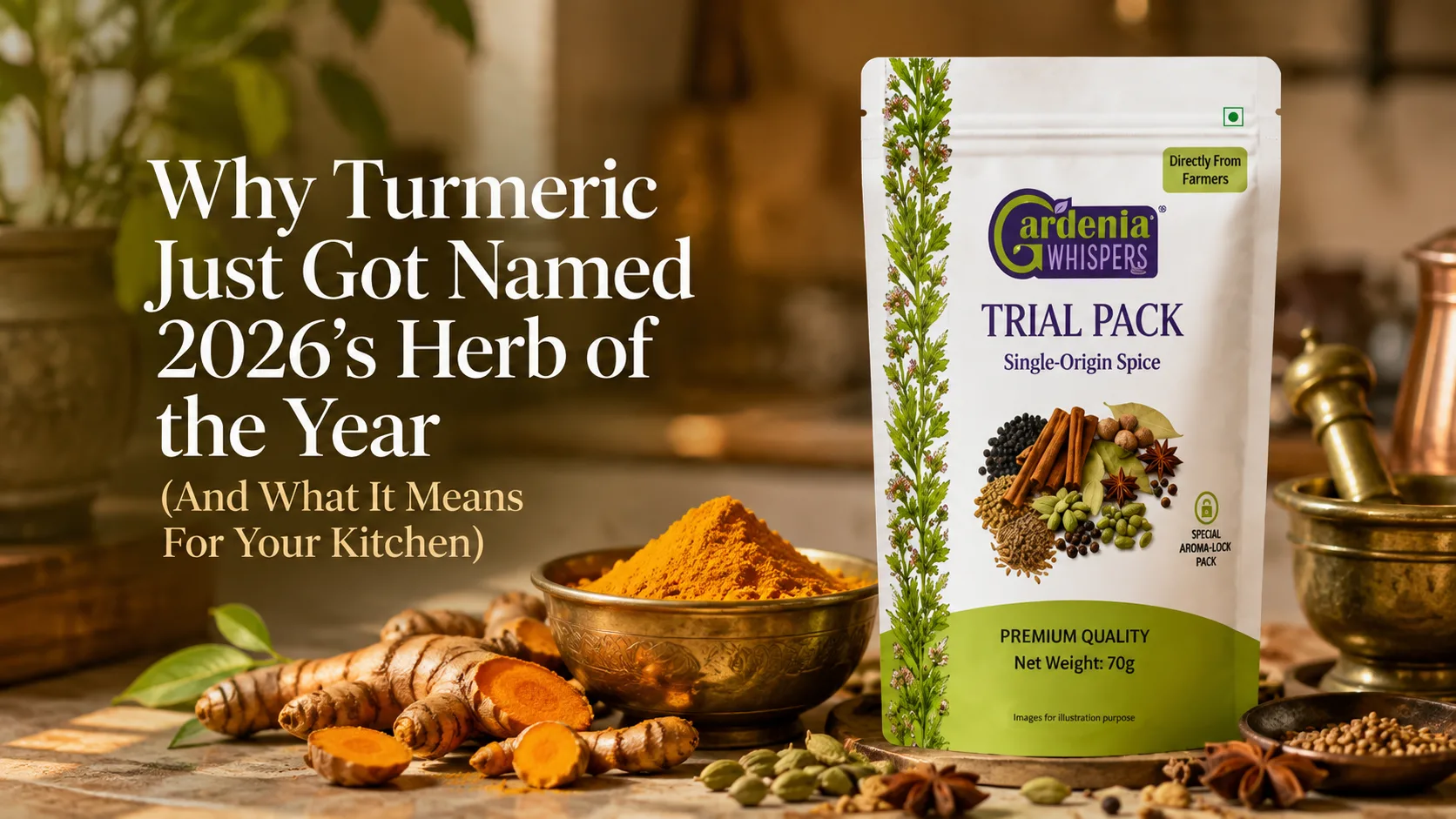
Funny how these things go. One year nobody's paying attention to the little tub of yellow powder sitting next to the salt, and the next year it's being called the Herb of the Year by international herbal associations. That's exactly what happened with turmeric in 2026, and honestly, it's about time.
For most Indian households, this isn't news. Turmeric has been doing its quiet, unglamorous job in daily cooking for generations a pinch in the dal, a dash in the milk before bed, a rub on a bruise because your grandmother said so. What's changed is that science finally caught up to what the kitchen already knew.
What's Actually Driving the Trend
Recent research is pointing to some genuinely interesting findings. Clinical trials on knee joint comfort have shown turmeric extract performing on par with common pain relievers, minus the stomach trouble that usually comes with those. Other studies are looking at bone strength in postmenopausal women, and even memory and mood support tied to curcumin the compound that gives turmeric its color and its punch.
None of this means turmeric is a miracle cure. But it does mean the spice deserves a second look, especially the quality of turmeric people are actually buying.
Not All Turmeric Is Created Equal
Here's the part most trend pieces skip over: curcumin content varies wildly depending on where the turmeric is grown. Mass-market turmeric powder, the kind sitting in most supermarket racks, often has curcumin levels barely worth mentioning. That's where something like the Lakadong Turmeric Powder from Gardenia Whispers stands apart Lakadong turmeric from Meghalaya is known for having one of the highest curcumin percentages in the world, sometimes touching 6-7%, compared to the 2-3% found in ordinary varieties.
If you're going to jump on the turmeric trend, the source actually matters.
Bringing It Back Into Daily Use
You don't need fancy supplements to benefit from this. A few simple habits work just as well:
- A pinch of turmeric in warm milk before bed
- Stirred into dal, sabzi, or rice while cooking
- Mixed into a paste with honey for a natural face mask
- Added to soups and broths during cold season
The trick is consistency, not quantity. A small daily amount, over weeks and months, does more than an occasional large dose.
Whole Spice or Powder Does It Matter?
This is a question that comes up a lot. Whole turmeric root retains its essential oils longer and can be freshly ground at home, which some purists swear by. If you're someone who likes that level of control, Gardenia Whispers' Whole Spices collection is worth browsing.
For everyday convenience, though, a well-sourced, single origin powder does the job just fine especially when it's stone-ground and stored properly. The Powdered Spices range covers that need without cutting corners on quality.
The Bigger Picture
What's happening with turmeric right now is part of a larger shift. People are getting tired of over-processed, over-packaged food products and are circling back to ingredients that have stood the test of time. Turmeric just happens to be one of the clearest examples cheap, easy to use, backed by both tradition and emerging science.
The 2026 spotlight on turmeric isn't really a new discovery. It's a rediscovery. And for anyone who wants to actually feel the difference, starting with a genuinely high-quality source rather than whatever's cheapest on the shelf makes all the difference.
Sometimes the oldest ingredient in your kitchen turns out to be the one worth paying the most attention to.