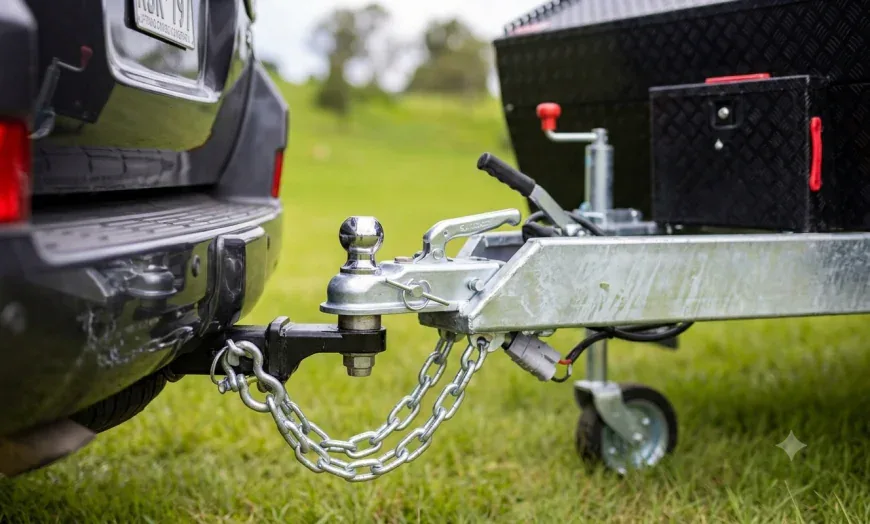
If you own a caravan or a camper trailer, you already know towing is a big responsibility. One small part that people often forget about is the tow ball. It looks tiny compared to the caravan behind it, but it does a huge job. It holds your whole caravan or camper trailer connected to your car.
In this blog, we will talk about why the tow ball matters so much, how it works, and what you should know before you hit the road with your caravan or camper trailer.
What Is a Tow Ball?
A tow ball is the round metal ball fitted at the back of your car or tow bar. It connects to the tow ball hitch on your caravan or camper trailer. Think of it like a joint. It lets your caravan turn, tilt, and move smoothly while your car drives on the road.
How the Tow Ball and Tow Ball Hitch Work Together
The tow ball and tow ball hitch work as a team. The tow ball sits on your car. The tow ball hitch sits on your caravan or camper trailer. When you park your caravan close to the car, the hitch drops down over the ball and locks into place.
Why Choosing the Right Size Matters
Tow balls come in different sizes. The most common sizes are 50mm tow balls, but there are other sizes too depending on the caravan or trailer type.
If your tow ball size does not match your tow ball hitch size, they will not fit properly. Even if they somehow connect, the fit will be loose and unsafe. This is very dangerous, especially on highways or long trips.
Weight Rating Is Just as Important
Every tow ball has a weight limit. This is called the rated capacity. It tells you the maximum weight the tow ball can safely handle.
Caravans and camper trailers can be heavy, especially when they are fully packed with luggage, water, and camping gear. If your tow ball's weight rating is lower than your caravan's actual weight, it can bend, crack, or break while driving.
Signs of a Worn-Out Tow Ball
Just like tyres or brakes, tow balls also wear out over time. Here are some signs that tell you it might be time to check or replace your tow ball.
If you see rust building up, especially deep rust that eats into the metal, this is a warning sign. If the ball looks scratched, flattened on top, or has grooves worn into it, that means it has been under a lot of stress.
Tow Ball Height Matters for Balance
Another thing people often overlook is the height of the tow ball. If the tow ball sits too high or too low compared to the caravan hitch, it can make your caravan tilt while driving.
A caravan that is not level can affect how it handles on the road. It may sway more, especially at higher speeds or when overtaking other vehicles.
Safety Chains and Tow Balls
Along with the tow ball, safety chains are also very important. These chains connect your caravan to your car as a backup safety measure. If the tow ball hitch somehow comes loose, the safety chains stop the caravan from completely separating from the car.
Simple Checklist Before Every Trip
Before you drive off with your caravan or camper trailer, it helps to do a few quick checks.
Check that the tow ball size matches your hitch size. Make sure the connection is locked and tight. Look for any rust, cracks, or wear on the tow ball. Check that the weight of your caravan is within the tow ball's rated capacity. Confirm your safety chains are connected properly.
Final Thoughts
The tow ball might be small, but it plays a huge role in keeping your caravan or camper trailer safely connected to your car. Choosing the right tow ball size, checking the weight rating, and doing regular maintenance all help make your towing experience smoother and safer.
Whether you are heading out for a weekend camping trip or a long road journey with your caravan, taking a few minutes to check your tow ball and tow ball hitch is always worth it. It is a simple habit that protects you, your family, and everyone else on the road.
Original Source: https://blogosm.com/why-the-right-towball-matters-for-safe-and-stable-towing