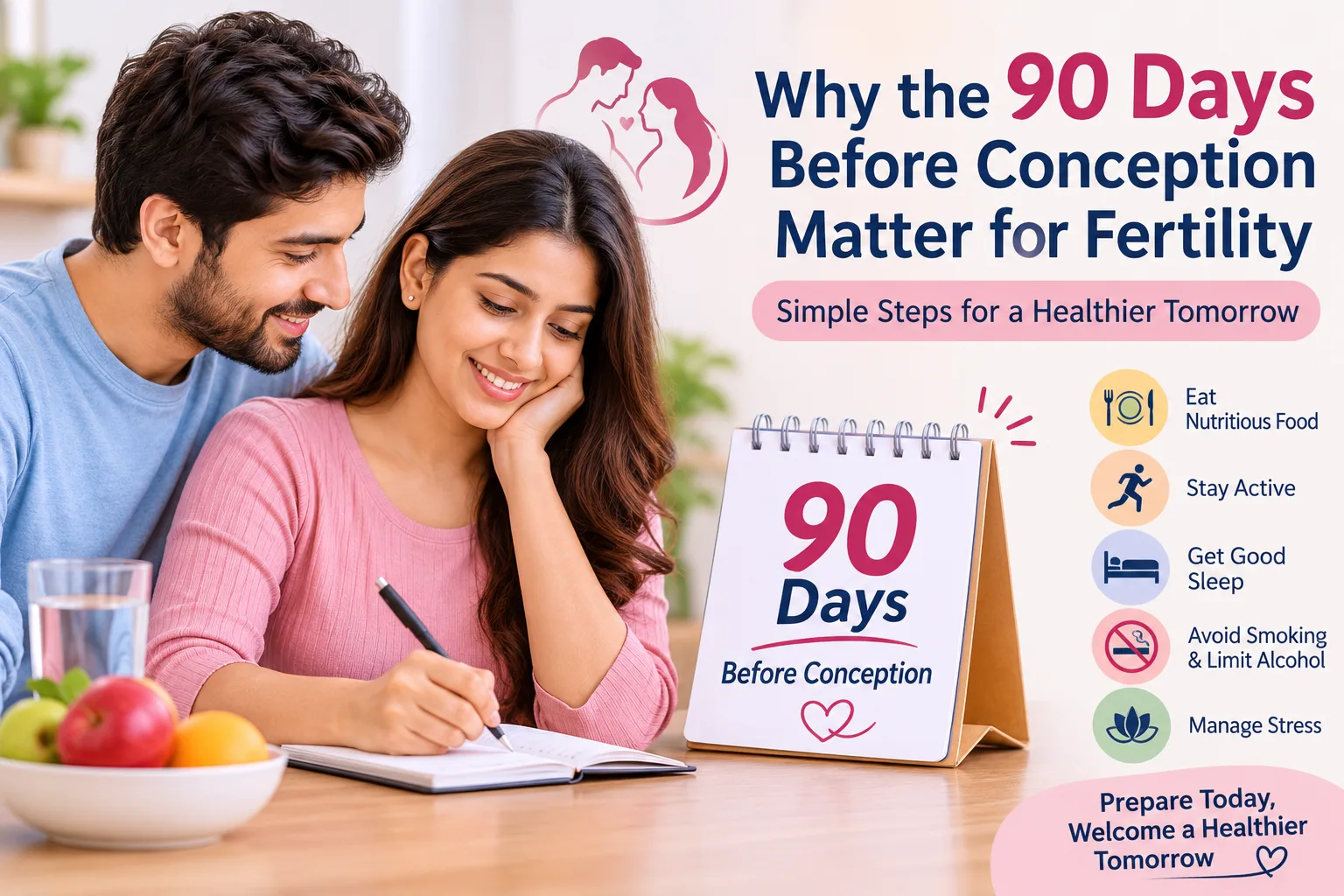
Preparing for pregnancy involves more than waiting for a positive test. The choices you and your partner make before trying to conceive can also support your reproductive health and help prepare your body for pregnancy.
The 90 days before conception are often considered an important preparation period because sperm take around three months to develop fully. Egg development also takes place over several months before ovulation. This makes the months leading up to pregnancy a useful time to build healthier habits.
You do not need to make major changes all at once. Eating balanced meals, staying active, getting enough sleep, and addressing existing health concerns can help both partners prepare for the journey ahead.
Why Are the 90 Days Before Conception Important?
Fertility depends on several factors, including egg health, sperm quality, hormone levels, and overall reproductive health.
Sperm take approximately 74 days to develop, followed by additional time to mature. Egg development is a longer process involving several stages before ovulation. Although 90 days is not a fixed biological deadline, it provides a practical period for couples to focus on their health before trying to conceive.
During this time, everyday habits such as diet, sleep, physical activity, and avoiding tobacco may support reproductive health. These changes cannot guarantee pregnancy, but they can help create healthier conditions for conception.
9 Steps to Follow in the 90 Days Before Conception
1. Choose a Balanced and Nutritious Diet
A healthy diet provides nutrients that support normal reproductive function. Try to include a variety of foods in your daily meals, such as:
- Green leafy and seasonal vegetables
- Fresh fruits and whole grains
- Lentils, beans and other legumes
- Nuts, seeds, eggs and fish
- Healthy fats such as olive oil
Limit highly processed foods and sugary drinks where possible. No single food can improve fertility on its own, but consistent healthy eating can support your overall well-being.
You can also read about lifestyle changes to improve fertility naturally for more practical guidance.
Women planning pregnancy should discuss folic acid supplementation with their doctor. The CDC recommends taking 400 micrograms of folic acid daily, starting at least one month before conception.
2. Maintain a Healthy Weight
Being significantly underweight or having obesity can affect reproductive health. In women, weight-related hormonal changes may interfere with regular ovulation. In men, obesity may also affect reproductive function.
Avoid crash diets or extreme weight-loss plans. Instead, focus on balanced meals, regular exercise, and gradual, sustainable changes. A healthcare professional can help you decide what is appropriate for your body.
3. Stay Physically Active
Regular physical activity supports heart health, helps manage weight, and can improve mood.
You can include activities such as walking, swimming, cycling, yoga, or light strength training in your routine. Choose an exercise plan that you can follow comfortably.
Avoid excessive workouts, particularly when combined with inadequate food intake, as they may affect menstrual cycles in some women.
4. Stop Smoking and Avoid Alcohol
Smoking can negatively affect fertility in both men and women. Exposure to secondhand smoke can also be harmful. Vaping should not be considered a safe alternative.
It is best to avoid alcohol while trying to conceive, as there is no known safe amount during pregnancy. Recreational drugs should also be avoided.
Making these changes before conception can support better reproductive health for both partners.
5. Follow a Consistent Sleep Routine
Sleep plays an important role in overall health, hormone regulation, and daily energy levels.
Try to maintain a regular bedtime and wake-up time. Reduce screen use before sleeping, avoid caffeine late in the day, and create a comfortable sleeping environment.
Getting enough rest can also make it easier to maintain other healthy habits during your pregnancy preparation.
6. Find Healthy Ways to Manage Stress
Preparing for pregnancy can bring excitement, uncertainty, and emotional pressure. Although stress alone does not necessarily cause infertility, ongoing stress may affect sleep, eating habits and general well-being.
Simple activities such as walking, meditation, deep breathing, journaling or speaking with a counsellor may help you manage everyday stress.
You do not need to eliminate stress completely. Focus on finding healthy ways to cope with it.
7. Make Fertility Preparation a Shared Responsibility
Fertility involves both partners, so preparation should not fall on women alone.
Men can support their reproductive health by eating nutritious food, exercising regularly, sleeping well, and avoiding smoking, excessive alcohol, and recreational drugs.
It is also important to discuss medications with a doctor. Testosterone treatment, in particular, can reduce sperm production. If you have regular exposure to high heat or workplace chemicals, mention this during your medical consultation.
8. Schedule a Preconception Health Check-Up
A preconception consultation can help identify health concerns before you start trying for a baby.
Your doctor may review:
- Existing conditions such as diabetes or thyroid disorders
- Current medicines and supplements
- Vaccination history
- Menstrual cycle patterns and reproductive health
- Family and medical history
Your doctor can also advise you about folic acid, suitable supplements, and any tests that may be needed based on your health.
9. Understand Your Fertile Window
Knowing when ovulation occurs can help you plan intercourse during the days when pregnancy is most likely.
The fertile window usually includes the five days before ovulation and the day of ovulation. Having intercourse every one to two days during this period can improve the chances of conception.
You can use menstrual cycle tracking or ovulation predictor kits to estimate your fertile days. However, ovulation timing may vary, particularly if your periods are irregular.
Can Healthy Habits Solve Every Fertility Problem?
Healthy lifestyle choices can support reproductive health, but they cannot treat every cause of infertility.
Conditions such as blocked fallopian tubes, endometriosis, reduced ovarian reserve, ovulation disorders, and male-factor infertility may require medical evaluation and treatment.
If you are under 35, consider seeking a fertility evaluation after 12 months of regular, unprotected intercourse without conception. For women aged 35 or older, an evaluation is generally recommended after six months. You should seek medical advice earlier if you have irregular periods, known reproductive conditions, or other fertility concerns.
Your 90-Day Pregnancy Preparation Checklist
A few consistent habits can make pregnancy preparation more manageable. Use this checklist as a simple reminder:
- Eat balanced meals: Include a variety of nutritious foods.
- Stay active: Choose regular, moderate physical activity.
- Avoid tobacco: Stop smoking and vaping, and avoid secondhand smoke.
- Avoid alcohol and recreational drugs: Make healthier choices while trying to conceive.
- Get enough sleep: Maintain a consistent sleep schedule.
- Manage stress: Make time for activities that support your well-being.
- Prepare together: Both partners should take steps to support reproductive health.
- Book a health check-up: Discuss your medical history and pregnancy plans with your doctor.
Start Your Pregnancy Preparation with the Right Guidance
The 90 days before conception can be a valuable time to focus on your health and make positive lifestyle changes. However, every couple's fertility journey is different. If you have been trying to conceive without success or have concerns about your reproductive health, getting the right medical advice is an important step.
At Safal Infertility & Laparoscopy Hospital, Vadodara, couples can receive guidance and care for fertility concerns, including fertility diagnostics, IVF, IUI, ICSI, male and female infertility treatment, and other reproductive health conditions.
For guidance based on your health and pregnancy plans, contact Safal IVF & Laparoscopy Hospital to schedule a fertility consultation.