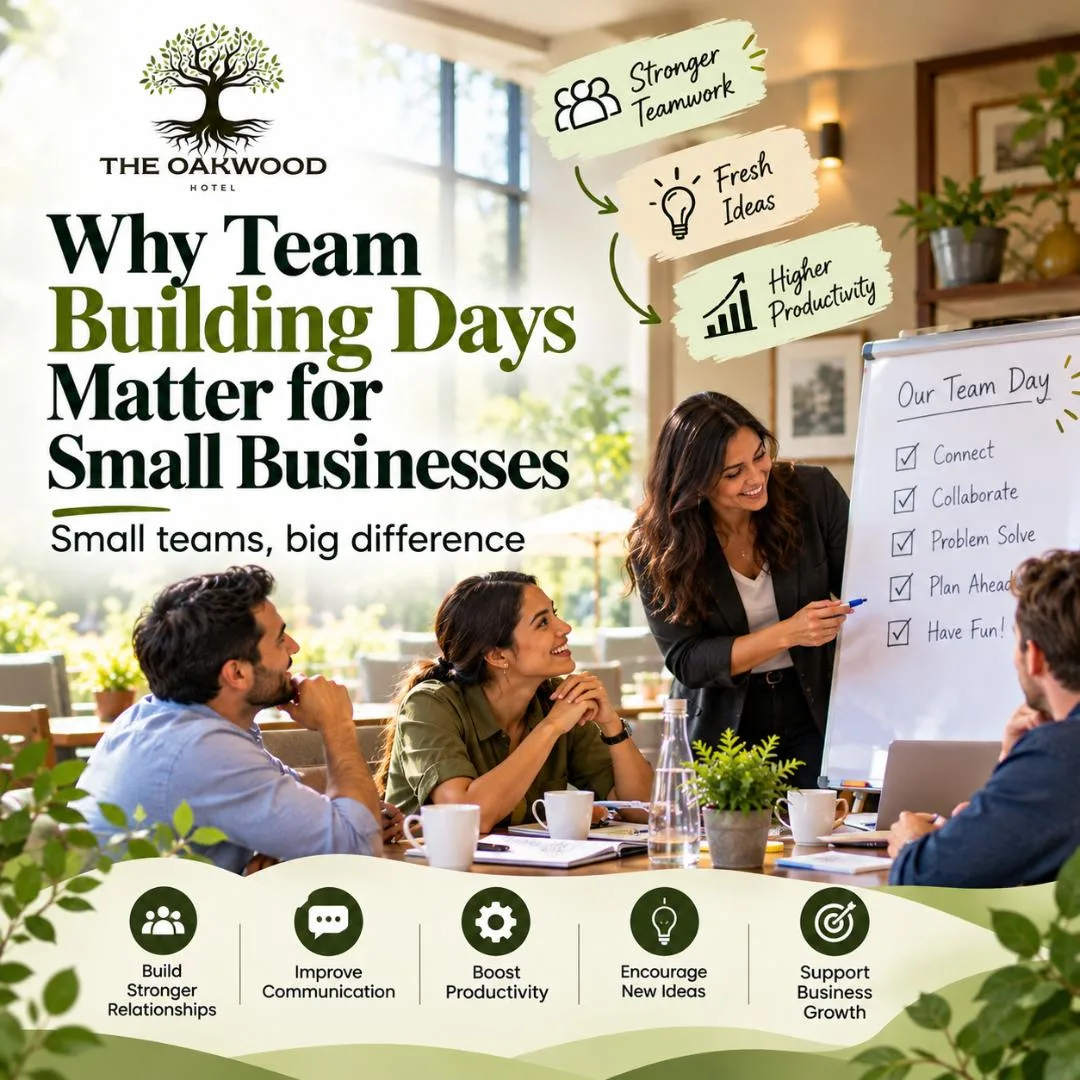
In a small business, every person counts. If one colleague is unhappy, or two departments are not talking, the whole company feels it quickly. There is no large HR team to smooth things over and no spare staff to cover the gaps. That is why the way your people work together matters so much.
Many owners and managers are too busy to think about this. Orders need to go out, customers need replies and the calendar is always full. But setting aside one day for your team, away from the usual routine, can bring real and lasting benefits. This article explains why, in plain language, and gives practical advice on how to get it right.
What Do We Mean by Team Building?
Team building is not about forced games or awkward icebreakers. At its best, it is simply time for colleagues to work, talk or relax together in a different setting.
What it can look likeA team day might be a workshop where staff plan the year ahead. It might be a group task that needs everyone to contribute. It could be a relaxed lunch where nobody talks about targets. Often it is a mix of all three.
What it is notIt is not a performance review, and it is not a way to fix serious management problems. It works best when people feel free to join in without pressure.
Why Small Businesses Feel the Difference More
Large companies can absorb a few weak working relationships. Small businesses cannot.
Every role is visibleWhen your team is small, everyone depends on everyone else. If the person who takes orders and the person who delivers them do not communicate well, customers notice.
Culture forms quicklyIn a small team, the mood of two or three people can shape the whole workplace. A shared day gives you a chance to set a positive tone on purpose, rather than leaving it to chance.
Staff often wear many hatsPeople in small firms usually handle several jobs. This is rewarding, but it can also be tiring. A thoughtful day away shows that you value the extra effort.
Five Real Benefits of a Team Day
1. Clearer communicationAway from desks and screens, people speak more openly. A quiet colleague who rarely shares ideas in meetings may do so over lunch. Misunderstandings that built up over email can also be cleared in a single honest conversation.
2. Faster settling in for new staffNew starters often take months to feel part of the group. A shared day helps them meet colleagues properly, not just by name. They learn who to ask for help, and the team learns more about them.
3. Better problem solvingWhen people from different roles work on a task together, they see problems from new angles. A workshop on a real business issue can produce ideas that a normal meeting would miss.
4. Higher moralePeople like to feel that their work is noticed. A well-run day gives staff a break, a good meal and some time to enjoy each other’s company. That goodwill often carries into the following weeks.
5. Better service for customersA team that gets along tends to cooperate better. Handovers are smoother, mistakes are shared and solved faster, and customers feel the difference.
Signs Your Team Might Need a Day Together
How do you know if the time is right? Watch for these signals:
• Staff mainly talk to people in their own department
• The same issues come up in every meeting
• New starters seem unsure or left out
• Energy has dropped after a busy period
• Only a few people ever offer ideas
If a few of these sound familiar, a team day could be a sensible step.
Team Day Formats That Suit Smaller Budgets
You do not need a huge budget. The right format depends on your goals and your group.
A half-day workshopA morning session with refreshments, followed by lunch, works well for teams who cannot be away for long. It is a good way to plan goals or solve a specific problem.
A shared mealSometimes the simplest idea works best. A relaxed lunch or dinner away from the workplace gives people time to talk in a natural way.
A full day or two-day eventFor larger plans, or teams who travel in from different places, a full day or an overnight stay gives more time and a more relaxed pace.
Choosing the Right Venue
The place you choose shapes the whole experience. A comfortable, well-organised venue lets you focus on your team rather than on logistics.
What to ask a venueIf you are looking at team building events in Gloucester, a hotel venue can be a practical option, because meeting space, food and rooms are often available together. Oakwood Hotel in Twigworth, just outside Gloucester, is one example, and you can read about their team building events in Gloucester before getting in touch. Whichever venue you consider, a few simple questions will help.
Space
Ask about room size, seating options and whether the space suits workshops as well as relaxed time. A quiet room with natural light makes a real difference.
Food and drink
Check what refreshments and meals are included, and whether menus can be adjusted for dietary needs. Good food keeps energy steady through the day.
Travel and rooms
Find out about parking and how easy the venue is to reach. If some staff are travelling far, ask whether rooms are available on site.
Making Sure the Day Actually Works
Even a good venue cannot save a day with no purpose. A few habits help.
Explain the reasonTell your staff why the day is happening. People take part more willingly when they understand the purpose.
Keep it simpleA short, clear plan works better than a crowded timetable. Leave gaps for breaks and conversation.
Include everyoneSome people enjoy lively group tasks, while others prefer quieter chats. Offer a mix so nobody feels uncomfortable.
Follow upA few days later, ask your team what they found useful. If people raised ideas or concerns, act on them. This is what turns a pleasant day into a lasting improvement.
One Venue, Many Occasions
A business that builds a good relationship with a local hotel often finds it useful again and again. The same venue may be able to help with other occasions across the year.
If someone on your team is planning a celebration, or you are comparing wedding receptions venues in Gloucester, it is worth asking what a hotel can offer. And when major events fill the county, such as the racing festival, visitors and clients often need rooms early. Those looking for a hotel for Cheltenham Festival visitors should book well in advance.
How to Tell If It Worked
Success does not have to be measured with complicated numbers.
Look for small changesAre people talking more across departments? Do meetings feel more open? Are new staff settling faster? These signs matter more than a formal score.
Ask for honest feedbackA short, anonymous survey can help staff share their views freely. Use the answers to plan the next event.
Common Questions
How often should a small business hold a team day?Once or twice a year suits many teams. Some also add shorter get-togethers, such as a team lunch every quarter.
Does it have to be a full day?No. A half day can be just as useful, especially for small groups or tight budgets.
Is it worth the cost?When the day has a clear goal and is planned well, many managers find the benefits in communication and morale are worth it.
Final Thoughts
Team building days matter for small businesses because small teams depend on trust and cooperation. A single, well-planned day can help people understand each other, solve problems together and feel valued. Start with a clear purpose, choose a comfortable setting, keep the plan simple and listen to your staff afterwards.
If you are considering team building events in Gloucester, Oakwood Hotel is happy to talk through your plans and help you find a format that suits your group.
Contact Now:
The Oakwood Hotel Gloucester, United Kingdom
Phone: +44 1452 905452
Website: https://oakwoodhotel.co.uk/