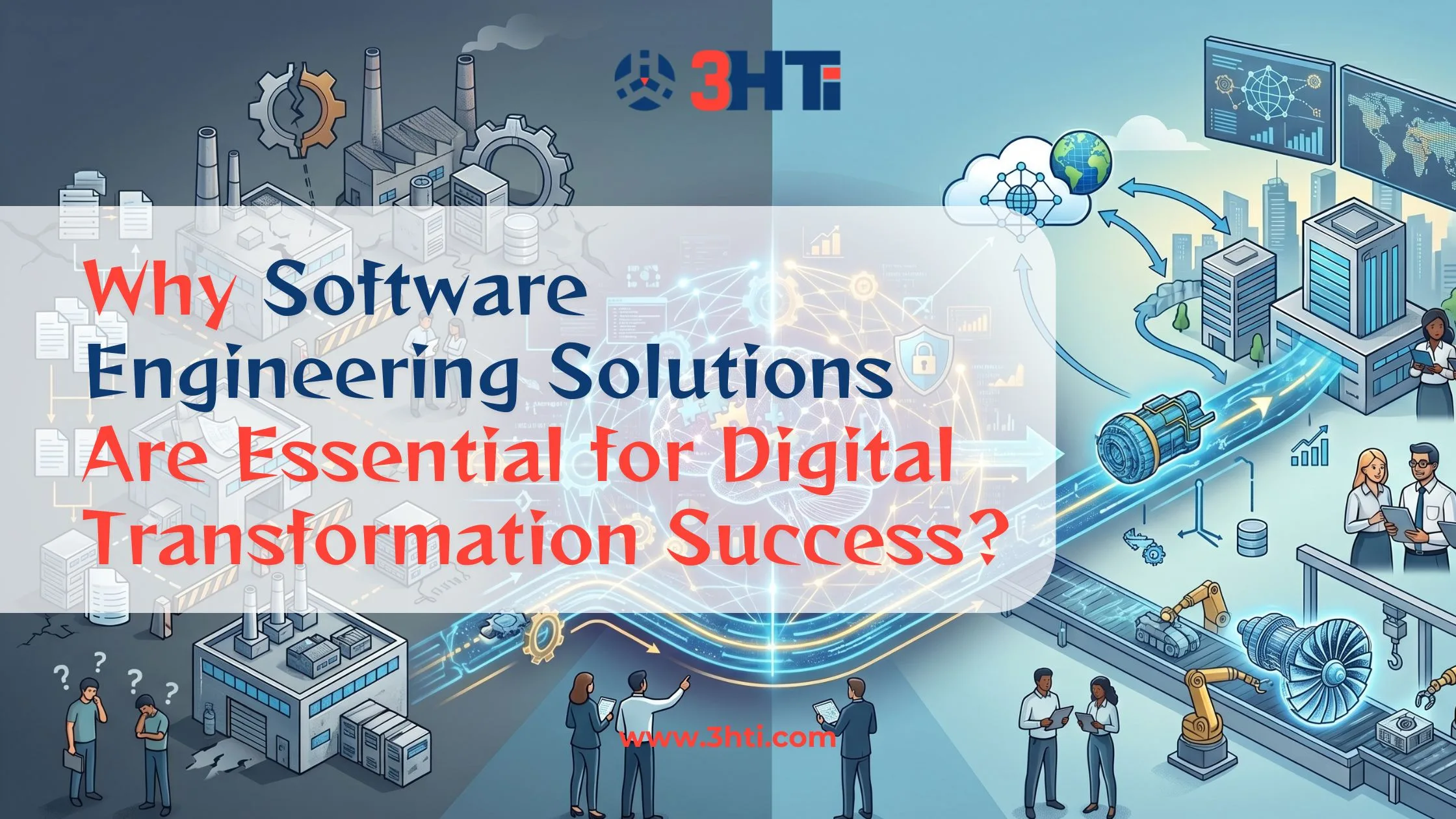
Digital transformation is an operational imperative for modern manufacturing and product development organizations. However, many ambitious initiatives stall during the execution phase. The missing link is rarely a lack of vision; it is usually inadequate technical infrastructure. At the heart of a successful transition, software engineering solutions provide the structural foundation necessary to turn theoretical digital strategies into tangible, measurable business value.
To remain competitive, companies must modernize their core systems, streamline product lifecycles, and empower their workforce with seamless data access. This requires moving beyond off-the-shelf software and investing in customized technical frameworks tailored to specific operational demands.
Key Takeaways
- Strategic alignment: Bridging the gap between digital ambition and operational reality requires robust technical architecture.
- Unified data: Connecting CAD, PLM, and manufacturing floors through a digital thread eliminates costly operational silos.
- Expert guidance: Leveraging external consulting ensures that complex technology implementations directly support core business objectives.
- Scalable infrastructure: Integrating cloud frameworks provides the elasticity needed for globally distributed product development teams.
The Core of Modern Business: How Software Engineering Solutions Drive Change
When enterprises attempt to digitize without upgrading their underlying technical architecture, they immediately encounter severe integration bottlenecks. High-performance software engineering solutions act as the central nervous system of a modernized enterprise. By properly linking Computer-Aided Design (CAD) applications, Product Lifecycle Management (PLM) systems, and real-time operational analytics, these technical frameworks allow teams to design, test, and deploy products with unprecedented speed and accuracy.
Overcoming Legacy System Bottlenecks
Legacy infrastructure actively isolates critical data. Engineering departments cannot communicate effectively with the manufacturing floor if their platforms refuse to integrate. Implementing well-architected software engineering solutions breaks down these entrenched data silos. It ensures that every stakeholder, from the initial design engineer to the final supply chain manager, operates from a single, accurate source of truth, drastically reducing costly rework.
Building a Resilient Digital Thread
A primary goal for forward-thinking manufacturing firms is establishing a 'digital thread' , a continuous, connected flow of data across the entire product lifecycle. Without specialized software engineering solutions, achieving this connectivity is nearly impossible. These integrations ensure that downstream departments immediately see the impact of upstream design changes, accelerating time-to-market and improving overall product quality.
Accelerating ROI with Digital Transformation Consulting Services
Knowing exactly which technologies to implement is just as critical as the software itself. This is where digital transformation consulting services become an invaluable asset. Organizations like 3 HTi demonstrate that technology alone cannot solve workflow inefficiencies. Expert consultants thoroughly analyze an organization’s specific design and manufacturing workflows to recommend the exact technical upgrades needed.
Rather than adopting a disruptive, one-size-fits-all approach, a guided consulting strategy ensures that investments in new software engineering solutions directly align with core business objectives. This targeted approach accelerates the return on investment, minimizes operational downtime during rollout, and significantly improves user adoption rates across all technical departments.
Securing the Future with Cloud Managed Services
Modern engineering infrastructure requires unparalleled agility. Traditional on-premise servers simply lack the elasticity to support rapid organizational growth and massive data loads. Integrating cloud managed services alongside your core software engineering solutions provides a highly resilient, scalable foundation.
Cloud environments allow globally distributed engineering teams to collaborate in real-time, whether they are accessing heavy 3D CAD files, updating complex PLM databases, or analyzing massive IoT datasets. Furthermore, specialized managed services ensure these cloud architectures remain strictly secure, industry-compliant, and continuously optimized. This approach removes the heavy maintenance burden from internal IT teams, allowing them to focus on strategic innovation rather than server upkeep.
Key Pillars of Effective Software Engineering Solutions
To successfully support comprehensive digital initiatives, the chosen technology framework must possess specific, high-performance characteristics. Organizations evaluating their infrastructure should prioritize the following core elements:
- Inherent Scalability: The architecture must effortlessly grow alongside the enterprise without requiring complete system rebuilds.
- Seamless Interoperability: Systems must natively connect with existing tools, particularly complex CAD and enterprise resource planning (ERP) environments.
- Security by Design: With vital intellectual property at stake, stringent security protocols must be embedded directly into the foundational code.
- Data-Driven Analytics: The platform should inherently support Internet of Things (IoT) integration and real-time operational data harvesting.
By focusing strictly on these functional pillars, enterprises ensure their software engineering solutions remain robust, adaptable, and completely future-proof.
Conclusion: Building a Foundation for Continuous Innovation
The journey toward a fully digitized enterprise is undeniably complex, demanding far more than surface-level technology updates. True transformation requires fundamentally restructuring how people, data, and processes interact. By leveraging comprehensively designed software engineering solutions, product development and manufacturing companies can unlock unprecedented operational efficiency. When paired with expert strategic consulting and highly scalable cloud infrastructure, these technical solutions form the unshakable bedrock of sustainable, long-term market leadership.
Frequently Asked Questions
Q. What are software engineering solutions?
Comprehensive software engineering solutions encompass custom applications, system integrations, and architectural frameworks designed to solve distinct business problems, streamline complex workflows, and enable seamless data sharing across an entire manufacturing organization.
Q. How do digital transformation consulting services help?
Expert digital transformation consulting services provide strategic guidance, helping businesses identify workflow bottlenecks, select appropriate technologies, and implement software efficiently while minimizing operational disruptions and maximizing their return on investment.
Q. Why are cloud managed services important for engineering?
Specialized cloud managed services provide the secure, scalable computing power necessary for globally distributed engineering teams to seamlessly collaborate on complex product designs and heavy datasets in real time without lag.
Q. What is the role of customized software in PLM?
Customized software engineering solutions ensure Product Lifecycle Management systems integrate flawlessly with CAD software, databases, and factory systems, creating a unified digital thread from initial design through end-of-life.
Q. Can small businesses benefit from these engineering solutions?
Absolutely. Tailored software engineering solutions allow smaller product teams to automate manual technical tasks, scale design operations rapidly, and compete with larger enterprises by establishing highly efficient, error-free operational workflows.
Q. How do these specialized solutions improve time-to-market?
By automating testing protocols, integrating real-time feedback loops, and breaking down departmental data silos, intelligently engineered software environments drastically reduce overall development cycles and get products to market faster.
Q. What is the very first step in digital transformation?
The initial step is conducting a comprehensive operational audit. Before implementing new tools, organizations must understand their current technical limitations and define clear business objectives to precisely guide their software investments.