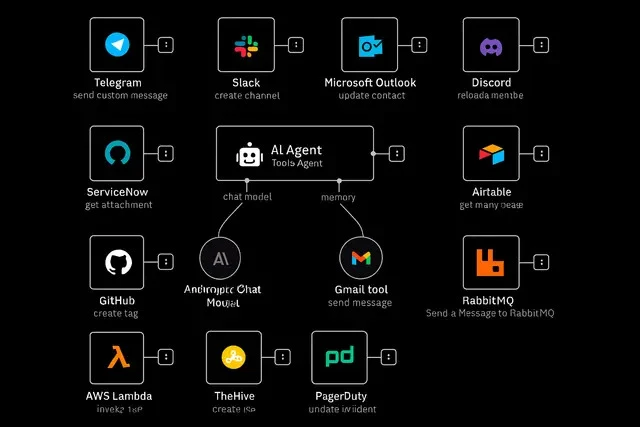
Small and medium-sized enterprises (SMEs) are the backbone of the global economy, but they face intense competition from both larger corporations and rapidly evolving startups. In this fast-paced landscape, Artificial Intelligence (AI) is no longer a luxury—it’s a necessity. SMEs that adopt AI early gain a competitive edge by improving efficiency, enhancing customer experiences, and making data-driven decisions.
This article explores why SMEs should invest in AI now and how it can drive growth, productivity, and market relevance.
1. Automate Repetitive Tasks to Free Up Resources
SMEs often operate with limited staff, meaning employees spend significant time on repetitive, administrative tasks. AI can:
- Automate data entry, invoicing, and reporting
- Handle routine customer queries through chatbots
- Schedule meetings and follow-ups automatically
Benefit: Employees can focus on strategic work, innovation, and growth rather than mundane tasks.
Example: A small e-commerce business using AI to automate order processing reduced manual work by 50%, allowing staff to concentrate on marketing and customer engagement.
2. Enhance Decision-Making with Data-Driven Insights
SMEs generate valuable data from sales, customer interactions, and operations. AI can analyze this data to:
- Predict customer behavior and trends
- Identify the most profitable leads and marketing strategies
- Optimize inventory and resource allocation
- Provide real-time performance dashboards
Benefit: AI enables SMEs to make faster, smarter decisions, reducing guesswork and risk.
Example: A local retail chain implemented AI for sales forecasting, reducing overstock by 30% and increasing profitability.
3. Improve Customer Experience and Engagement
Customer expectations are higher than ever, and SMEs need to compete with large enterprises offering personalized experiences. AI helps by:
- Segmenting customers based on behavior and preferences
- Automating personalized marketing campaigns
- Providing instant support via AI-powered chatbots
Benefit: Enhanced customer engagement, loyalty, and retention, even for businesses with small teams.
Example: An SME service provider used AI chatbots for client support, reducing response times to under 5 minutes and increasing customer satisfaction ratings significantly.
4. Stay Ahead of the Competition
Many larger companies have already integrated AI to streamline operations, improve marketing, and enhance customer engagement. SMEs that delay adoption risk:
- Losing market share to tech-savvy competitors
- Being unable to scale efficiently as demand grows
- Falling behind in customer expectations and operational efficiency
Benefit: Early AI adoption allows SMEs to compete on equal footing with larger enterprises while capitalizing on agility and flexibility.
5. Cost-Effective and Accessible AI Solutions
Contrary to popular belief, AI is no longer limited to large budgets. Today’s AI solutions are:
- Cloud-based with subscription models, reducing upfront costs
- Pre-built AI agents for specific functions like sales, marketing, and HR
- Low-code or no-code platforms, requiring minimal technical expertise
Benefit: SMEs can implement AI affordably and see tangible ROI without extensive infrastructure or specialized staff.
6. Scale Operations Efficiently
As SMEs grow, manual processes often become bottlenecks. AI provides scalable solutions:
- Handle increasing customer inquiries automatically
- Process higher volumes of data for analytics
- Automate repetitive HR tasks like recruitment and onboarding
Benefit: Businesses can expand operations without proportionally increasing headcount or costs.
7. Real-World Examples
- Tech Startups: Use AI to automate lead scoring and outbound sales, increasing conversions by up to 50%.
- Retail SMEs: Implement AI-powered inventory forecasting, reducing waste and boosting margins.
- Service SMEs: Leverage chatbots and personalized marketing to improve customer engagement and retention.
These examples demonstrate that AI adoption delivers measurable improvements across industries.
8. How SMEs Can Get Started
- Identify High-Impact Areas: Focus on sales, marketing, HR, or operations where AI can deliver immediate results.
- Start Small: Pilot AI tools in one function before expanding to others.
- Choose User-Friendly Tools: Opt for pre-built AI agents and cloud-based platforms.
- Monitor and Optimize: Track KPIs and refine workflows for continuous improvement.
- Train Your Team: Ensure employees understand how to leverage AI effectively.
Final Thoughts
AI is no longer optional for SMEs—it’s essential for remaining competitive, efficient, and growth-oriented. By automating tasks, improving decision-making, enhancing customer experiences, and scaling operations, AI empowers SMEs to operate like larger enterprises while retaining agility.
Investing in AI now allows SMEs to future-proof their business, capitalize on opportunities, and stay ahead of competitors. In today’s market, early adoption isn’t just a strategy—it’s a survival imperative.