
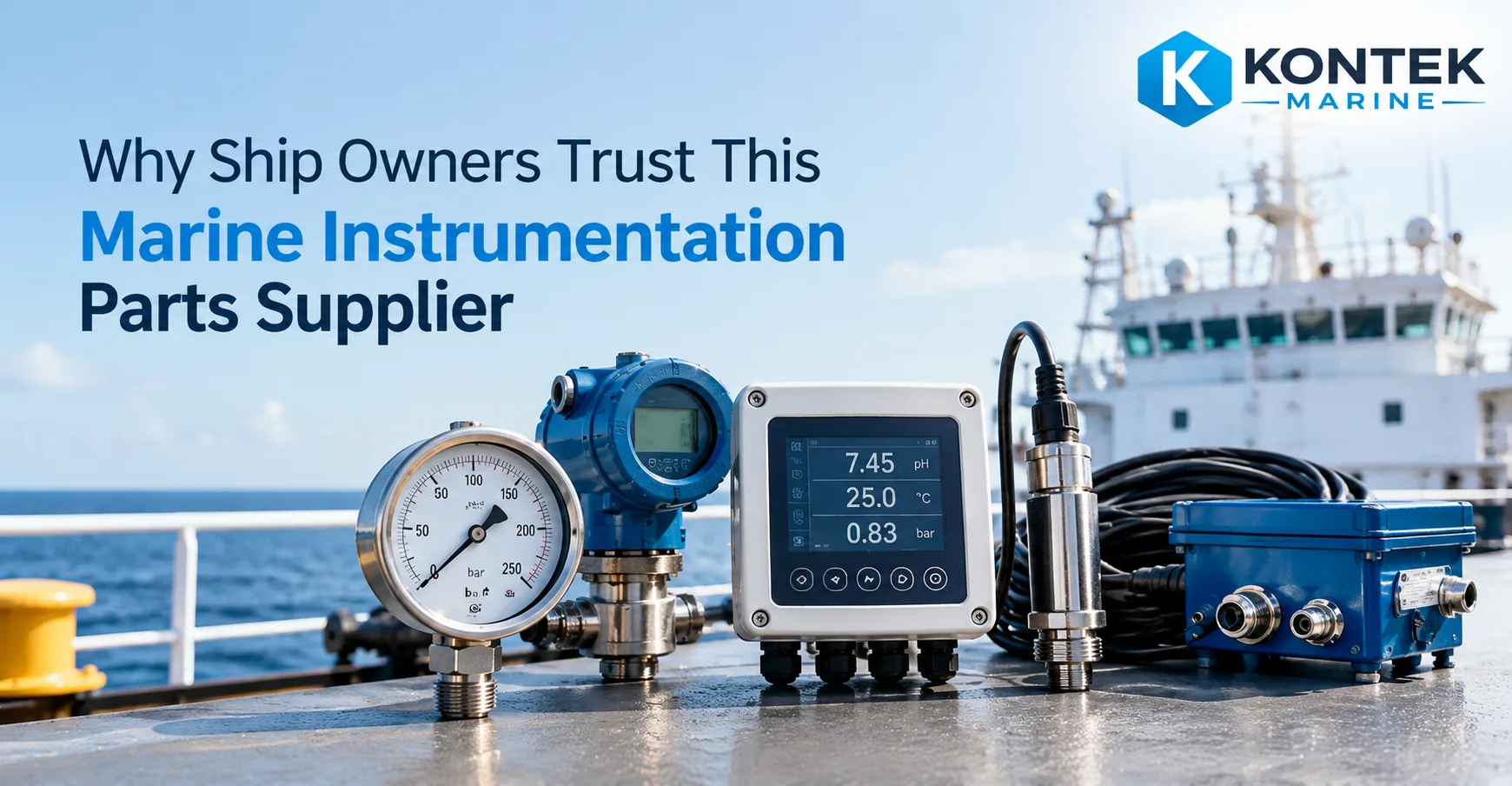
Why Ship Owners Trust This Marine Parts Supplier
It's 3 a.m. in the middle of the North Atlantic, and a pressure gauge on the main engine has just failed. The watch officer can't get an accurate reading, the chief engineer is scrambling for a spare, and the vessel's next port call is still four days away. This scenario plays out more often than most people outside the industry realize, and it illustrates exactly why equipment failure at sea is never just a maintenance inconvenience — it's an operational and safety emergency.
A single malfunctioning instrument can force a vessel to reduce speed, deviate from its route, or in worst cases, anchor and wait for a technician or replacement part. Charter agreements carry penalty clauses for delays, cargo can spoil, and crews are put under unnecessary stress trying to compensate for instruments they can no longer trust. This is why ship owners and fleet managers place so much weight on finding a dependable marine instrumentation parts supplier before problems arise, not after. The right partner doesn't just sell components — they help prevent the 3 a.m. crisis in the first place.
Essential Instrumentation Categories Every Vessel Depends On
Modern ships run on a dense network of sensors, gauges, and control systems that monitor everything from engine performance to cargo conditions. A few categories stand out as critical to safe, efficient operation:
- Pressure and temperature instruments — gauges, transmitters, and sensors that track lubrication oil pressure, fuel temperature, and cooling water systems.
- Level measurement devices — tank gauging systems, float switches, and radar-based level sensors used for fuel, ballast, and freshwater tanks.
- Flow meters — essential for fuel consumption monitoring, bunkering accuracy, and emissions compliance reporting.
- Navigation and bridge instrumentation — echo sounders, speed logs, and gyrocompass components that support safe passage planning.
- Alarm and monitoring panels — centralized systems that alert crew to abnormal readings before they escalate into failures.
Sourcing these components from a supplier who understands ship instrumentation equipment as a system, rather than a catalog of disconnected parts, makes a measurable difference. Compatibility issues, incorrect calibration ranges, or substandard materials in any one of these categories can compromise the accuracy of the entire monitoring chain.
Maintenance Best Practices That Extend Equipment Life
Even the best instrumentation eventually wears down under constant vibration, salt exposure, and temperature swings. Ship owners who avoid costly downtime tend to follow a few consistent maintenance habits:
Scheduled calibration checks. Instruments drift over time, and a gauge that reads "close enough" can mask a developing problem. Regular calibration against class society requirements keeps readings trustworthy.
Proactive spare parts inventory. Rather than waiting for a failure, experienced engineers keep critical spares — sensors, seals, transmitters — on board or readily accessible through a reliable supplier network.
Environmental protection. Corrosion-resistant housings, proper sealing, and routine cleaning of sensor contacts significantly reduce failure rates in the harsh marine environment.
Documented service history. Tracking when a part was installed, serviced, or replaced helps engineers anticipate failures before they happen rather than reacting to them.
When onboard maintenance isn't enough, vessels need access to a professional marine spare service capable of handling repair, replacement, and recalibration work efficiently, whether that means dispatching a technician to the vessel or arranging expedited part delivery to the next port. This kind of responsive repair and replacement support is often what separates a minor inconvenience from an extended off-hire period.
What Makes a Supplier Reliable
Not every parts distributor can support the operational demands of a working fleet. Ship owners consistently point to a handful of factors that separate a dependable partner from a risky one:
- Genuine, traceable components. Counterfeit or unverified parts are a real risk in the marine supply chain. A reputable supplier provides documentation confirming origin, materials, and compliance with manufacturer specifications.
- Broad compatibility across makes and models. Fleets often operate mixed equipment from different manufacturers and vessel ages, so a supplier's ability to source across brands matters.
- Certification and classification alignment. Parts should meet the standards set by classification societies and flag state requirements, with certificates available on request.
- Fast, predictable lead times. When a vessel is waiting on a part, communication and shipping speed can matter as much as the part itself.
- Technical support. Suppliers who can advise on installation, calibration, or troubleshooting add value well beyond simply shipping a box.
These are the same reasons many fleet operators describe their preferred vendor as a trusted marine instrumentation parts supplier rather than just another catalog seller. Trust in this industry is built gradually, through consistent delivery performance and technical accuracy, not through marketing claims.
Industry standards bodies reinforce why this rigor matters. According to research published in <cite index="8-1">a peer-reviewed study on measurement methods for ships and offshore facilities, the specificity of shipboard operating conditions creates strict requirements for the reliability and accuracy of measuring systems used at sea</cite>. That reality is exactly why sourcing decisions for instrumentation parts shouldn't be treated as routine procurement — they directly affect vessel safety and performance.
Supporting the Full Lifecycle of Ship Instrumentation
A supplier's value isn't limited to selling replacement parts. The most trusted partners support the full lifecycle of ship instrumentation equipment: helping select the right components during a retrofit, supplying spares during scheduled dry-docking, and stepping in quickly when an unplanned failure occurs mid-voyage. This full-lifecycle approach reduces the guesswork for engineering teams and gives fleet managers a single point of contact instead of juggling multiple vendors for different systems.
When something does go wrong and a part needs replacing quickly, having a supplier that owners can reach without delay makes all the difference. Fleet managers who need urgent support can request a quote today rather than waiting through a lengthy procurement cycle, which is often the deciding factor in minimizing off-hire time.
Conclusion
Instrumentation failures at sea rarely announce themselves conveniently in port with plenty of lead time. They tend to surface mid-voyage, under pressure, when the margin for error is thin. That reality is exactly why so many ship owners choose to build a long-term relationship with a specialized marine instrumentation parts supplier rather than sourcing components reactively from whoever happens to have stock. A supplier who understands the categories of equipment involved, follows through on maintenance support, and backs every part with proper certification becomes a genuine extension of the engineering team — one that helps keep vessels moving safely and on schedule.
Frequently Asked Questions
1. What is the typical lead time for ordering marine instrumentation parts? Lead times vary by part type and availability, but a supplier with strong inventory management can often ship common components within a few business days. Custom or specialty items may take longer, so it helps to confirm timelines before an urgent need arises.
2. How do I know if a replacement part is compatible with my existing equipment? Reliable suppliers cross-reference manufacturer model numbers, specifications, and calibration ranges before confirming an order. Providing the original equipment's make, model, and serial number helps avoid compatibility issues.
3. Are the parts certified to meet classification society standards? Reputable suppliers provide documentation showing compliance with relevant classification society and flag state requirements. Always request certificates of conformity or test certificates before installation, especially for safety-critical instrumentation.
4. Can a supplier help with both parts and repair services? Many suppliers offer combined support, providing replacement components alongside repair, recalibration, or installation assistance, which reduces the number of vendors a fleet needs to coordinate with.
5. What should I do if an instrument fails while the vessel is at sea? Contact your supplier as soon as possible to arrange either expedited shipping to the next port or remote technical guidance, if available. Having an established relationship with a supplier before an emergency occurs significantly shortens response time.
For more information on marine engineering measurement standards, see this peer-reviewed research on shipboard measurement systems.