Introduction
Saudi Arabia's logistics and warehousing industry is undergoing rapid transformation. Driven by Vision 2030 initiatives, e-commerce growth, and large-scale industrial developments, warehouses are handling more inventory and vehicle movement than ever before.
As forklift activity increases, so does the challenge of maintaining a safe working environment for both operators and pedestrians. Traditional safety measures such as warning signs, mirrors, and audible alarms remain important, but many facilities are now looking beyond conventional approaches.
One technology gaining significant attention is the forklift halo light.
The Growing Safety Challenge in Modern Warehouses
Forklifts are essential for material handling operations, but they also contribute to a significant number of workplace incidents globally.
In busy warehouse environments, operators often work in areas where:
- Pedestrians and forklifts share the same pathways
- Visibility is restricted by loads and shelving
- Noise levels reduce the effectiveness of audible warnings
- Multiple vehicles operate simultaneously
Even experienced operators can struggle to identify nearby personnel in crowded environments.
Why Visual Warning Systems Are Becoming More Important
Traditional alarms rely on workers hearing the warning signal. However, warehouses are often noisy environments filled with machinery, loading operations, and vehicle traffic.
Visual warning systems offer a different approach by creating clear and visible safety indicators that can be seen regardless of ambient noise levels.
This is one reason why many warehouse managers are incorporating visual safety technologies into their overall risk management strategy.
What Are Forklift Halo Lights?
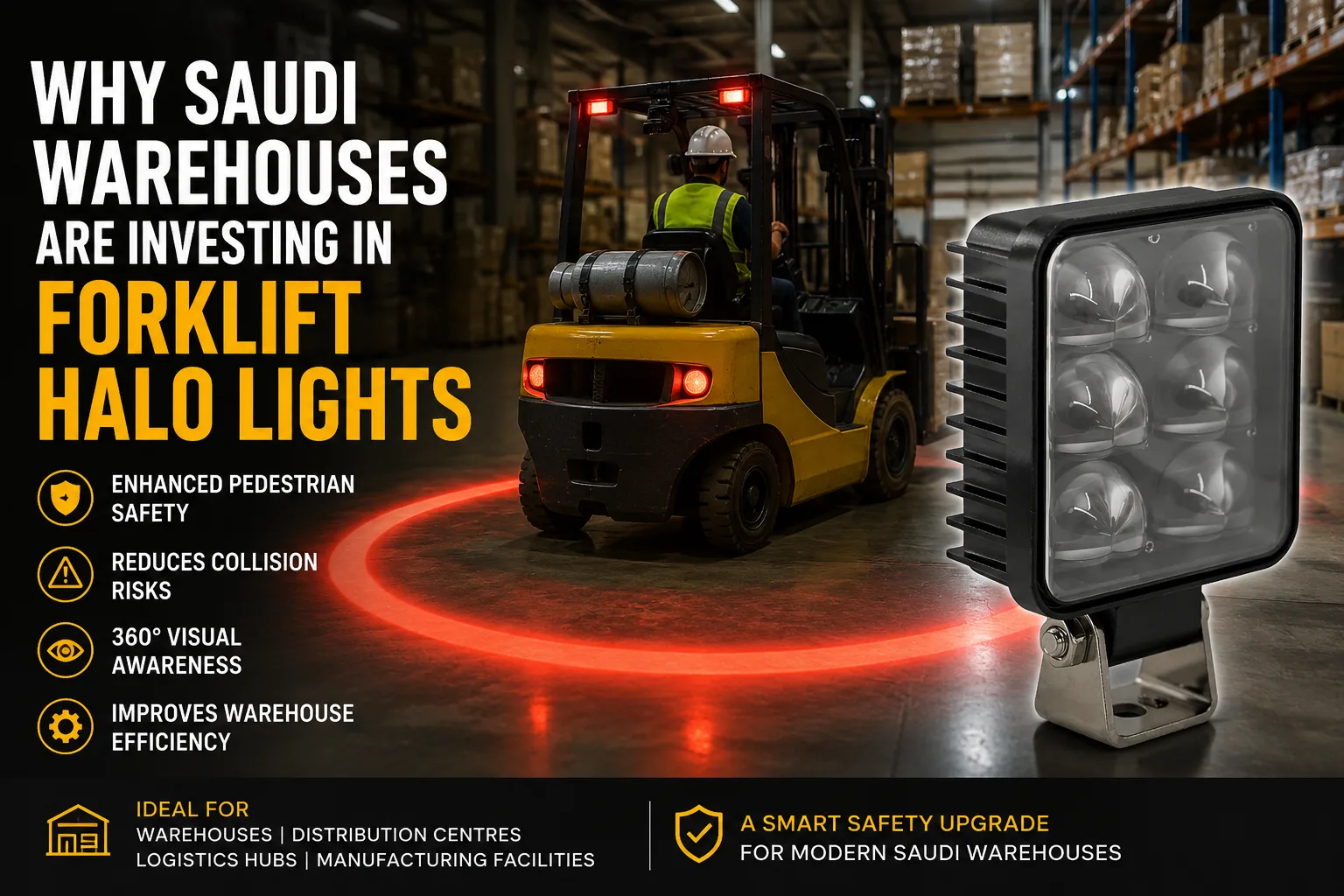
Forklift halo lights project a visible arc or safety zone around the forklift.
The illuminated boundary acts as a visual reminder of the vehicle's operating area and helps pedestrians maintain a safe distance.
Unlike standard vehicle lighting, halo lights are specifically designed to improve awareness of potential danger zones around moving equipment.
Key Benefits Driving Adoption in Saudi Arabia
Enhanced Pedestrian Awareness
Workers can more easily identify the forklift's operating zone, reducing the likelihood of accidental entry into hazardous areas.
Improved Visibility in High-Traffic Areas
Loading bays, storage aisles, and warehouse intersections often experience heavy traffic. Halo lights help improve awareness in these locations.
Reduced Risk of Collisions
By clearly defining safety zones, warehouses can help minimise interactions between forklifts and pedestrians.
Support for Safety Initiatives
Many organisations are investing in technologies that support workplace safety objectives and contribute to safer operational practices.
Applications Across Saudi Industries
Forklift halo lights are increasingly being used in:
- Warehouses
- Distribution centres
- Manufacturing plants
- Logistics hubs
- Ports and terminals
- Industrial storage facilities
These environments often involve frequent forklift movement and benefit from enhanced visual safety measures.
The Future of Warehouse Safety
As warehouse automation and material handling operations continue to evolve, visual warning technologies are expected to play an increasingly important role in accident prevention.
Modern facilities are moving toward layered safety approaches that combine operator training, warehouse design, traffic management, and technology-driven safety solutions.
Conclusion
The growing adoption of forklift halo lights in Saudi warehouses reflects a broader commitment to workplace safety and operational efficiency.
By improving pedestrian awareness, increasing visibility, and helping reduce collision risks, halo lights are becoming an important component of modern warehouse safety strategies.
As organisations continue to invest in safer working environments, visual warning technologies are likely to remain a key part of future material handling operations.
Looking to Improve Forklift Safety in Your Facility?
Creating a safer warehouse environment requires more than operator training alone. Modern facilities are increasingly combining safety procedures with technologies such as forklift safety lights, camera systems, reverse sensors, and pedestrian warning solutions to reduce workplace risks.
Organizations looking to enhance forklift visibility and improve pedestrian awareness should consider conducting a comprehensive safety assessment to identify potential blind spots and high-risk operational areas.
To learn more about advanced forklift safety technologies, Speak with a safety specialist about solutions tailored to your facility's requirements.