
Introduction
The hospitality industry is experiencing a significant digital transformation. Guests today expect more than comfortable accommodations—they want a seamless booking experience, instant confirmations, transparent communication, and personalized service throughout their stay.
As resorts handle increasing numbers of reservations from websites, travel agencies, mobile apps, and third-party booking platforms, managing bookings manually has become increasingly difficult. Traditional methods often lead to booking conflicts, delayed confirmations, inaccurate room availability, and operational inefficiencies.
This is where Resort Booking Management Software is making a meaningful impact. Rather than simply digitizing reservations, it helps hospitality businesses streamline operations, improve guest experiences, and make better business decisions through centralized booking management.
Understanding Resort Booking Management Software
Resort Booking Management Software is a digital solution that enables hospitality businesses to manage reservations, room availability, guest information, payments, and booking operations from a centralized platform.
Instead of relying on spreadsheets, emails, or manual registers, resorts can automate reservation workflows while maintaining accurate records and real-time availability.
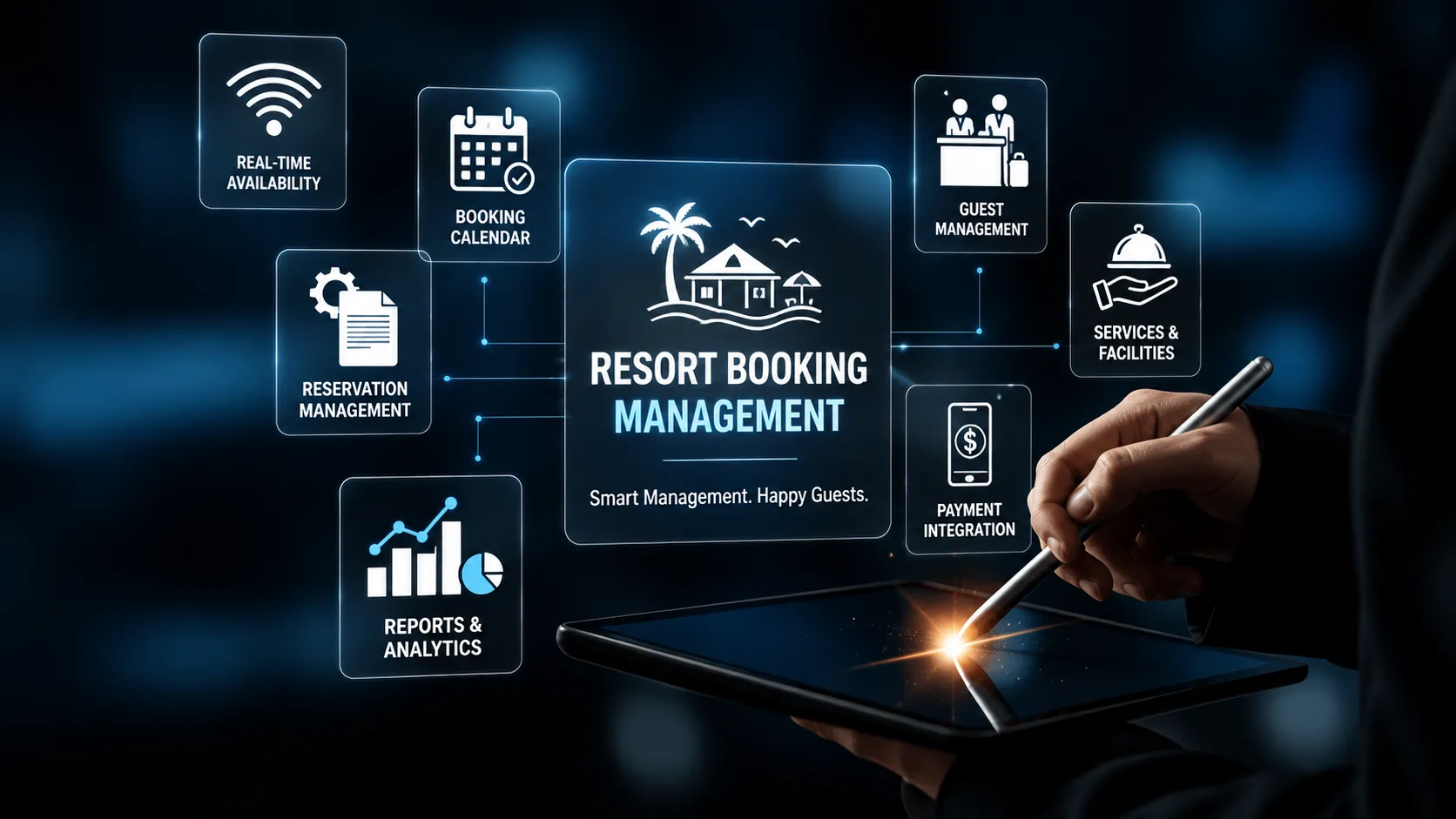
Modern booking management platforms generally support:
- Reservation management
- Room availability tracking
- Guest profile management
- Online booking integration
- Payment processing
- Reporting and analytics
- Automated guest communication
These capabilities allow hospitality teams to focus more on guest service rather than administrative work.
Why Digital Booking Management Matters?
The booking experience is often the first impression a guest has of a resort. A fast and reliable reservation process builds confidence, while booking errors or communication delays can negatively influence the overall guest experience.
By implementing Resort Booking Management Software, hospitality businesses can create a more efficient reservation process while improving operational visibility across departments.
Digital booking management also enables better coordination between front desk staff, housekeeping, maintenance teams, and management, ensuring rooms are prepared on time and guest requests are handled efficiently.
Key Benefits of Resort Booking Management Software
Improved Reservation Accuracy
Real-time availability helps reduce booking conflicts and minimizes manual errors.
2. Faster Guest Communication
Automated confirmations, reminders, and booking updates keep guests informed throughout their journey.
3. Better Operational Efficiency
Centralized booking information allows departments to work with the same data, improving collaboration.
4. Enhanced Guest Experience
Personalized guest profiles help staff understand customer preferences and deliver more tailored service.
5. Data-Driven Decision Making
Booking reports and occupancy analytics provide valuable insights into seasonal demand, guest behavior, and revenue performance.
Technology Trends Shaping Hospitality
The hospitality industry continues to adopt new technologies that improve both guest experiences and operational efficiency.
Some of the emerging trends include:
- AI-assisted reservation management
- Contactless check-in and check-out
- Cloud-based hospitality platforms
- Mobile-first booking experiences
- Predictive occupancy forecasting
- Personalized guest engagement
- Data-driven revenue optimization
These innovations are helping resorts respond more effectively to changing customer expectations.
Conclusion
As guest expectations continue to evolve, digital reservation management is becoming an important component of successful hospitality operations.
Resort Booking Management Software enables resorts to simplify reservations, improve communication, reduce operational inefficiencies, and provide a more consistent guest experience.
For hospitality businesses focused on long-term growth, investing in modern booking technology is no longer just about operational convenience—it is becoming a strategic step toward delivering better service and remaining competitive in an increasingly digital marketplace.