
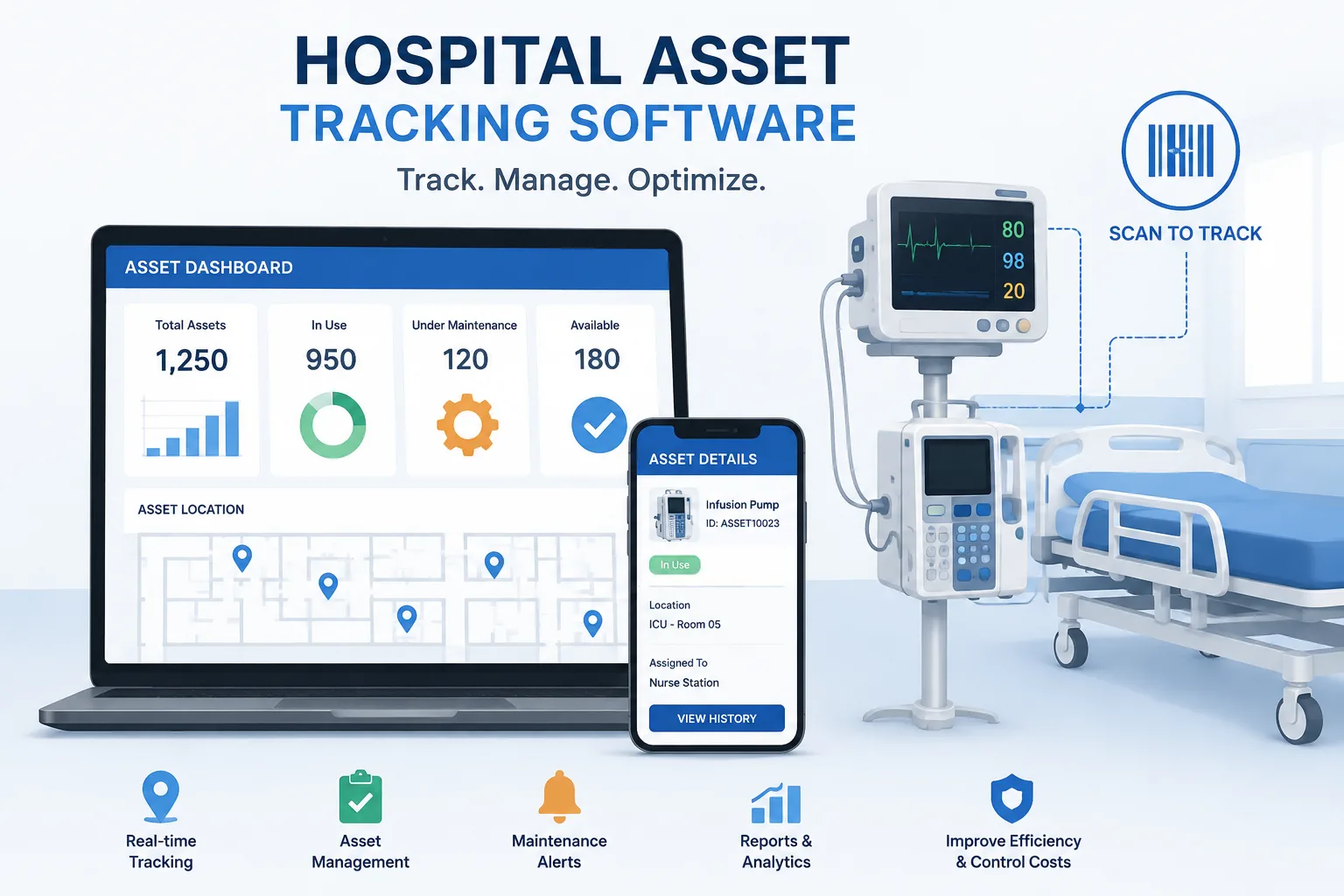
Hospitals depend on thousands of physical assets to keep care moving. Infusion pumps, wheelchairs, portable monitors, imaging accessories, medication carts, and other equipment often travel between departments throughout the day. When staff cannot quickly see where an item is, whether it is available, or when it was last serviced, a simple search can become an operational distraction. hospital asset tracking software gives healthcare organizations a structured way to create visibility around these moving resources.
The Problem Is Bigger Than Missing Equipment
Searching for equipment is only the most visible symptom of fragmented asset processes. A device may appear available in a spreadsheet while it is actually in use, awaiting cleaning, under repair, or stored in another unit. Different departments may maintain separate records, making it difficult for administrators to understand utilization across the facility.
A modern hospital asset tracking system can connect an asset’s identity with its location, status, maintenance history, and assigned department. Technologies such as RFID tags, barcode or QR scanning, Bluetooth beacons, and IoT sensors can support different tracking needs. The right approach depends on the asset type, required location precision, facility layout, network environment, and staff workflow.
Design Around Clinical Movement
Effective hospital asset tracking starts with understanding how equipment actually moves. A pump may leave central supply, enter a patient room, go through cleaning, and return to storage. If the digital workflow does not reflect those transitions, records become unreliable even when the tracking technology works correctly.
Hospitals should map common asset journeys before configuring screens, alerts, and status categories. Check-in and check-out actions need to be simple enough for busy staff. Mobile access can help teams confirm an item’s status without returning to a workstation. Role-based views can also prevent users from sorting through information that is irrelevant to their responsibilities.
The system should make exceptions visible. If an asset enters a restricted area, remains idle longer than expected, or misses a scheduled maintenance event, the appropriate team may need an alert. Too many notifications, however, can create alarm fatigue. Escalation rules should therefore reflect urgency, asset criticality, and ownership.
Turn Tracking Data Into Operational Insight
Location data becomes more valuable when combined with utilization and lifecycle information. Leaders can examine whether departments are sharing equipment effectively, which assets frequently require service, and where demand regularly exceeds availability. These insights can support decisions about redistribution, rental, repair, and procurement.
Integration also matters. Asset records may need to exchange information with hospital information systems, maintenance platforms, inventory tools, financial applications, or procurement workflows. Clear identifiers and consistent data definitions help prevent duplicate records and conflicting status updates.
Security and governance should be addressed from the beginning. Access controls, audit trails, encryption, validation rules, and retention policies can help protect operational data and create accountability. Hospitals should also define who owns each record, who can change an asset’s status, and how inaccurate data will be corrected.
Build for Adoption, Not Just Installation
Even sophisticated tracking technology will struggle if it adds friction to clinical work. Successful implementation requires input from nursing, biomedical engineering, facilities, supply chain, IT, finance, and other affected teams. A phased rollout can reveal issues with tag placement, signal coverage, terminology, and day-to-day usability before the system expands.
The goal is not simply to put a digital marker on every object. It is to create a dependable operational picture that helps people locate, maintain, and plan for critical resources. When technology, governance, and real hospital workflows are aligned, asset visibility can become a practical foundation for more coordinated operations.