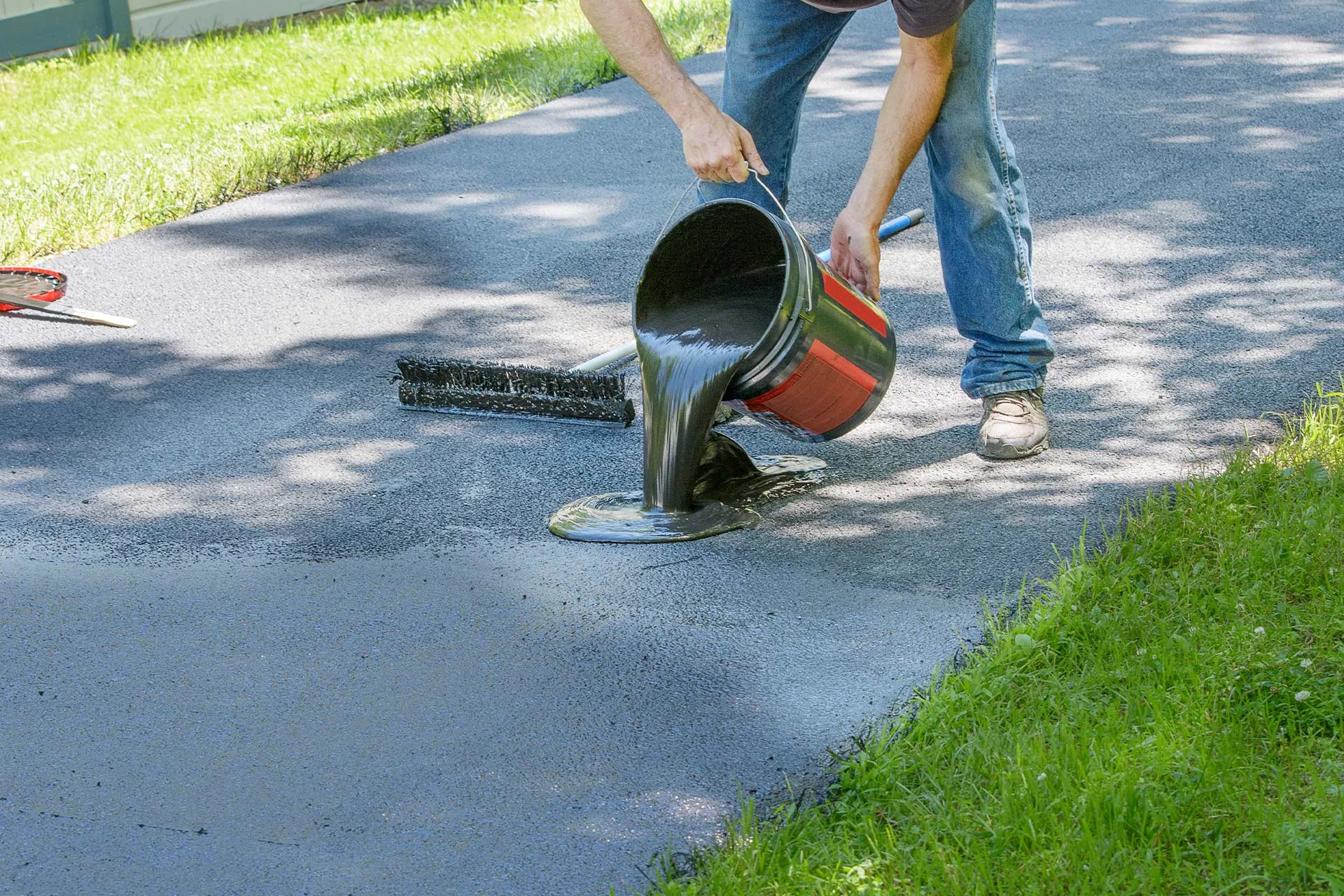
A new concrete driveway may look strong and complete once the surface hardens, but its early life is important for long-term performance. The surface remains vulnerable to moisture, stains, salts, and everyday exposure. Professional sealing adds a protective layer or water-repellent treatment suited to the concrete and its environment. When applied at the correct time, it can help protect the surface without interfering with proper curing or creating application problems.
Sealing Is Not the Same as Curing
One common mistake is thinking that sealing a new driveway and curing it are the same job. They are not. Curing allows cement in fresh concrete to continue reacting with water so the concrete can develop its intended properties. And a sealer is applied as a protective treatment to the concrete surface for additional safeguard.
ACI's current 2026 curing guidance specifically covers curing practices for slabs-on-ground and discusses materials and monitoring methods used to develop concrete quality. This makes the timing of any later protective treatment an important part of the overall installation process.
The driveway should not simply be sealed because it “looks dry.” The concrete's age, moisture condition, weather, curing method, and sealer manufacturer's requirements all need to be considered.
What Does a Sealer Actually Do?
Concrete contains a network of small pores. Water and dissolved substances can move through these spaces. Depending on the product, a sealer may work in different ways. For a driveway, this protection can be useful because the concrete is exposed directly to rain, wet vehicles, dirt, winter materials, and other outdoor conditions.
Professional residential concrete driveway contractors in Troy can select a sealing system based on the driveway's finish, exposure, expected traffic, and appearance requirements rather than using the same product for every project.
Why Moisture Protection Matters
Water is not automatically harmful to concrete. The concern is repeated exposure combined with conditions that allow moisture-related deterioration to develop.
A surface sealer can reduce the amount of water entering from the top of the slab. FHWA guidance explains that surface sealing can help limit moisture and other substances entering through the concrete surface, although it cannot stop moisture that enters from the sides or bottom.
This is an important point for homeowners. Sealing is one layer of protection, not a replacement for good drainage.
If a driveway slopes toward the house or a downspout releases water beside the slab, applying sealer will not correct that design problem.
Protection From Winter Exposure
Driveways in areas with freezing weather can face repeated wetting and freezing conditions. Deicing materials can add another exposure.
A suitable sealer can help reduce the amount of water and dissolved salts entering through the surface. However, the concrete itself still needs to be properly designed and constructed for its environment.
This is why residential concrete driveway contractors should consider local exposure conditions when selecting a sealer.
The important questions include:
- Will the driveway face freezing and thawing?
- Are deicing products commonly used?
- Does water drain quickly from the surface?
- Is the driveway exposed to heavy vehicle traffic?
- Is appearance important, such as with decorative concrete?
The answers can affect the type of protective treatment that makes sense.
Penetrating Sealers vs. Film-Forming Sealers
Not every concrete sealer behaves in the same way.
Penetrating sealers work within the near-surface pores and are commonly used when water repellency is desired without creating a visible coating.
Film-forming sealers create a layer over the concrete. Depending on the product, they may change the appearance by adding gloss, enhancing color, or creating a more noticeable surface finish.
For a plain driveway, a homeowner may prefer a natural appearance. For decorative concrete, appearance may be part of the reason for sealing in the first place.
The correct choice depends on the concrete finish and the expected exposure. FHWA notes that film-forming products can also have wear and skid-resistance considerations, while penetrating sealers have their own application limitations.
Timing Can Make or Break the Result
Professional sealing is not simply about choosing an expensive product.
Timing matters.
A driveway may appear hard enough to walk on while still being unsuitable for the specific sealer being considered. Some products require the concrete to reach a particular age or moisture condition. Others have specific requirements for temperature, surface preparation, and weather.
Applying a product too early can interfere with the intended curing process or produce an uneven result. Applying it to a dirty or damp surface can also reduce performance.
Experienced residential concrete driveway contractors can check the surface and follow the product's technical requirements instead of relying only on a fixed calendar date.
Surface Preparation Is a Professional Job
Even a high-quality sealer cannot hide a poorly prepared surface forever. Before sealing, the concrete may need to be clean, free from contaminants, and sufficiently dry for the selected product. Existing construction residue, dirt, curing materials, or other substances can affect bonding or penetration.
Professional preparation may involve:
- Inspecting the surface condition
- Checking for moisture
- Cleaning contaminants
- Confirming suitable weather conditions
- Protecting nearby surfaces
- Applying the correct amount of sealer
- Allowing the treatment to cure before normal use
The application rate also matters. Too little product may provide incomplete coverage. Too much can leave unwanted residue, discoloration, or a surface that does not perform as intended.
Sealing Does Not Fix Bad Concrete
This is perhaps the most important point for homeowners. A sealer cannot repair structural cracks, poor drainage, weak concrete, improper slope, or serious surface defects.
If the driveway already has a construction problem, sealing it may simply cover the issue temporarily. A good installation therefore starts with proper concrete placement and curing. Sealing comes afterward as a protective step.
For residential concrete driveway contractors, this means the sealing plan should be part of the driveway's overall construction and protection strategy rather than an afterthought.
How Often Should a Driveway Be Resealed?
There is no single schedule that applies to every driveway. Sealer life depends on the product, weather, sunlight, traffic, surface wear, and exposure to chemicals or water. Penetrating products may behave differently from film-forming products.
Instead of resealing automatically every year, homeowners should observe the surface and follow the sealer manufacturer's maintenance guidance.
Signs that a protective treatment may need attention can include:
- Water no longer beads or is repelled as expected
- The surface looks noticeably worn
- The protective appearance has faded
- Areas receive much more traffic than others
- The manufacturer recommends another application
A Better Way to Protect a New Driveway
Professional sealing works best when it is treated as one part of a complete driveway care plan. Good drainage should move water away from the slab. The concrete should be properly cured. The surface should be cleaned correctly before treatment. The sealer should match the concrete and its exposure.
When residential concrete driveway contractors combine these steps with careful product selection and application, sealing becomes more than a cosmetic finish. It becomes a practical way to reduce surface exposure and help a new driveway maintain its intended appearance and performance.
Final Thoughts
A new concrete driveway deserves protection from the day it is completed, but protection should not be rushed. Proper curing must come first, followed by a sealing treatment suited to the concrete, climate, surface condition, and expected use.
Professional sealing can help reduce moisture and contaminant entry through the driveway's surface, but it works best alongside sound construction and drainage. With the right timing, preparation, product, and application method, residential concrete driveway contractors in Troy can help give a new driveway a stronger start and more dependable surface protection.