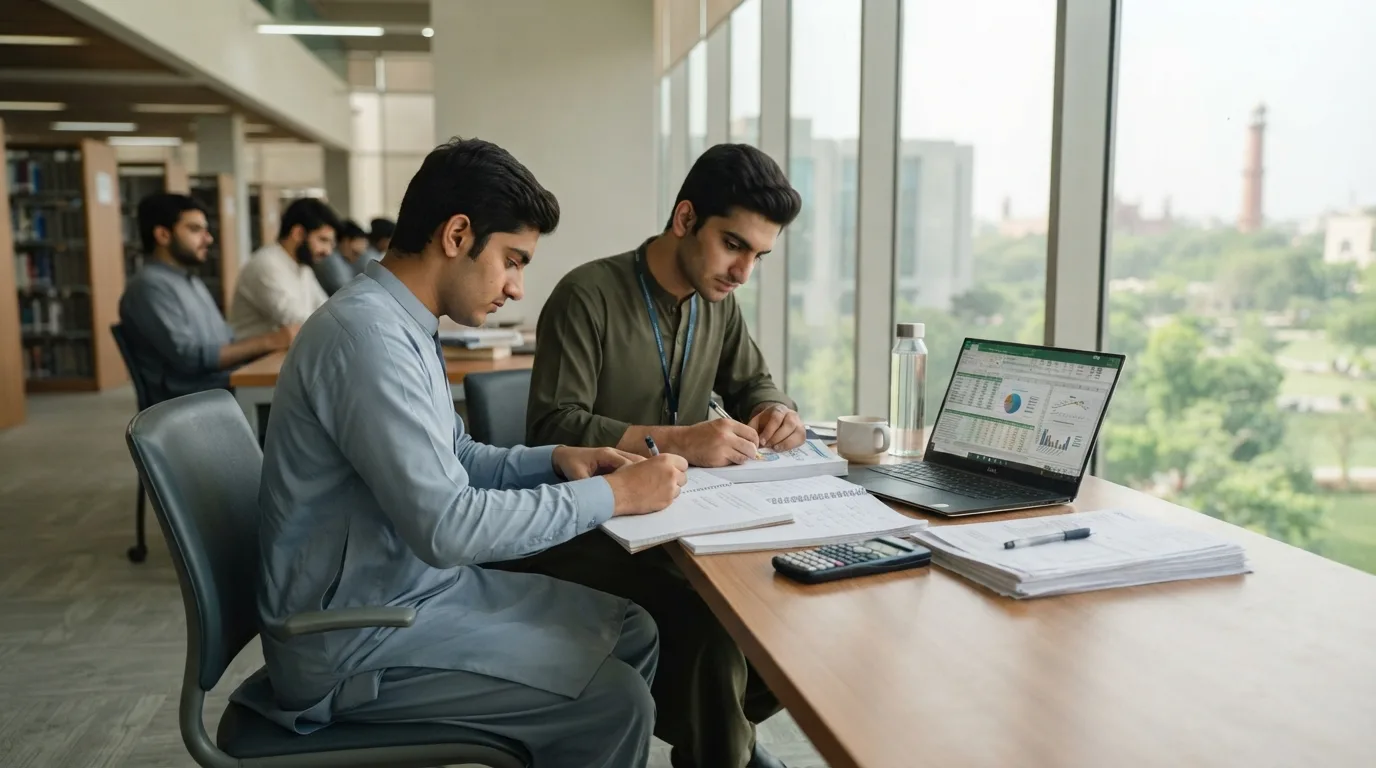
A career in accounting can open doors to opportunities across many industries. Businesses need professionals who understand financial records, reporting, taxation, budgeting, auditing, and financial analysis. However, entering the accounting profession today requires more than knowing basic bookkeeping.
Professional accounting qualifications can give students a structured way to develop technical knowledge and prepare for the demands of the workplace. They can also provide a foundation for careers that extend beyond traditional accounting roles.
For students in Pakistan considering a future in finance, understanding the value of professional accounting education can help them make better decisions about their career path.
Understanding Professional Accounting Education
Professional accounting education is designed to develop knowledge that can be applied in real business environments.
Students typically study areas such as financial accounting, management accounting, taxation, auditing, financial reporting, business law, and financial management. These subjects help students understand how organizations record, analyze, and communicate financial information.
The structured nature of professional qualifications can also encourage students to develop consistent study habits and analytical thinking.
Rather than learning accounting as a collection of isolated concepts, students gradually build knowledge across different areas of the profession.
Developing Strong Technical Knowledge
Technical knowledge is one of the most important foundations of an accounting career.
An accountant needs to understand how transactions are recorded, how financial statements are prepared, and how different accounting treatments affect a company's financial position.
Students should become comfortable with concepts such as assets, liabilities, equity, revenue, expenses, depreciation, inventory, receivables, payables, and cash flow.
These fundamentals remain important even as accounting becomes increasingly automated. Software can perform calculations and organize information, but professionals still need to understand whether the information is correct and what it means.
Professional Qualifications and Career Planning
Students should consider their long-term objectives before selecting an accounting qualification.
Some students may want to work in auditing, while others may be more interested in corporate finance, taxation, management accounting, financial analysis, or advisory services.
Internationally recognized qualifications can be particularly useful for students who want to keep their career options open across different markets.
Students in Lahore can research professional accounting education providers such as Blackstone School of Accountancy when comparing institutions, programs, learning environments, and available study support.
The important point is to choose an educational route based on personal career objectives rather than simply following what other students are doing.
Accounting Skills Beyond the Classroom
Passing examinations is only one part of becoming an effective accounting professional.
Modern accountants also need practical technical skills. Spreadsheet software, accounting platforms, data-analysis tools, and digital reporting systems are now common parts of financial work.
Microsoft Excel is particularly useful for accountants. Students should become comfortable with formulas, tables, filtering, sorting, charts, and financial calculations.
As their skills develop, they can explore more advanced spreadsheet functions and data-analysis techniques.
Learning these tools while studying can make the transition from education to employment easier.
The Importance of Practical Experience
Practical experience allows students to understand how accounting principles are applied in real organizations.
An internship or trainee position can expose students to tasks such as preparing invoices, maintaining records, performing reconciliations, organizing financial documents, assisting with reports, and working with accounting software.
These experiences also teach professional habits that cannot always be developed through textbooks alone.
For example, students learn the importance of checking their work, meeting deadlines, protecting confidential information, and communicating with colleagues.
Even a relatively short period of relevant experience can help a student understand workplace expectations.
Communication Is an Accounting Skill
Accounting is often associated with numbers, but communication is equally important.
Professionals frequently need to explain financial information to managers, clients, business owners, or colleagues who do not have an accounting background.
A good accountant should be able to take complicated financial information and explain the important points clearly.
Written communication is also important. Accountants may prepare reports, emails, financial summaries, audit documentation, and other business correspondence.
Students can begin developing these skills by practicing clear writing and learning how to present financial information in an organized way.
Ethics and Professional Responsibility
Accounting professionals handle information that can have significant consequences for businesses and individuals.
Financial statements, tax information, payroll records, budgets, and business transactions must be handled responsibly.
Professional ethics therefore form an important part of accounting education.
Students should understand the importance of accuracy, confidentiality, objectivity, integrity, and professional responsibility.
Technical knowledge without ethical judgment can create serious problems for organizations. A strong accounting professional should understand not only how to perform a task, but also why accuracy and responsible conduct matter.
Technology Is Changing Accounting
The accounting profession is changing rapidly because of technology.
Cloud accounting platforms, automation, artificial intelligence, digital payments, and data-analysis tools are changing how financial information is processed.
Some repetitive accounting tasks can now be completed much faster through software. This does not mean accountants are becoming unnecessary. Instead, the role of the accountant is increasingly moving toward analysis, interpretation, decision support, and professional judgment.
Students who understand both accounting and technology can be better prepared for this changing environment.
Learning how modern systems work can also make professionals more adaptable when they move between employers or industries.
Exploring Different Career Opportunities
A professional accounting qualification can support several different career directions.
Some professionals pursue careers in audit and assurance. Others specialize in taxation, financial reporting, management accounting, internal audit, or financial analysis.
There are also opportunities within companies, accounting practices, banks, consulting organizations, government institutions, and nonprofit organizations.
Career development does not necessarily follow one fixed route.
A student might begin as an accounts assistant, gain practical experience, and later move into a specialized financial role. Another professional might develop expertise in auditing and eventually progress into management or advisory positions.
This flexibility is one reason accounting remains an attractive professional field.
Building a Professional Network
Networking can also contribute to career development.
Students can connect with teachers, classmates, accounting professionals, employers, alumni, and professional communities.
A strong professional network can expose students to internships, job opportunities, industry information, and useful career advice.
Networking does not have to mean attending large events. It can begin with participating in professional discussions, maintaining a professional online presence, attending educational events, or simply building positive relationships with people in the field.
The key is to approach networking as a long-term professional activity rather than something done only when looking for a job.
Continuous Learning Matters
Accounting does not stop changing after qualification.
Financial regulations, reporting standards, technology, business practices, and employer expectations can all evolve.
Successful professionals therefore continue developing their knowledge throughout their careers.
This might involve learning new software, studying changes in accounting standards, improving data-analysis skills, completing additional training, or developing expertise in a particular industry.
Students who develop a habit of continuous learning early in their careers are better positioned to adapt when the profession changes.
Final Thoughts
Professional accounting qualifications can provide students with a structured foundation for entering the finance and accounting profession. However, qualifications alone are not enough.
Students should combine formal education with practical experience, technology skills, communication abilities, analytical thinking, and professional ethics.
Understanding different career paths can also help students make more informed decisions about specialization and future employment.
For students in Pakistan, professional accounting education can provide a pathway into a wide range of roles within local and international organizations. With consistent learning and practical development, accounting knowledge can become the foundation for a long-term professional career.
The most successful approach is to think beyond simply passing examinations. Build skills that can be used in the workplace, understand how businesses operate, stay informed about technological changes, and continue learning as your career develops.