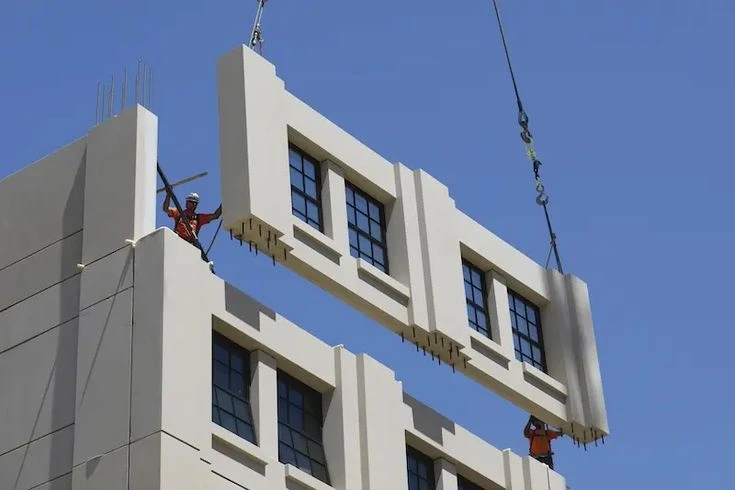
In 2026, prefabricated construction has moved from being a niche method to a mainstream solution shaping the future of the construction industry. Rising urban populations, infrastructure pressure, labor shortages, and sustainability goals have accelerated the adoption of prefab systems across residential, commercial, healthcare, and institutional projects. Prefabrication enables faster project delivery, higher quality standards, predictable costs, and reduced environmental impact key requirements for modern construction. Advanced digital tools, automation, and modular technologies have further strengthened prefab’s role in transforming how buildings are designed and executed. As developers and governments seek smarter, scalable, and resilient construction solutions, prefabrication stands at the center of this transformation in 2026.
By 2026, the construction industry faces unprecedented pressure. Rapid urbanization, increasing population density, climate concerns, and tight project timelines have exposed the limitations of traditional construction methods. Delays, cost overruns, labor dependency, and inconsistent quality have become major challenges, pushing the industry to explore smarter alternatives.
Prefabricated construction has emerged as a powerful response to these challenges, offering speed, efficiency, and reliability at scale.
Evolution of Prefabricated Construction
Prefabrication is not new, but its application has evolved significantly. Earlier, prefab was limited to basic structures or temporary buildings. In 2026, it includes high-rise residential towers, multi-speciality hospitals, commercial complexes, and institutional campuses.
Improved materials, better engineering standards, and advanced manufacturing processes have elevated prefab from a basic solution to a high-performance construction system.
Speed as a Critical Requirement
Time is one of the most valuable resources in modern construction. Delayed projects impact revenue, operations, and investor confidence. Prefab construction addresses this challenge by enabling parallel workflows factory manufacturing and on-site preparation happen simultaneously.
This approach reduces project duration by up to 50%, making prefab ideal for time-sensitive developments such as hospitals, educational institutions, and commercial projects.
Urbanization and Infrastructure Demand
Cities in 2026 are expanding faster than ever. Demand for housing, healthcare, transportation, and public infrastructure continues to rise. Traditional construction struggles to keep pace with this growth.
Prefabrication allows faster scaling without sacrificing quality. Standardized components combined with flexible design enable rapid deployment of buildings, supporting large-scale urban development efficiently.
Labor Shortages and Skill Gaps
The construction industry faces a significant shortage of skilled labor in 2026. Aging workforces and reduced interest in manual labor have increased dependency on automation and controlled manufacturing.
Prefab construction shifts much of the labor to factory environments where fewer workers can achieve higher productivity. This reduces on-site labor dependency and mitigates risks associated with workforce shortages.
Cost Predictability and Financial Control
Uncertain costs are a major concern in traditional construction. Material price fluctuations, labor inefficiencies, and delays often lead to budget overruns.
Prefabricated construction offers better cost predictability through accurate design, fixed manufacturing processes, and reduced waste. Developers benefit from improved financial planning and minimized risk exposure.
Technology Driving Prefab Adoption
Technology plays a crucial role in the prefab revolution. Tools like BIM, digital twins, automation, and precision engineering ensure seamless coordination between design, manufacturing, and installation.
Factories use automated systems to maintain accuracy and consistency, while digital tracking improves transparency and accountability throughout the project lifecycle.
Sustainability and Green Building Goals
Sustainability has become a core requirement rather than an option. Prefab construction supports green building objectives by reducing material waste, minimizing site disturbances, and lowering carbon emissions.
Shorter construction timelines also reduce energy consumption at the site. Many prefab systems are designed for energy efficiency, helping buildings achieve sustainability certifications.
Sector-Wise Impact of Prefab
Prefab is transforming multiple sectors:
- Healthcare: Faster hospital construction, modular ICUs, diagnostic blocks
- Education: Rapid deployment of schools and universities
- Residential: Affordable housing and premium apartments
- Commercial: Offices, hotels, and mixed-use developments
- Industrial: Warehouses and manufacturing units
Each sector benefits from prefab’s speed, quality, and scalability.
Government and Policy Support
In many regions, governments are actively encouraging prefabricated construction to address housing shortages and infrastructure gaps. Policies supporting modular construction, sustainable materials, and faster approvals have boosted prefab adoption in 2026.
Public-private partnerships increasingly rely on prefab solutions for timely project delivery.
Quality, Safety, and Compliance
Prefabrication ensures compliance with modern building codes and safety standards. Factory-controlled production improves quality consistency, while reduced on-site work lowers accident risks.
This makes prefab particularly suitable for regulated environments such as hospitals and educational institutions.
Changing Mindsets in Construction
One of the biggest transformations in 2026 is the shift in mindset. Developers, architects, and engineers now view prefabrication as a strategic advantage rather than a limitation. Customization, design flexibility, and high aesthetics are now achievable through prefab systems.
Future of Prefab Beyond 2026
Looking ahead, prefabricated construction will continue to evolve with smarter materials, AI-driven design, and increased automation. Hybrid models combining RCC and prefab will become more common, further strengthening the industry.