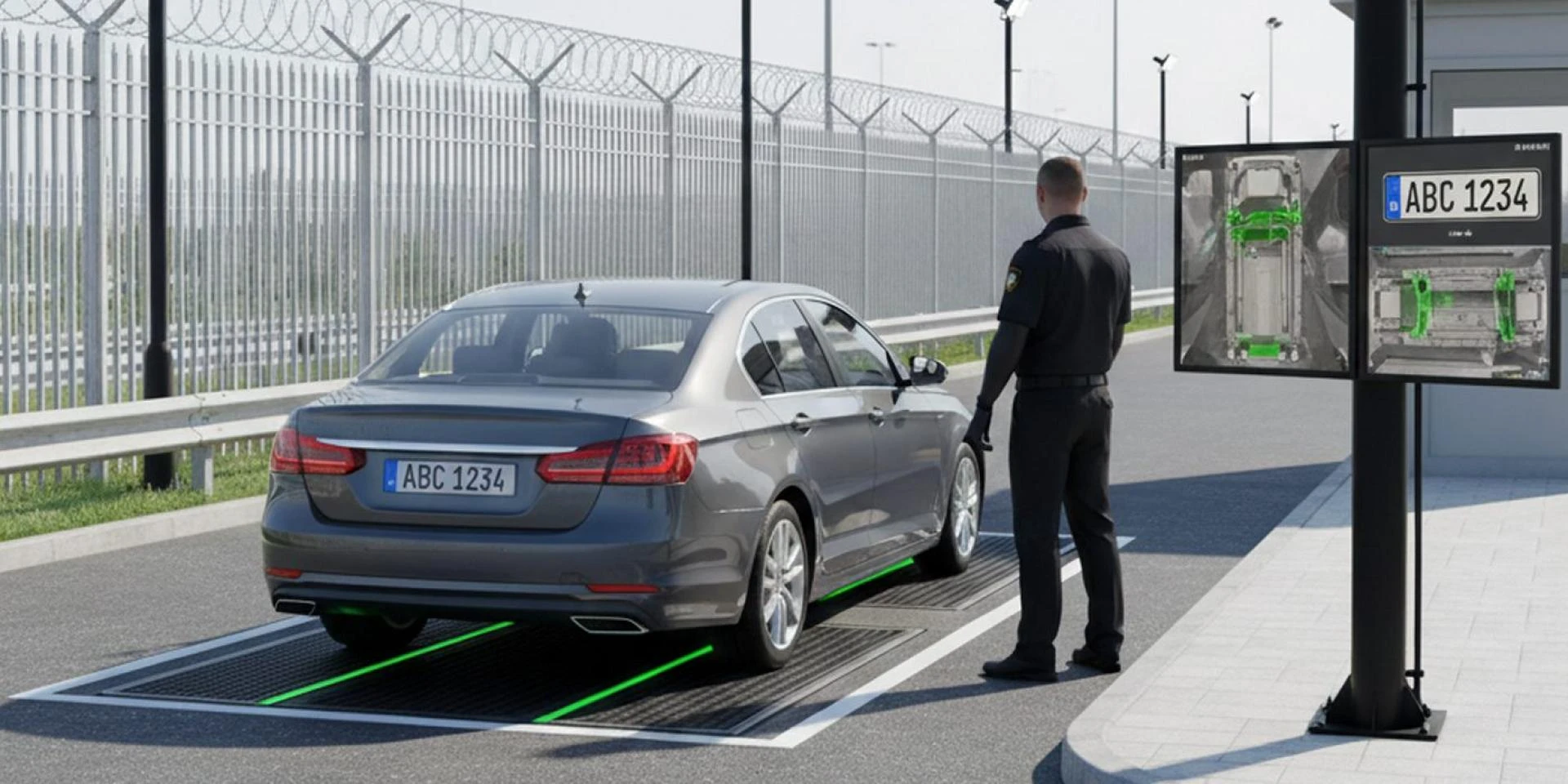
In an increasingly complex security environment, organizations are re evaluating how they protect their facilities, assets, and people. Vehicles entering secure premises represent one of the most critical risk points, as they can be used to transport concealed threats, unauthorized materials, or contraband. Traditional inspection methods, largely dependent on manual checks, are struggling to keep pace with modern security demands. As a result, organizations across sectors are rapidly shifting toward automated UVIS technology to strengthen vehicle screening while maintaining efficiency.
This transition is not driven by technology trends alone it is a response to real operational, safety, and reliability challenges faced by security teams every day.
The Shortcomings of Manual Vehicle Inspections
Manual under-vehicle inspections have long been a standard security practice. However, they come with significant limitations. Inspectors rely on mirrors, flashlights, and visual judgment to examine areas that are difficult to access and poorly lit. These methods are time-consuming and highly dependent on the alertness, experience, and physical condition of personnel.
Fatigue, distractions, adverse weather, and high traffic volumes all increase the likelihood of missed threats. In high-risk locations, even a single oversight can result in severe consequences. Organizations are recognizing that manual inspections alone cannot deliver the consistency and accuracy required in today’s threat landscape.
Rising Security Risks and Evolving Threats
Modern threats are more sophisticated and harder to detect. Concealed devices, hidden compartments, and tampered vehicle components are deliberately designed to evade basic checks. At the same time, many facilities are experiencing increased vehicle movement due to growing operations, supply chains, and workforce mobility.
This combination of higher risk and higher volume puts immense pressure on traditional inspection processes. Automated UVIS technology offers a more robust solution by applying advanced imaging and intelligent analysis to every vehicle, regardless of traffic conditions.
Automation Brings Consistency and Reliability
One of the strongest reasons organizations are adopting automation is consistency. Automated systems inspect each vehicle using the same predefined process, removing variability caused by human judgment or fatigue. High-resolution cameras and optimized lighting capture detailed images of the vehicle underside every time it passes through the checkpoint.
This standardization ensures that no area is overlooked and that inspections remain reliable throughout the day. For organizations responsible for protecting critical infrastructure or sensitive data, consistent inspection quality is essential.
Faster Screening Without Compromising Security
Efficiency is another major driver behind the shift to automation. Manual inspections often slow down entry points, causing congestion, delays, and operational bottlenecks. These disruptions can affect employee productivity, logistics schedules, and visitor experience.
Automated inspection technology allows vehicles to be scanned quickly and non-intrusively, often while moving at low speeds. This significantly reduces inspection time while maintaining a high level of security. Organizations no longer have to choose between safety and operational flow—they can achieve both.
Reducing Human Error and Operational Strain
Human error is an unavoidable factor in manual security processes. Repetitive tasks, physical strain, and long shifts reduce attention to detail over time. Automated UVIS solutions reduce reliance on physical effort and subjective judgment, allowing security personnel to focus on analysis and decision-making.
By minimizing physical strain and fatigue, organizations improve both inspection accuracy and workforce well-being. This leads to better morale, lower turnover, and more sustainable security operations.
Improved Visibility and Threat Detection
Under-vehicle areas are naturally difficult to inspect due to shadows, complex designs, and limited access. Automated systems are specifically engineered to overcome these challenges. Advanced imaging delivers clear, detailed views regardless of lighting or environmental conditions.
Security teams can zoom in on suspicious areas, compare images with reference data, and quickly identify anomalies. When integrated with an automatic under vehicle inspection system, organizations gain a powerful tool for detecting hidden threats that would be easy to miss during manual checks.
Digital Records and Accountability
Another key advantage of automated UVIS technology is the ability to generate digital inspection records. Each vehicle scan can be time-stamped, stored, and linked to identification data. These records enhance transparency and accountability across security operations.
In the event of an incident, audit, or investigation, organizations can review historical inspection data to verify compliance and identify gaps. This level of documentation is especially valuable for regulated industries and high-security environments.
Enhanced Safety for Security Personnel
Manual under-vehicle inspections place personnel in close proximity to potentially dangerous vehicles. Automation allows inspections to be conducted remotely from secure control rooms, significantly reducing exposure to risk.
By prioritizing staff safety, organizations not only protect their workforce but also create a more confident and focused security team. Safer working conditions directly contribute to better performance and reduced error rates.
Scalability for Growing Organizations
As organizations expand, security requirements become more complex. Automated UVIS technology is highly scalable, making it suitable for both small facilities and large, multi-site operations. Systems can be customized, upgraded, and integrated with other security technologies such as access control and surveillance platforms.
This scalability ensures long-term value and future readiness, allowing organizations to adapt as threats and operational demands evolve.
Conclusion
The move toward automated UVIS technology is driven by a clear need for more reliable, efficient, and accurate vehicle inspection processes. Manual methods are no longer sufficient to address modern security challenges, especially in high-risk and high-traffic environments.
By adopting automation, organizations achieve consistent inspections, faster throughput, reduced human error, improved threat detection, and safer working conditions for personnel. More importantly, they build a resilient security framework capable of protecting people, assets, and operations in an increasingly uncertain world.